
Accounting
Trump bends Congress to his will on spending, tax cut agenda

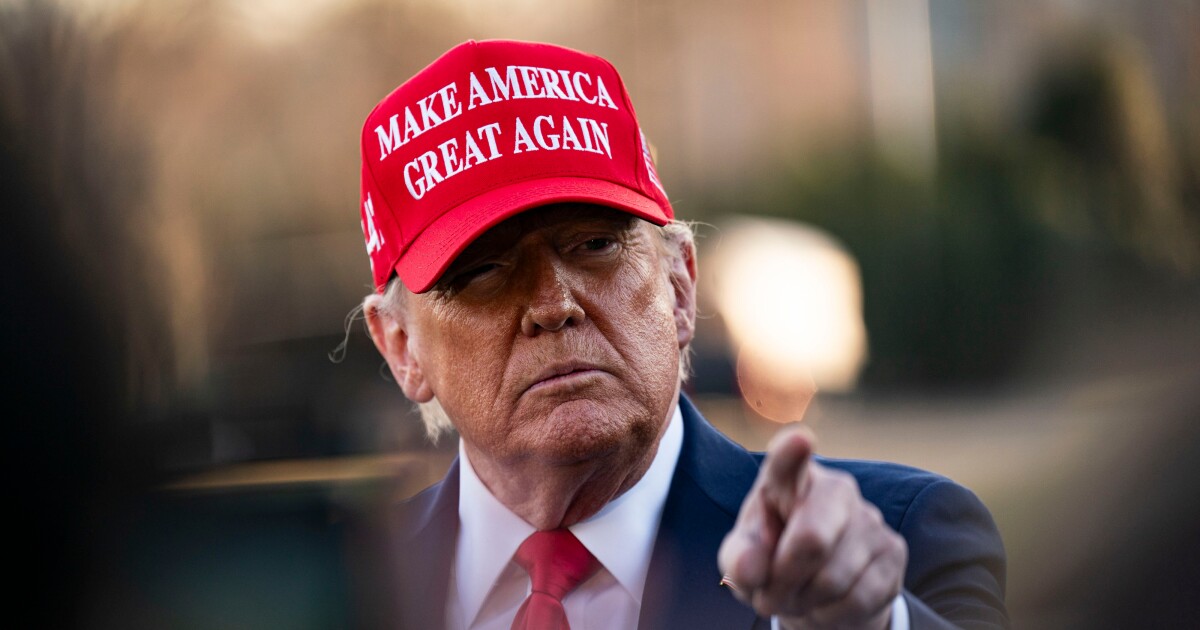

President Donald Trump is bending Congress to his will, hobbling minority Democrats with an everything-at-once strategy and rallying fractious Republicans behind his politically risky tax cut plan and billionaire Elon Musk’s cost-cutting crusade.
That’s the backdrop for Trump’s scheduled address to Congress on Tuesday, five weeks into his second term and just over a week before a March 14 U.S. funding deadline that would ordinarily serve as a point of political leverage for the opposition party.
But Democrats are squeamish about a disruptive government shutdown and struggling to stymie Trump’s agenda, turning to the courts to blunt the effects of the president’s actions.
It’s all a remarkable contrast to Trump’s first term, when congressional Democrats were the face of an energetic resistance. Trump then failed to get Congress to rein in the burgeoning budget and expended political capital to wrangle his own party behind a tax cut bill. He and fellow Republicans also suffered the political fallout from two government shutdowns.
Now, however, an emboldened and experienced Trump benefits from a more compliant Congress, which has shrugged off legally dubious moves like unilaterally slashing the federal workforce and ending government contracts. His tax plan, which requires only a simple majority in both chambers, could be enacted as soon as May.
Democrats are training their attacks on that plan, which uses deep cuts in safety-net programs such as Medicaid and food aid to pay for tax cuts for the wealthy. But if Trump’s momentum keeps apace, at least through the spring, Democratic pushback will likely amount to little more than a 2026 election attack.
Shutdown deadline
Democrats have, for weeks, tried to leverage talks to avert a government shutdown to tie Musk’s hands. But while Republicans need their votes to keep the government open, Democrats’ political pragmatism weakens their hand.
“I’m not for shutting the government down,” said Representative Rosa DeLauro, the top Democratic spending negotiator in the House.
Others in the party — even those with large numbers of federal workers in their states — expressed similar defeatist sentiments.
Virginia Senator Tim Kaine said he’d like the spending bill to include language to prevent large government layoffs. “Whether that is practical I don’t know,” he said.
And Maryland Senator Chris Van Hollen questioned whether Trump, who has ignored Congress’s constitutional power of the purse, would even abide by any new legislative constraints to his power.
The emerging GOP plan ahead of March 14 in the House is a stopgap bill lasting to Sept. 30, essentially extending current funding to the end of the fiscal year.
They’ll need to court Democrats in the Senate, where 60 votes are needed to overcome a filibuster. But the final compromise will likely amount to a status quo for DOGE — no new constraints or freedoms.
Tax cuts
On taxes, Congress is moving with much more rapidity to enact a plan than in 2017, giving businesses and individuals more lead time to adapt to looming changes.
Trump’s campaign proposals to expand breaks to end taxes on tips, overtime and Social Security, once considered wishful thinking, are even gaining momentum despite their costs.
Last week’s dramatic, down-to-the-wire vote on the $4.5 trillion House tax cut outline was a milestone in the GOP’s evolution toward unity, with Trump quelling a rebellion from fiscal conservatives through a few last-minute phone conversations.
The budget plan would add nearly $3 trillion in deficits over 10 years and raise the debt ceiling by $4 trillion. Nonetheless spending hardliners voted for the compromise.
“It’s a new day,” said conservative Ralph Norman of South Carolina.
In the Senate, Republicans are eyeing a budget gimmick counting the extension of Trump’s 2017 tax cuts as zero dollars because it’s current policy. That gives them ample room for even more breaks for businesses and individuals.
Republican House Speaker Mike Johnson, who discussed the idea last week with Trump and Senate Majority Leader John Thune, would need to sell fiscal hawks on it. But several, like Texas Representative Chip Roy, have signaled they’d go along with it, in exchange for another trillion dollars in spending cuts.
That could lift the $10,000 cap on the state and local tax deduction and end the estate tax, while stopping taxes on tips, overtime and Social Security benefits. Trump may even be able to convince Congress to go along with $5,000 stimulus checks he has floated.
North Dakota Senator John Hoeven said Trump is the most powerful president he has seen on budget matters.
“This is his second time around. He’s got the experience,” Hoeven said, pointing to Trump’s own lobbying push to get the House budget plan passed.
But it also plays into Democrats’ 2026 strategy, banking that cuts to Medicaid, food stamps, Pell Grants and other programs would be widely unpopular with voters, giving them an opportunity to take over congressional control. One Democratic political action committee, House Majority Forward PAC, is running ads in swing districts starting Monday on cuts to Medicaid, which insures nearly one-quarter of Americans.
“Today’s ad is just the beginning, and we will make sure every American knows exactly who is responsible,” Mike Smith, the PAC’s president, said in a statement.





U.S. Inflation Outlook for 2027

S&P 500 September Outlook: Tech Rally Holds Index at 7,600

India Unveils ‘Saptadhara’ Reform Agenda Targeting Technology, Youth Skilling, and Growth

Armanino adds Strategic Accounting Outsourced Solutions

New 2023 K-1 instructions stir the CAMT pot for partnerships and corporations

Tax Strategy: Employee Retention Credit update
-

 Technology1 week ago
AI Infrastructure Boom Hits Physical Limits: Power, Financing, and Supply Chain Strain
-

 Economics7 days ago
U.S.- Canada Trade Talks Collapse; Carney Says Retaliatory Tariffs Begin September 8
-
 Stock News3 days ago
S&P 500 September Outlook: Tech Rally Holds Index at 7,600
-

 Finance3 days ago
S&P 500 Outperforms Amid Strong Corporate Earnings as Treasury Yields Cap Equity Multiples
-

 Technology7 days ago
Flock Cameras and the Future of Public Security
-

 Insights3 days ago
Climate Resilience and Offshore Wind and Land Restoration Milestones
-

 Accounting3 days ago
Mandatory ESG Reporting Standards Demand Standardized Non-Financial Audit Trails
-
 Leaders3 days ago
India Unveils ‘Saptadhara’ Reform Agenda Targeting Technology, Youth Skilling, and Growth