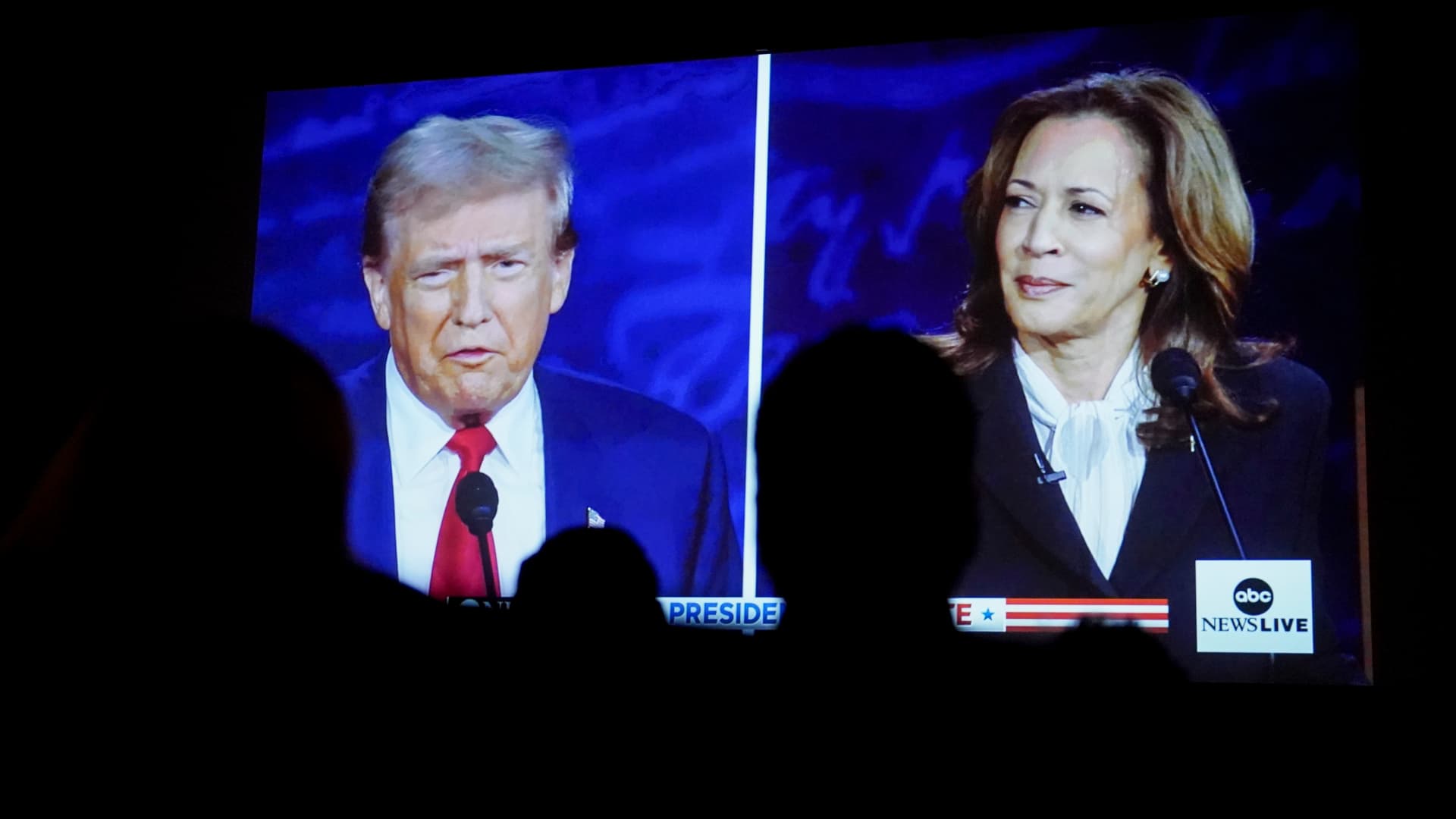
Former President Donald Trump and Vice President Kamala Harris face off in the ABC presidential debate on Sept. 10, 2024.
Getty Images
With the U.S. election less than a month away, the country and its corporations are staring down two drastically different options.
For airlines, banks, electric vehicle makers, health-care companies, media firms, restaurants and tech giants, the outcome of the presidential contest could result in stark differences in the rules they’ll face, the mergers they’ll be allowed to pursue, and the taxes they’ll pay.
During his last time in power, former President Donald Trump slashed the corporate tax rate, imposed tariffs on Chinese goods, and sought to cut regulation and red tape and discourage immigration, ideas he’s expected to push again if he wins a second term.
In contrast, Vice President Kamala Harris has endorsed hiking the tax rate on corporations to 28% from the 21% rate enacted under Trump, a move that would require congressional approval. Most business executives expect Harris to broadly continue President Joe Biden‘s policies, including his war on so-called junk fees across industries.
Personnel is policy, as the saying goes, so the ramifications of the presidential race won’t become clear until the winner begins appointments for as many as a dozen key bodies, including the Treasury, Justice Department, Federal Trade Commission, and Consumer Financial Protection Bureau.
CNBC examined the stakes of the 2024 presidential election for some of corporate America’s biggest sectors. Here’s what a Harris or Trump administration could mean for business:
Airlines
The result of the presidential election could affect everything from what airlines owe consumers for flight disruptions to how much it costs to build an aircraft in the United States.
The Biden Department of Transportation, led by Secretary Pete Buttigieg, has taken a hard line on filling what it considers to be holes in air traveler protections. It has established or proposed new rules on issues including refunds for cancellations, family seating and service fee disclosures, a measure airlines have challenged in court.
“Who’s in that DOT seat matters,” said Jonathan Kletzel, who heads the travel, transportation and logistics practice at PwC.
The current Democratic administration has also fought industry consolidation, winning two antitrust lawsuits that blocked a partnership between American Airlines and JetBlue Airways in the Northeast and JetBlue’s now-scuttled plan to buy budget carrier Spirit Airlines.
The previous Trump administration didn’t pursue those types of consumer protections. Industry members say that under Trump, they would expect a more favorable environment for mergers, though four airlines already control more than three-quarters of the U.S. market.
On the aerospace side, Boeing and the hundreds of suppliers that support it are seeking stability more than anything else.
Trump has said on the campaign trail that he supports additional tariffs of 10% or 20% and higher duties on goods from China. That could drive up the cost of producing aircraft and other components for aerospace companies, just as a labor and skills shortage after the pandemic drives up expenses.
Tariffs could also challenge the industry, if they spark retaliatory taxes or trade barriers to China and other countries, which are major buyers of aircraft from Boeing, a top U.S. exporter.
Big banks such as JPMorgan Chase faced an onslaught of new rules this year as Biden appointees pursued the most significant slate of regulations since the aftermath of the 2008 financial crisis.
Those efforts threaten tens of billions of dollars in industry revenue by slashing fees that banks impose on credit cards and overdrafts and radically revising the capital and risk framework they operate in. The fate of all of those measures is at risk if Trump is elected.
Trump is expected to nominate appointees for key financial regulators, including the CFPB, the Securities and Exchange Commission, the Office of the Comptroller of the Currency and Federal Deposit Insurance Corporation that could result in a weakening or killing off completely of the myriad rules in play.
“The Biden administration’s regulatory agenda across sectors has been very ambitious, especially in finance, and large swaths of it stand to be rolled back by Trump appointees if he wins,” said Tobin Marcus, head of U.S. policy at Wolfe Research.
Bank CEOs and consultants say it would be a relief if aspects of the Biden era — an aggressive CFPB, regulators who discouraged most mergers and elongated times for deal approvals — were dialed back.
“It certainly helps if the president is Republican, and the odds tilt more favorably for the industry if it’s a Republican sweep” in Congress, said the CEO of a bank with nearly $100 billion in assets who declined to be identified speaking about regulators.
Still, some observers point out that Trump 2.0 might not be as friendly to the industry as his first time in office.
Trump’s vice presidential pick, Sen. JD Vance, of Ohio, has often criticized Wall Street banks, and Trump last month began pushing an idea to cap credit card interest rates at 10%, a move that if enacted would have seismic implications for the industry.
Bankers also say that Harris won’t necessarily cater to traditional Democratic Party ideas that have made life tougher for banks. Unless Democrats seize both chambers of Congress as well as the presidency, it may be difficult to get agency heads approved if they’re considered partisan picks, experts note.
“I would not write off the vice president as someone who’s automatically going to go more progressive,” said Lindsey Johnson, head of the Consumer Bankers Association, a trade group for big U.S. retail banks.
Electric vehicles have become a polarizing issue between Democrats and Republicans, especially in swing states such as Michigan that rely on the auto industry. There could be major changes in regulations and incentives for EVs if Trump regains power, a fact that’s placed the industry in a temporary limbo.
“Depending on the election in the U.S., we may have mandates; we may not,” Volkswagen Group of America CEO Pablo Di Si said Sept. 24 during an Automotive News conference. “Am I going to make any decisions on future investments right now? Obviously not. We’re waiting to see.”
Republicans, led by Trump, have largely condemned EVs, claiming they are being forced upon consumers and that they will ruin the U.S. automotive industry. Trump has vowed to roll back or eliminate many vehicle emissions standards under the Environmental Protection Agency and incentives to promote production and adoption of the vehicles.
If elected, he’s also expected to renew a battle with California and other states who set their own vehicle emissions standards.
“In a Republican win … We see higher variance and more potential for change,” UBS analyst Joseph Spak said in a Sept. 18 investor note.
In contrast, Democrats, including Harris, have historically supported EVs and incentives such as those under the Biden administration’s signature Inflation Reduction Act.
Harris hasn’t been as vocal a supporter of EVs lately amid slower-than-expected consumer adoption of the vehicles and consumer pushback. She has said she does not support an EV mandate such as the Zero-Emission Vehicles Act of 2019, which she cosponsored during her time as a senator, that would have required automakers to sell only electrified vehicles by 2040. Still, auto industry executives and officials expect a Harris presidency would be largely a continuation, though not a copy, of the past four years of Biden’s EV policy.
They expect some potential leniency on federal fuel economy regulations but minimal changes to the billions of dollars in incentives under the IRA.
Both Harris and Trump have called for sweeping changes to the costly, complicated and entrenched U.S. health-care system of doctors, insurers, drug manufacturers and middlemen, which costs the nation more than $4 trillion a year.
Despite spending more on health care than any other wealthy country, the U.S. has the lowest life expectancy at birth, the highest rate of people with multiple chronic diseases and the highest maternal and infant death rates, according to the Commonwealth Fund, an independent research group.
Meanwhile, roughly half of American adults say it is difficult to afford health-care costs, which can drive some into debt or lead them to put off necessary care, according to a May poll conducted by health policy research organization KFF.
Both Harris and Trump have taken aim at the pharmaceutical industry and proposed efforts to lower prescription drug prices in the U.S., which are nearly three times higher than those seen in other countries.
But many of Trump’s efforts to lower costs have been temporary or not immediately effective, health policy experts said. Meanwhile, Harris, if elected, can build on existing efforts of the Biden administration to deliver savings to more patients, they said.
Harris specifically plans to expand certain provisions of the IRA, part of which aims to lower health-care costs for seniors enrolled in Medicare. Harris cast the tie-breaking Senate vote to pass the law in 2022.
Her campaign says she plans to extend two provisions to all Americans, not just seniors: a $2,000 annual cap on out-of-pocket drug spending and a $35 limit on monthly insulin costs.
Harris also intends to accelerate and expand a provision allowing Medicare to directly negotiate drug prices with manufacturers for the first time. Drugmakers fiercely oppose those price talks, with some challenging the effort’s constitutionality in court.
Trump hasn’t publicly indicated what he intends to do about IRA provisions.
Some of Trump’s prior efforts to lower drug prices “didn’t really come into fruition” during his presidency, according to Dr. Mariana Socal, a professor of health policy and management at the Johns Hopkins Bloomberg School of Public Health.
For example, he planned to use executive action to have Medicare pay no more than the lowest price that select other developed countries pay for drugs, a proposal that was blocked by court action and later rescinded.
Trump also led multiple efforts to repeal the Affordable Care Act, including its expansion of Medicaid to low-income adults. In a campaign video in April, Trump said he was not running on terminating the ACA and would rather make it “much, much better and far less money,” though he has provided no specific plans.
He reiterated his belief that the ACA was “lousy health care” during his Sept. 10 debate with Harris. But when asked he did not offer a replacement proposal, saying only that he has “concepts of a plan.”
Top of mind for media executives is mergers and the path, or lack thereof, to push them through.
The media industry’s state of turmoil — shrinking audiences for traditional pay TV, the slowdown in advertising, and the rise of streaming and challenges in making it profitable — means its companies are often mentioned in discussions of acquisitions and consolidation.
While a merger between Paramount Global and Skydance Media is set to move forward, with plans to close in the first half of 2025, many in media have said the Biden administration has broadly chilled deal-making.
“We just need an opportunity for deregulation, so companies can consolidate and do what we need to do even better,” Warner Bros. Discovery CEO David Zaslav said in July at Allen & Co.’s annual Sun Valley conference.
Media mogul John Malone recently told MoffettNathanson analysts that some deals are a nonstarter with this current Justice Department, including mergers between companies in the telecommunications and cable broadband space.
Still, it’s unclear how the regulatory environment could or would change depending on which party is in office. Disney was allowed to acquire Fox Corp.’s assets when Trump was in office, but his administration sued to block AT&T’s merger with Time Warner. Meanwhile, under Biden’s presidency, a federal judge blocked the sale of Simon & Schuster to Penguin Random House, but Amazon’s acquisition of MGM was approved.
“My sense is, regardless of the election outcome, we are likely to remain in a similar tighter regulatory environment when looking at media industry dealmaking,” said Marc DeBevoise, CEO and board director of Brightcove, a streaming technology company.
When major media, and even tech, assets change hands, it could also mean increased scrutiny on those in control and whether it creates bias on the platforms.
“Overall, the government and FCC have always been most concerned with having a diversity of voices,” said Jonathan Miller, chief executive of Integrated Media, which specializes in digital media investment. “But then [Elon Musk’s purchase of Twitter] happened, and it’s clearly showing you can skew a platform to not just what the business needs, but to maybe your personal approach and whims,” he said.
Since Musk acquired the social media platform in 2022, changing its name to X, he has implemented sweeping changes including cutting staff and giving “amnesty” to previously suspended accounts, including Trump’s, which had been suspended following the Jan. 6, 2021, Capitol insurrection. Musk has also faced widespread criticism from civil rights groups for the amplification of bigotry on the platform.
Musk has publicly endorsed Trump, and was recently on the campaign trail with the former president. “As you can see, I’m not just MAGA, I’m Dark MAGA,” Musk said at a recent event. The billionaire has raised funds for Republican causes, and Trump has suggested Musk could eventually play a role in his administration if the Republican candidate were to be reelected.
During his first term, Trump took a particularly hard stance against journalists, and pursued investigations into leaks from his administration to news organizations. Under Biden, the White House has been notably more amenable to journalists.
Also top of mind for media executives — and government officials — is TikTok.
Lawmakers have argued that TikTok’s Chinese ownership could be a national security risk.
Earlier this year, Biden signed legislation that gives Chinese parent ByteDance until January to find a new owner for the platform or face a U.S. ban. TikTok has said the bill, the Protecting Americans From Foreign Adversary Controlled Applications Act, which passed with bipartisan support, violates the First Amendment. The platform has sued the government to stop a potential ban.
While Trump was in office, he attempted to ban TikTok through an executive order, but the effort failed. However, he has more recently switched to supporting the platform, arguing that without it there’s less competition against Meta’s Facebook and other social media.
Both Trump and Harris have endorsed plans to end taxes on restaurant workers’ tips, although how they would do so is likely to differ.
The food service and restaurant industry is the nation’s second-largest private-sector employer, with 15.5 million jobs, according to the National Restaurant Association. Roughly 2.2 million of those employees are tipped servers and bartenders, who could end up with more money in their pockets if their tips are no longer taxed.
Trump’s campaign hasn’t given much detail on how his administration would eliminate taxes on tips, but tax experts have warned that it could turn into a loophole for high earners. Claims from the Trump campaign that the Republican candidate is pro-labor have clashed with his record of appointing leaders to the National Labor Relations Board who have rolled back worker protections.
Meanwhile, Harris has said she’d only exempt workers who make $75,000 or less from paying income tax on their tips, but the money would still be subject to taxes toward Social Security and Medicare, the Washington Post previously reported.
In keeping with the campaign’s more labor-friendly approach, Harris is also pledging to eliminate the tip credit: In 37 states, employers only have to pay tipped workers the minimum wage as long as that hourly wage and tips add up to the area’s pay floor. Since 1991, the federal pay floor for tipped wages has been stuck at $2.13.
“In the short term, if [restaurants] have to pay higher wages to their waiters, they’re going to have to raise menu prices, which is going to lower demand,” said Michael Lynn, a tipping expert and Cornell University professor.
Whichever candidate comes out ahead in November will have to grapple with the rapidly evolving artificial intelligence sector.
Generative AI is the biggest story in tech since the launch of OpenAI’s ChatGPT in late 2022. It presents a conundrum for regulators, because it allows consumers to easily create text and images from simple queries, creating privacy and safety concerns.
Harris has said she and Biden “reject the false choice that suggests we can either protect the public or advance innovation.” Last year, the White House issued an executive order that led to the formation of the Commerce Department’s U.S. AI Safety Institute, which is evaluating AI models from OpenAI and Anthropic.
Trump has committed to repealing the executive order.
A second Trump administration might also attempt to challenge a Securities and Exchange Commission rule that requires companies to disclose cybersecurity incidents. The White House said in January that more transparency “will incentivize corporate executives to invest in cybersecurity and cyber risk management.”
Trump’s running mate, Vance, co-sponsored a bill designed to end the rule. Andrew Garbarino, the House Republican who introduced an identical bill, has said the SEC rule increases cybersecurity risk and overlaps with existing law on incident reporting.
Also at stake in the election is the fate of dealmaking for tech investors and executives.
With Lina Khan helming the FTC, the top tech companies have been largely thwarted from making big acquisitions, though the Justice Department and European regulators have also created hurdles.
Tech transaction volume peaked at $1.5 trillion in 2021, then plummeted to $544 billion last year and $465 billion in 2024 as of September, according to Dealogic.
Many in the tech industry are critical of Khan and want her to be replaced should Harris win in November. Meanwhile, Vance, who worked in venture capital before entering politics, said as recently as February — before he was chosen as Trump’s running mate — that Khan was “doing a pretty good job.”
Khan, whom Biden nominated in 2021, has challenged Amazon and Meta on antitrust grounds and has said the FTC will investigate AI investments at Alphabet, Amazon and Microsoft.
A turbulent week in the U.S. Treasury market prompted the Treasury Department to sharply increase the size of its long-term debt buyback program, as bond prices fell even while equity markets pushed toward record highs. The divergence has drawn attention from fixed-income strategists who see it as a signal of underlying investor unease about federal borrowing levels.
What Happened This Week
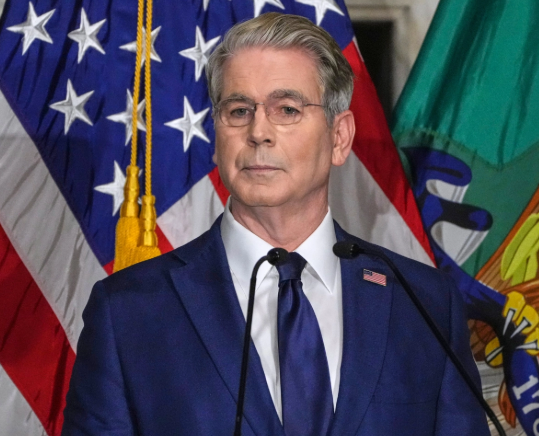
U.S. Treasury Secretary Scott Bessent told CNBC on Thursday, August 20, 2026, that the Treasury had doubled the size of its long-term debt buyback operations, moving from roughly $2 billion to at least $4 billion per operation. Bessent indicated the figure could climb further, saying “we’re going to increase the size of the buyback,” and noted the accelerated pace could exceed the announced $4 billion threshold per issue.
Buybacks allow the Treasury to repurchase outstanding government bonds directly from the market, which can help support prices and dampen yield volatility during periods of stress. The expanded program came as stocks staged a late-week recovery: the S&P 500 and Russell 2000 both advanced on Friday, August 21, even as Treasuries logged mild losses, according to Bloomberg market data.
Why Bond and Equity Markets Are Diverging
Capital.com senior market analyst Daniela Hathorn described the week’s dynamic as markets “ending the week on a softer tone after the relative calm of early August was disrupted by renewed pressure in global bond markets, another rise in oil prices, and growing uncertainty around the Federal Reserve’s next move.” She noted that higher long-term borrowing costs are increasingly challenging elevated equity valuations, even as U.S. equities pull back modestly from record highs.
This divergence — equities near record levels while bonds sell off is unusual and reflects two different sets of investor concerns. Equity investors have remained focused on corporate earnings strength, particularly from large technology companies ahead of Nvidia’s closely watched August 26 earnings report. Bond investors, by contrast, are more directly exposed to concerns about the scale of federal borrowing, highlighted this week by the national debt crossing the $40 trillion threshold for the first time.
The Fed and Treasury “Working in Opposite Directions”
Wilmington Trust senior bond portfolio manager Wil Stith told Yahoo Finance that current conditions reflect “the Fed and the Treasury basically working in sort of opposite directions,” adding that the imbalance will likely require the Federal Reserve which he described as having “the larger sandbox” to adjust the federal funds rate rather than relying on Treasury market interventions alone to manage yields.
Notably, the bond market’s reaction to the Treasury’s buyback expansion was relatively muted; strategists described the move as being largely absorbed without a major rally, suggesting the underlying pressure on yields stems from factors, such as inflation persistence and debt sustainability concerns, that a buyback program alone cannot resolve.
What Comes Next
Markets are now looking to two major events in the days ahead: Nvidia’s earnings report on Wednesday, August 26, and the Federal Reserve’s Jackson Hole Economic Symposium, running August 27-29. This will be the first Jackson Hole gathering under new Fed Chair Kevin Warsh, whose public communication style and policy signals remain less established than his predecessors’, according to market commentary from Regards of Wall Street.
For investors, the key metrics to watch are the size and frequency of future Treasury buyback operations, movements in the 10-year Treasury yield, and any policy signals from Warsh’s keynote address. Continued yield volatility alongside record equity valuations would suggest the market imbalance identified this week has not yet been resolved.
The global banking system is undergoing a comprehensive modernization of cross-border payment infrastructure. Driven by real-time settlement networks, open banking APIs, and interoperable messaging standards, financial institutions and multinational corporations are eliminating multi-day delays and reducing transaction costs associated with legacy international wire transfers.
Transition to Real-Time Gross Settlement Networks
Historically, international business-to-business (B2B) payments relied on complex correspondent banking relationships involving intermediary fees and processing delays. In 2026, the widespread adoption of ISO 20022 messaging protocols alongside interconnected Real-Time Gross Settlement (RTGS) systems allows direct, end-to-end processing of cross-border transfers.
Commercial banks are providing corporate clients with continuous, 24/7 payment clearing capabilities. Real-time transaction confirmation and automated FX rate locking allow international businesses to settle cross-border trade obligations within minutes, significantly reducing counterparty risk.
Central Bank Digital Currency (CBDC) Interoperability
Wholesale Central Bank Digital Currency (CBDC) pilot initiatives are reaching operational maturity across several key financial centers. Collaborative multi-CBDC platforms enable participating central banks and commercial institutions to settle foreign exchange and international trade transactions directly on shared distributed ledgers.
These wholesale digital currency networks eliminate traditional clearinghouse delays and minimize foreign exchange slippage. Enterprise treasury departments benefit from enhanced liquidity management, as cross-border cash balances can be deployed and repatriated instantaneously.
Corporate Treasury Transformation
For enterprise treasurers, instant cross-border settlement transforms cash management strategies:
– Working Capital Optimization: Reduced transaction float allows companies to lower precautionary cash reserves and optimize short-term liquidity investments.
– Automated Reconciliation: Enriched data formats embedded in ISO 20022 payment messages streamline automated general ledger posting and invoice matching.
– Reduced Processing Overhead: Account-to-account (A2A) real-time clearing bypasses costly intermediary correspondent banking fees.
Strategic Financial Priorities
1. Upgrade Treasury Systems: Ensure internal core enterprise software supports real-time ISO 20022 payment messaging standards.
2. Leverage Instant Clearing Rails: Utilize direct payment networks to lower cross-border transaction fees and eliminate settlement delays.
3. Evaluate Multi-Currency Liquidity: Modernize liquidity management frameworks to capitalize on 24/7 real-time settlement capabilities.
The global private credit market has solidified its role as a fundamental pillar of enterprise finance, expanding rapidly across middle-market lending, asset-backed finance, and infrastructure financing. As non-bank financial institutions capture a larger share of corporate debt origination, global regulatory bodies are increasing oversight to evaluate market transparency and systemic risk interconnections.
Growth Drivers in Direct Lending
Direct lending platforms have continued to attract substantial institutional allocations from pension funds, sovereign wealth entities, and insurance companies seeking attractive risk-adjusted yields. Private debt funds offer corporate borrowers customized financing structures, faster execution timelines, and confidentiality compared to syndicated loan markets.
In 2026, private credit managers are increasingly financing larger corporate transactions, providing multi-billion-dollar credit facilities for buyout deals and corporate restructurings. The flexibility of private debt contracts—featuring unitranche pricing and tailored covenant packages—has made direct lending the preferred capital source for middle-market enterprise sponsors.
Regulatory Scrutiny and Systemic Risk Assessment
The rapid growth of non-bank intermediation has drawn heightened scrutiny from financial regulators in North America and Europe. Because private debt agreements are negotiated privately without public exchange disclosures, central banks are evaluating potential vulnerabilities related to asset valuation consistency and fund liquidity profiles.
Regulatory agencies are introducing guidelines aimed at improving reporting standards for private investment vehicles managing institutional assets. Key focus areas include monitoring leverage ratios within private credit funds and evaluating indirect credit exposures between commercial banking institutions and private debt funds.
Navigating Elevated Refinancing Costs
With benchmark interest rates remaining elevated, private debt borrowers face higher debt service obligations on floating-rate credit facilities. Financial advisory firms report an increase in proactive liability management strategies, including payment-in-kind (PIK) interest options, equity infusions from sponsors, and covenant modifications.
Private credit managers with deep operational capabilities are actively working alongside portfolio companies to optimize working capital and maintain cash flow coverage ratios during periods of higher borrowing costs.
Key Financial Takeaways
1. Mainstream Asset Class: Private credit has expanded beyond niche alternative asset status into a core corporate finance solution.
2. Enhanced Transparency Standards: Regulatory frameworks are evolving toward greater disclosure requirements for private debt managers.
3. Proactive Risk Management: Lenders and sponsors must prioritize debt sustainability and active portfolio monitoring amid high benchmark rates.








 Stock News1 week ago

