
Accounting
Trump pick for SEC chair faces conflict-of-interest scrutiny

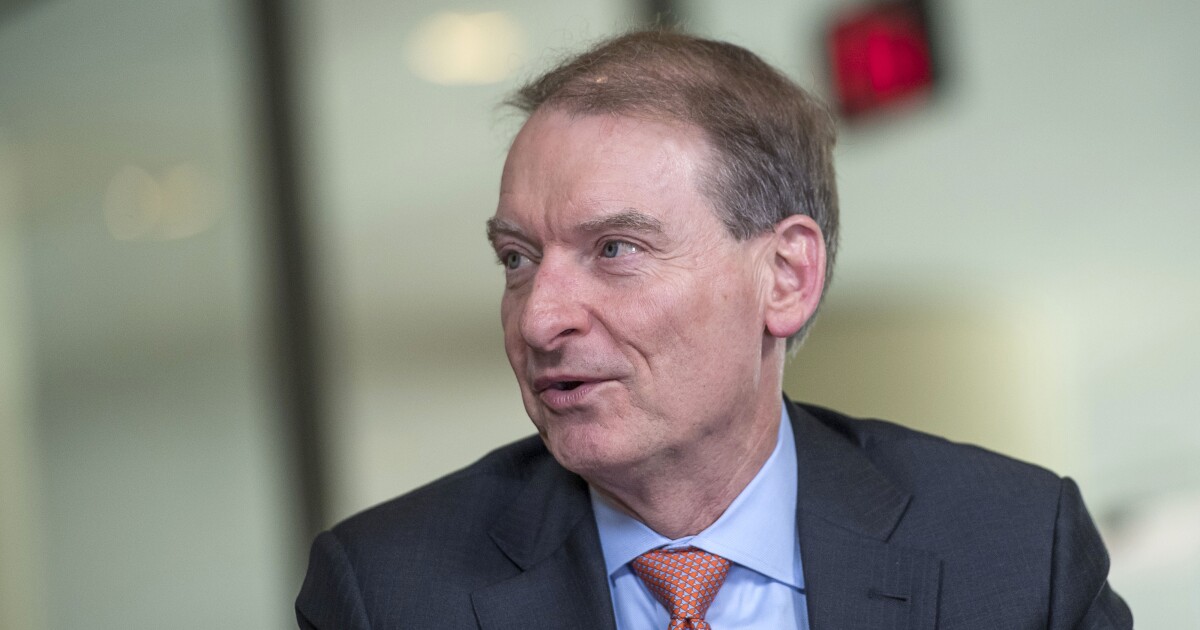

Paul Atkins, President Donald Trump’s pick to lead the Securities and Exchange Commission, faced an early political test over his strong ties to Wall Street and digital-asset firms.
At his nomination hearing Thursday, the former Republican SEC commissioner and founder of consulting firm Patomak Global Partners met with stiff opposition from Democratic lawmakers over his potential conflicts of interest and support of deregulation.
Senator Elizabeth Warren, speaking just before his Banking Committee hearing, said she’s concerned that Atkins is “thinking about his past and future clients” rather than American families. That criticism is unlikely to get in the way of his approval by the GOP-controlled Senate.
Supporters of Atkins see him as an ideal choice to roll back Biden-era policies, bolster capital formation and provide clarity to the crypto industry.
In a letter sent Thursday to Warren, Atkins said he had “met or exceeded” the same ethics standard applied to prior SEC nominees, and was divesting from more than 150 financial holdings.
Priorities reset
Atkins told lawmakers he plans to work on “clear rules of the road” for Wall Street and digital-asset firms.
“Unclear, overly politicized, complicated and burdensome regulations are stifling capital formation, while American investors are flooded with disclosures that do the opposite of helping them understand the true risks of an investment,” Atkins said. “It is time to reset priorities and return common sense to the SEC.”
Atkins, 66, would be the wealthiest SEC chair in recent decades. He and his wife, Sarah, an heir to a roofing-products firm, have a net worth of at least $327 million, according to Office of Government Ethics filings.
His stake in Patomak is worth at least $25 million, based on documents made public on Tuesday. Atkins said he will resign as chief executive and divest from the firm and other holdings within 90 days of confirmation.
Client list
The firm’s long list of clients has raised questions about Atkins’s ability to navigate any conflicts of interest. His filings show compensation from Bank of America Corp., Barclays Plc, Exxon Mobil Corp., global investment firm Temasek Holdings Pte. and trading firm Virtu Financial Inc., among others.
Warren, the top Democrat on the Banking Committee, has pressed him for details on who will purchase his stake in his firm. Divestitures aren’t enough “unless he agrees to disclose to Congress who the buyer will be and whether they are paying for access to the SEC chair,” Warren said in an emailed statement before the hearing.
Warren also has
Scaling back
Atkins is expected to scale back regulation and enforcement, a path the SEC is already taking under the Trump administration.
Last month, the SEC asked a federal court to delay arguments in its legal defense of climate disclosure rules. And on Monday, the agency’s acting enforcement director said penalties will generally
Atkins is listed as a contributor to the Heritage Foundation’s Project 2025, which calls for a rollback of SEC regulations and eliminating the Public Company Accounting Oversight Board, the audit regulator established after the Enron accounting scandal. Atkins deflected questions on whether the board should be scrapped, saying it was up to Congress.
Senator Angela Alsobrooks, a Maryland Democrat, pushed Atkins to pledge that he won’t allow politics to interfere with the SEC’s work. She referenced reports about SEC Commissioner
Atkins told the panel he didn’t anticipate there would be any attempts to politically influence the agency while he is chairman.
Crypto prospects
For the crypto community, Atkins’s nomination is viewed as critical for the development of a light-touch framework that sharply contrasts with former SEC Chair Gary Gensler’s aggressive approach. Gensler pursued firms for failure to register as exchanges and disclose information about their tokens.
Wall Street firms often criticized Gensler’s fast-paced rulemaking agenda and tight timelines — sometimes as few as 30 days — to respond to agency proposals. They also complained about the time and money spent complying with regulations, including new disclosures in their corporate financial statements.
“It’ll be more of an emphasis on capital formation and investment choice as opposed to more of an emphasis on investor prohibition or greater regulatory obligations,” said Nick Morgan, president of the Investors Choice Advocates Network and former SEC attorney. “That’s a very good thing.”
Luke Pettit, the Trump pick to serve as assistant secretary of the Treasury, as well as Jonathan Gould, the nominee to lead the Treasury’s Office of the Comptroller of the Currency, also testified before the panel.





Jackson Hole 2026: What the First Symposium Under Fed Chair Kevin Warsh Means for Markets

U.S. National Debt Surpasses $40 Trillion for the First Time: What It Means for the Economy

How to understand Intel $15B Stock Offering

Armanino adds Strategic Accounting Outsourced Solutions

New 2023 K-1 instructions stir the CAMT pot for partnerships and corporations

Tax Strategy: Employee Retention Credit update
-

 Economics1 week ago
U.S. Retail Sales Fall for the First Time in Nine Months as Consumer Spending Slows
-
 Accounting1 week ago
AI-Driven Automation and Continuous Accounting Frameworks
-

 Finance1 week ago
Cross-Border Settlement Innovation and Real-Time Payment Architecture
-

 Economics1 week ago
Macroeconomic Impact of Global Energy Shocks and Shipping Route Realignment in 2026
-

 Economics6 days ago
Nvidia’s Potential $3 Billion SB Energy Investment Could Reshape AI Infrastructure
-

 Personal Finance1 week ago
Navigating Residential Real Estate and Mortgage Strategy
-

 Economics2 days ago
Top 10 Largest Economies by 2030: IMF & World Bank GDP Projections for Global Powerhouses
-

 Leaders1 week ago
Modern Executive Leadership: Navigating Hybrid Work Dynamics and Outcome-Based Governance