
Personal Finance
Trump pick to lead Social Security faces questions on DOGE involvement

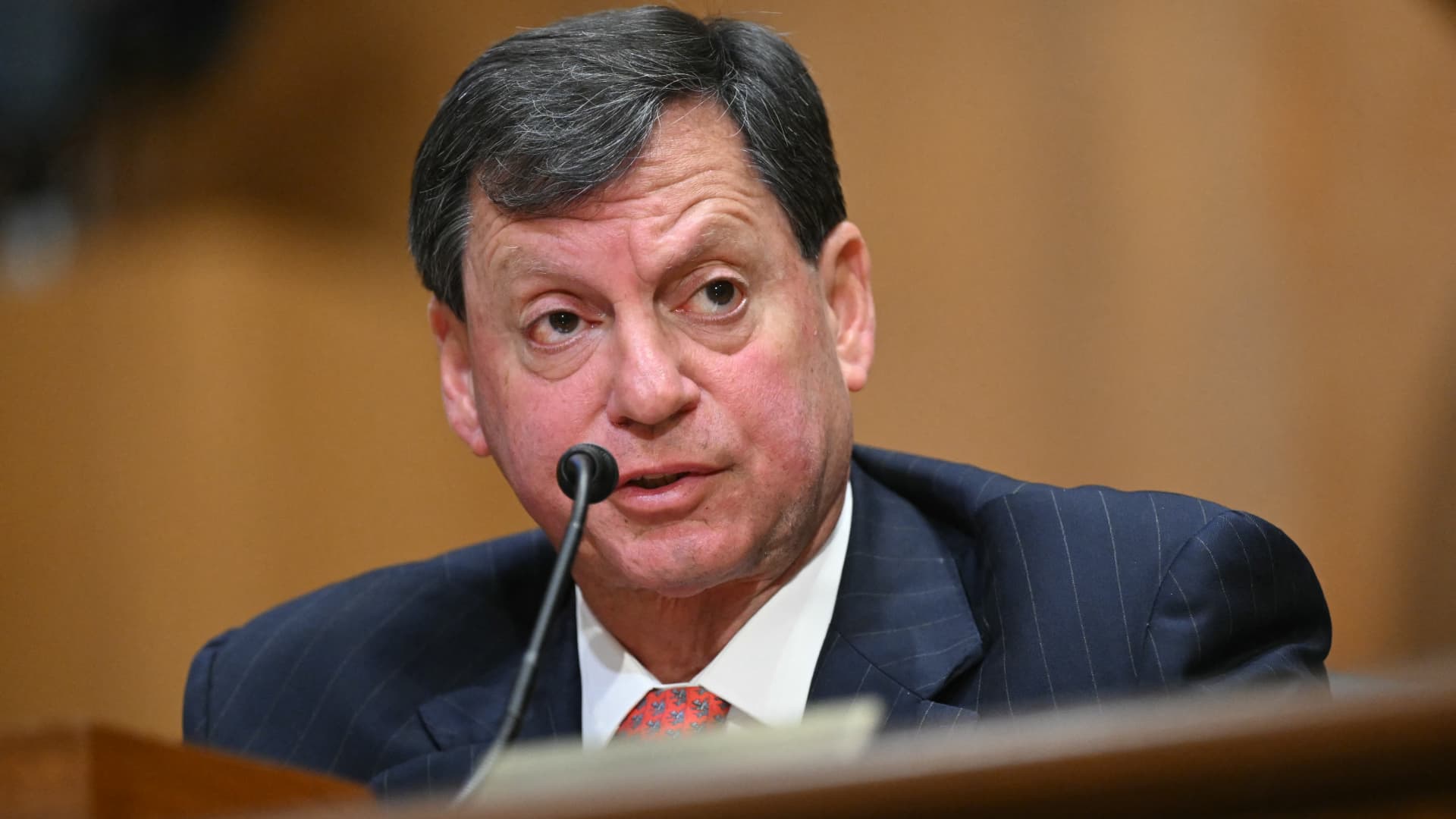
Frank Bisignano testifies before the Senate Finance Committee on his nomination to be Commissioner of the Social Security Administration, on Capitol Hill in Washington, DC, March 25, 2025.
Saul Loeb | AFP | Getty Images
President Donald Trump’s nominee to lead the Social Security Administration, Frank Bisignano, faced senators’ questions on Tuesday as to how involved he has been with recent changes at the agency under the Department of Government Efficiency.
The unofficial government entity known as DOGE has been tasked by the White House to root out waste, fraud and abuse in the federal government, including at the Social Security Administration, which provides benefit payments to millions of Americans each month.
More from Personal Finance:
Judge slams Social Security chief for agency shutdown ‘threats’
Tax season is prime time for scams. How to protect yourself
Trump signs executive order aimed at shutting down Dept. of Education
Following changes put in place by DOGE, including staff cuts and plans to close field offices, the Social Security Administration’s phone lines often go unanswered, the website is crashing and “seniors are getting lost in the system,” said Sen. Ron Wyden, D-Oregon, ranking member of the Senate Finance Committee.
The hearing, Wyden said, provides Bisignano, who is CEO of financial payments technology company Fiserv, to “tell the American people whose side he is on” — either the side of American workers or DOGE “bureaucracy.”
Whistleblower says nominee will be ‘bad for the agency’
At the hearing, Wyden introduced a statement from an unidentified “very high level official” at the Social Security Administration who said Bisignano insisted on approving several key DOGE hires at the agency and getting frequent briefings.
“This whistleblower has said that this is a nominee who will be bad for the agency, and has cited specifics,” said Wyden, who represented the unnamed person as “somebody who’s told the truth” in their career.
In response, Bisignano said he has never talked with Lee Dudek, who is currently the acting commissioner of the Social Security Administration. Bisignano said he knows Michael Russo, who is currently chief information officer at the Social Security Administration, through previous roles.
“I don’t know him as a DOGE person; I know him as a CIO,” Bisignano said.

When pressed by Wyden to confirm he would “lock DOGE out” of Social Security databases, Bisignano said he did not know what the term “lock DOGE out” specifically means.
“I’m going to do whatever is required to protect the information that is private information,” Bisignano said.
On March 20, federal judge Ellen Lipton Hollander issued a temporary restraining order that barred DOGE from accessing personally identifiable information at the Social Security Administration. She also told DOGE affiliates to delete any such info currently in their possession.
That includes Social Security numbers, medical provider information, medical and mental health treatment records, employer and employee payment records, employee earnings, addresses, bank records and tax information.
In a February CNBC interview, Bisignano said he “100%” plans to work with DOGE to identify potential waste, fraud and abuse at the agency.
“I am fundamentally a DOGE person,” Bisignano said during his CNBC appearance.
When asked to clarify that comment at the Tuesday Senate hearing, Bisignano said he has prioritized efficiency before there was such a word as DOGE.
Bisignano also said he would not knowingly allow personally identifiable information to be viewed by unauthorized personnel.
Whistleblower worries agency actions will ‘harm seniors’
In the written statement, the undisclosed whistleblower, who identifies as a “senior Social Security Administration employee who recently left the agency,” said they are concerned that recent actions at the agency will negatively impact millions of Americans.
Bisignano frequently spoke with senior SSA executives and was personally briefed on “key SSA operations, personnel and management decisions,” the whistleblower alleges.
As an unconfirmed nominee, Bisignano requested that senior agency executives not hire anyone without his approval, the whistleblower alleges.
Bisignano personally appointed Russo and has spoken to him frequently about the agency’s operations, the whistleblower alleges in their statement. He also was directly involved in the onboarding of attorney Mark Steffenson, Scott Coulter and DOGE engineer Akash Bobba, the whistleblower writes.
Bisignano was also aware of concerns regarding broad data access for DOGE employees that had been requested and that it did not follow privacy laws, disclosure policies and internal agency controls, the whistleblower states.
The whistleblower included a list of 19 individuals, including Dudek, Russo and former acting commissioner Michelle King, who they said can verify their statements.
“Frank Bisignano is not in the [Social Security] agency and is not involved in any decision making at the agency,” Arjun Mody, a Trump transition official, said via email.
The Social Security Administration did not immediately respond to CNBC’s request for comment.
This is a developing story. Please check back for updates.

Personal Finance
Next-Generation Retirement Planning: Managing Longevity Risk and Variable Income Streams


U.S.- Canada Trade Talks Collapse; Carney Says Retaliatory Tariffs Begin September 8

Flock Cameras and the Future of Public Security

AI Infrastructure Boom Hits Physical Limits: Power, Financing, and Supply Chain Strain

Armanino adds Strategic Accounting Outsourced Solutions

New 2023 K-1 instructions stir the CAMT pot for partnerships and corporations

Tax Strategy: Employee Retention Credit update
-

 Stock News1 week ago
Nvidia Q2 FY2027 Earnings beats Wall Street Expectation with Record $96.2 Billion Revenue
-
 Technology5 days ago
AI Infrastructure Boom Hits Physical Limits: Power, Financing, and Supply Chain Strain
-
 Technology3 days ago
Flock Cameras and the Future of Public Security
-
 Economics3 days ago
U.S.- Canada Trade Talks Collapse; Carney Says Retaliatory Tariffs Begin September 8