
Accounting
Trump sets 25% steel, aluminum tariffs, widening trade war

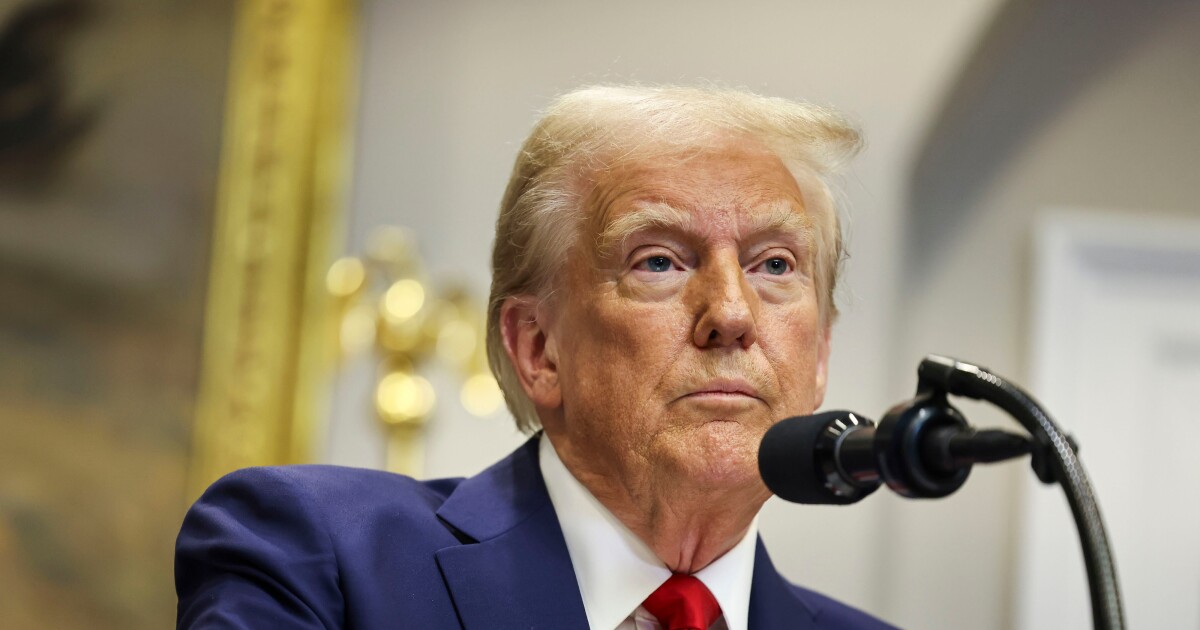

President Donald Trump ordered a 25% tariff on steel and aluminum imports, escalating his efforts to protect politically important U.S. industries with levies hitting some of the country’s closest allies.
The tariffs will apply widely to all U.S. imports of steel and aluminum, including from Canada and Mexico, among the country’s top foreign suppliers of the metals. The levies, which also include finished metal products, are meant to crack down on what administration officials said were efforts by countries like Russia and China to circumvent existing duties.
Trump cast the effort as one that would help bolster domestic production and bring more jobs to the U.S., and warned that the rate on metal tariffs “may go higher.” The new rates will take effect on March 12, at 12:01 am Washington time, according to a pair of
“It’s going to mean a lot of businesses are going to be opening in the United States,” Trump said Monday as he signed the measures in the Oval Office.
The announcement of Trump’s metals tariffs comes about a week after he added a
U.S. administration officials counter, however, that the levies are part of a broader economic strategy — including extended tax cuts and expanded domestic energy production — that will help lower costs overall.
Retaliation, costs
Goldman Sachs Group Inc. said Trump’s plan to impose 25% tariffs on steel and aluminum imports will largely be passed through to U.S. prices, if no major trading partners are exempted.
Trump’s tariffs will also provoke trading partners including the European Union to retaliate against American exports.
In response to Trump’s steel and aluminum tariffs, European Commission President Ursula von der Leyen said Tuesday in a statement that “unjustified tariffs on the EU will not go unanswered — they will trigger firm and proportionate countermeasures.”
In a speech, German Chancellor Olaf Scholz said if the U.S. “leaves us no other choice, then the European Union will react to this as one. As the largest market in the world with 450 million citizens, we have the strength to do so.”
The EU should be able to retaliate quickly if the U.S. follows through on its threat. The bloc suspended tariffs on about $3 billion of American products in 2021 after it reached a deal with the Biden administration on steel and aluminium imports. It could quickly reinstitute those duties, which targeted iconic products including Harley-Davidson Inc. motorcycles and Levi Strauss & Co. jeans. could not be loaded, either because the server or network failed or because the format is not supported.
While the measures unveiled Monday didn’t include exemptions for trading partners — and U.S. officials said they were wary of granting any leeway — Trump indicated that he may consider a
After-hours movement was muted in shares of the major American steel and aluminum producers. Alcoa Corp., the largest American aluminum producer, gained about 1%, while Nucor Corp., the largest U.S. steelmaker, rose 0.5%. U.S. equity futures were down 0.2% during mid-day trade in Asia on Tuesday.
The U.S. president also reiterated his threat to levy reciprocal tariffs against countries that have levies on U.S. imports, saying those could be announced over the next two days. And he said the administration will be looking at levies on cars and semiconductors, as well as other potential sectors. not supported.
Trump authorized the new tariffs under Section 232 of the Trade Expansion Act, which gives the president broad authority to impose trade restrictions on domestic security grounds. It’s the same power that Trump used to levy steel and aluminum tariffs in 2018, during his first term. With his proclamations Monday, he is effectively reviving and expanding those tariffs.
The U.S. saw a bump in manufacturing employment fueled by Trump’s tax cuts early in his last administration. But things started to change after he introduced the steel and aluminum tariffs in March 2018 and also launched a trade war against China.
In 2019, the first full year after Trump’s initial steel and aluminum tariffs went into effect, the U.S. actually
A senior administration official said the new action was necessary because steel and aluminum exporters abused exceptions under the previous policy, which hurt U.S. producers. The official detailed the moves on a call with reporters earlier Monday on condition of anonymity.
Trump’s decision to include downstream finished products is a significant move that will have broad-reaching price impacts on a massive swath of U.S. consumers.
Whereas Trump’s 2018 tariffs focused mostly on raw steelmaking and primary aluminum production, these new tariffs will include things like extrusions and slabs that are turned into value-added products needed in everything from automobiles to window frames and skyscrapers. The move would fulfill what the most extreme trade protectionists have sought for years.
In Washington, the National Association of Home Builders said that tariffs will likely hinder Trump’s goal to reduce housing costs and boost supply.
“His move to impose 25% tariffs on all steel and aluminum products imports into the U.S. runs totally counter to this goal by raising home building costs, deterring new development and frustrating efforts to rebuild in the wake of natural disasters,” NAHB Chairman Carl Harris said in an emailed statement.
Border checks
Trump will also direct U.S. Customs and Border Protection to step up oversight to prevent foreign countries from misclassifying steel products to evade tariffs, the officials said.
The effort reprises a strategy Trump adopted during his first term, when he imposed tariffs of 25% on steel and 10% on aluminum that prompted a decline in U.S. imports of the metals.
Trump ended up granting duty-free status to several major exporters, including Canada, Mexico and Brazil. Former President Joe Biden expanded those exemptions.
It’s unclear how countries might respond to Trump’s latest decision on metals. New retaliatory Chinese levies over the 10% tariff on goods took effect on Monday. Last week Trump
“Steel and aluminum tariffs on Canada, the United States’ closest ally, would be totally unjustified,” François-Philippe Champagne, Canada’s minister of Innovation, Science and Industry, said in a statement Monday night. “Canadian steel and aluminum support key industries in the U.S. from defense, shipbuilding, energy to automotive.”
The U.S. is heavily reliant on aluminum imports to meet domestic demand, with many of those supplies coming from Canada, the United Arab Emirates and China. Net imports of aluminum reached more than 80% in 2023, according to Morgan Stanley.
Although foreign steel represents a smaller portion of overall consumption, the aerospace, auto manufacturing and energy sectors rely on imported specialty grades.
Opponents overseas say the widespread tariffs violate global trading rules and are an affront to U.S. allies abroad.
The move comes before a visit from Indian Prime Minister Narendra Modi this week. India is a supplier of steel to the U.S. and the Indian Steel Association, a lobbying group, has urged the government to take diplomatic action to secure exemptions from US trade restrictions.
Trump made reviving U.S. steelmaking a signature aim of his agenda; it also was a potent political promise in Rust Belt states such as Ohio and Pennsylvania that have seen an erosion of industrial manufacturing jobs. While the United Steelworkers union, which is influential in such states, endorsed his general-election rival — former Vice President Kamala Harris — many local chapters backed Trump.
On Friday, Trump declared he would continue blocking a bid by Japan’s Nippon Steel Corp. to take over United States Steel Corp. — a deal that is also opposed by the steelworkers union. Instead, the president said after a meeting with Japanese Prime Minister Shigeru Ishiba that Nippon Steel might make a significant investment in the U.S. steelmaker, allowing it to





Jackson Hole 2026: What the First Symposium Under Fed Chair Kevin Warsh Means for Markets

U.S. National Debt Surpasses $40 Trillion for the First Time: What It Means for the Economy

How to understand Intel $15B Stock Offering

Armanino adds Strategic Accounting Outsourced Solutions

New 2023 K-1 instructions stir the CAMT pot for partnerships and corporations

Tax Strategy: Employee Retention Credit update
-

 Economics1 week ago
U.S. Retail Sales Fall for the First Time in Nine Months as Consumer Spending Slows
-

 Accounting1 week ago
AI-Driven Automation and Continuous Accounting Frameworks
-

 Finance1 week ago
Cross-Border Settlement Innovation and Real-Time Payment Architecture
-

 Economics1 week ago
Macroeconomic Impact of Global Energy Shocks and Shipping Route Realignment in 2026
-

 Economics6 days ago
Nvidia’s Potential $3 Billion SB Energy Investment Could Reshape AI Infrastructure
-

 Personal Finance1 week ago
Navigating Residential Real Estate and Mortgage Strategy
-

 Economics1 day ago
Top 10 Largest Economies by 2030: IMF & World Bank GDP Projections for Global Powerhouses
-

 Leaders1 week ago
Modern Executive Leadership: Navigating Hybrid Work Dynamics and Outcome-Based Governance