
Personal Finance
Trump wants to provide caregivers with a tax credit. What experts say


JGI/Tom Grill | Tetra images | Getty Images
At a recent campaign rally, President-elect Donald Trump promised new financial help for family caregivers.
“I will support a tax credit for family caregivers who take care of a parent or a loved one,” Trump said during an October speech at New York’s Madison Square Garden.
“It’s about time that they were recognized, right?” he said. “They add so much to our country and are never spoken of ever, ever, ever, but they’re going to be spoken of now.”
Trump has not elaborated on the details of that tax credit and his team did not respond to requests for comment. He has also promised other tax breaks aimed at helping Americans, including eliminating taxes on Social Security benefits, tips and overtime and a deduction for auto loan interest payments.
“It definitely adds up to big net tax cut,” Garrett Watson, senior policy analyst at the Tax Foundation, said of the president-elect’s tax proposals.
Family caregiving having a ‘political moment’
Family caregiving had a “bit of a political moment” this election cycle, with both presidential candidates addressing the topic, Nancy LeaMond, chief advocacy and engagement officer at AARP, said during a Monday webinar hosted by the organization, which represents people ages 50 and up.
About 48 million Americans help taking care of aging parents, spouses or other loved ones, according to AARP. And about 78% of those caretakers have paid for care-related expenses out of their own pockets. On average, that adds up to about $7,200 per year.
“This adds to the economic strain they feel and anxiety about their long-term financial security,” LeaMond said. “They’re cutting back on personal spending, dipping into their savings and reducing what they’re saving for their own retirement.”
A record number of Americans are expected to turn 65 in the coming years. However, the share of potential caregivers is projected to shrink versus the number of older adults who may need long-term care, according to AARP.
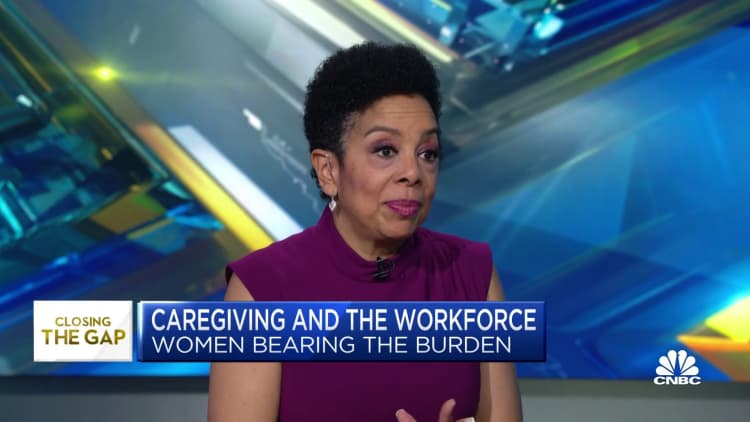
No one policy will be a ‘silver bullet,’ expert says
To enact a caregiver tax credit, Trump will need Congress’ support.
A bipartisan bill — the Credit for Caring Act — proposes a credit of up to $5,000 per tax year to help caregivers cover long-term care costs. Under the terms of the proposal, the credit would cover 30% of expenses exceeding $2,000. To be eligible, caregivers would need to have more than $7,500 in income and be paying for long-term care for a spouse or other dependent.
“We will urge new leadership in Congress and the White House to take it up and pass it,” LeaMond said.
Some states have already taken up the issue, she said. Oklahoma and Nebraska recently passed their own caregiver tax credits, while Maryland has created a caregiver expense grant program.
An October AARP survey found roughly 90% of Americans ages 50 and over support a federal tax credit for eligible family caregivers. Earlier this year, a national poll from Bipartisan Policy Center Action found 82% of registered voters support caregiver tax credits.
More from Personal Finance:
What Trump’s presidency could mean for the housing market
Trump’s win may put popular student loan forgiveness program at risk
What the Fed’s latest interest rate cut means for your money
The federal caregiving tax credit proposal provides a “key opportunity” to include family caregivers in upcoming federal tax policy discussions, said Jason Resendez, president and CEO at the National Alliance for Caregiving.
However, no one policy is going to be a “silver bullet” to alleviate the burden of caregiving, he said.
“We can’t lose sight of the bigger and larger-scale investments that we need,” Resendez said, including stronger home and community-based supports, paid family and medical leave and additional long-term services and supports.
To be sure, as lawmakers consider tax policy proposals, they may adjust the parameters to limit how much Trump’s proposed tax breaks may cost, Watson said.
“Step one is to figure out amongst Congress what their tolerance is for any debt increase,” Watson said.


Personal Finance
Next-Generation Retirement Planning: Managing Longevity Risk and Variable Income Streams


U.S.- Canada Trade Talks Collapse; Carney Says Retaliatory Tariffs Begin September 8

Flock Cameras and the Future of Public Security

AI Infrastructure Boom Hits Physical Limits: Power, Financing, and Supply Chain Strain

Armanino adds Strategic Accounting Outsourced Solutions

New 2023 K-1 instructions stir the CAMT pot for partnerships and corporations

Tax Strategy: Employee Retention Credit update
-

 Stock News1 week ago
Nvidia Q2 FY2027 Earnings beats Wall Street Expectation with Record $96.2 Billion Revenue
-
 Technology6 days ago
AI Infrastructure Boom Hits Physical Limits: Power, Financing, and Supply Chain Strain
-
 Technology4 days ago
Flock Cameras and the Future of Public Security
-
 Economics4 days ago
U.S.- Canada Trade Talks Collapse; Carney Says Retaliatory Tariffs Begin September 8