
Personal Finance
Trump’s ‘big beautiful bill’ sets student loan caps for medical school

Drazen Zigic | Istock | Getty Images
A measure in President Donald Trump‘s “big beautiful bill” that caps federal student loans could make it harder for medical students to finance their education or force them to abandon their medical school plans, experts say.
Starting next year, the legislation caps the amount of federal loans students can borrow for graduate school at $100,000 over a lifetime — and sets a lifetime loan limit of $200,000 for professional programs, such as medical, dental or law school. Grad PLUS loans will also be eliminated entirely. Those changes go into effect for new borrowers on July 1, 2026.
Some experts say the new loan limits will provide a much-needed check on soaring tuition costs, which have jumped significantly in recent decades, outpacing inflation and other household expenses. Higher costs have made college and graduate school seem out of reach for some while saddling others with crippling student loan debt.
More from Personal Finance:
These college majors have the best job prospects
Families feel confident about paying for college, until tuition bills arrive
Student loan borrowers — how will the end of the SAVE plan impact you? Tell us
Families, too, support having additional guardrails. Roughly two-thirds, or 67%, of parents said there should be limits on how much federal student loan debt students can take on, according to Sallie Mae’s annual How America Pays for College report.
However, for aspiring doctors, the limits may mean drastic changes. The average cost of medical school already exceeds $200,000. At private institutions, the average cost is more than $300,000, according to 2024 data from the Association of American Medical Colleges.
“This is now a generation that has a big-time punch in the face,” said Bobby Mukkamala, president of the American Medical Association.
‘Crazy, crazy debt’ for a medical degree
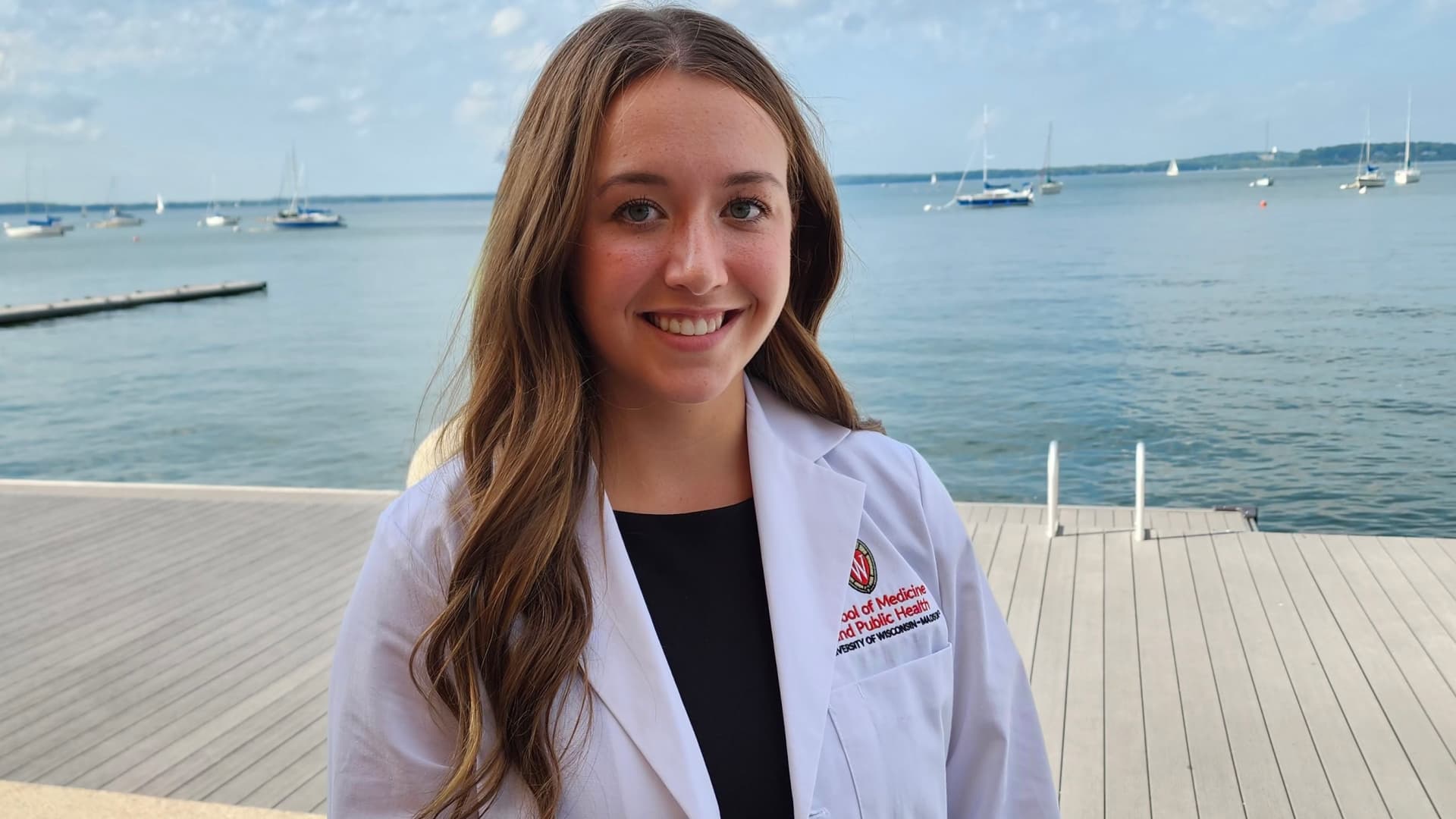
Kylie Ruprecht, 24, is a third-year medical student at the University of Wisconsin.
Courtesy: Kylie Ruprecht
“People view medical students as future rich people and that’s not the case at all,” said Kylie Ruprecht, a third-year student at the University of Wisconsin School of Medicine.
“You go into crazy, crazy debt to go into medicine,” said Ruprecht, 24, “and then repay those loans over decades.”
Ruprecht relies on a combination of unsubsidized student loans and Grad PLUS loans to cover her costs. Once she graduates, she will begin a four-year residency to become an anesthesiologist. It will be years before she is on solid financial footing, she said.
Ruprecht declined to say how much she will owe, in total, when she graduates. Although Ruprecht is grandfathered into the old borrowing limits, her current debt load, with Grad Plus loans, would surpass the new loan caps, she said.
In fact, about 27.5% of medical school students and 60% of those in dentistry programs graduated with more debt in 2020 than is allowed under the new loan limits, according to calculations by higher education expert Mark Kantrowitz.
“Medical school is the ‘hair on fire’ situation because the numbers are big, period, and the gaps between the federal loan limits and the program costs are sizeable,” said Ken Ruggiero, co-founder and CEO of private education lender Ascent Funding.
Nearly every year, students and their families are borrowing more to make up the difference. Now, around 44 million Americans owe a combined $1.7 trillion for their education. Roughly 40% of that outstanding federal student loan debt is taken on for master’s and PhD programs.
A growing shortage of doctors
The new legislation “doesn’t affect everyone equally,” Mukkamala said — it’s students from underserved communities who will be less likely to go into the medical field as the new loan limits fall short of the total cost of attendance, which is over $200,000. “If someone like that gets through college and looks at that number, they are going to say, ‘no way,'” he said.
According to 2024 projections by the Association of American Medical Colleges, the U.S. was already on track to have a shortage of up to 86,000 physicians by 2036.
“The new annual and aggregate loan limits could create challenges for some medical students to finance their education, resulting in an additional financial barrier to attending medical school and ultimately worsening the current and projected physician shortage,” said Kristen Earle, program leader for student financial aid services at the Association of American Medical Colleges.
“We are concerned that this added barrier could deter qualified candidates, particularly low-income students, from pursuing a medical career altogether,” Earle said.
‘An opportunity for private lenders’
It’s likely the new limits on federal student loans will spur borrowers to find other lenders to bridge the gap, Earle said. “The changing landscape does present an opportunity for private lenders.”
Private student loans often come into play once students have reached the federal loan limits and still need additional education financing.

“The new loan limits for Parent PLUS loans and graduate/professional school loans will shift some borrowing from federal loans to private student loans,” Kantrowitz also recently told CNBC. “This will particularly impact low-income students, who are less likely to qualify for private student loans.”
Unlike federal loans, private loans are not guaranteed. Private student loan lenders rely on a borrower’s credit score to determine eligibility and interest rate.
“We want to lend to people who can afford to pay us back, that’s how the model works,” said Ascent’s Ruggiero.
Private loans also come with fewer safety nets and less flexible repayment options compared with federal loans.
“The idea behind [the loan limits] is great, but it’s not putting the burden on the universities. It’s putting the burden on students,” said Ruprecht, the aspiring anesthesiologist. “It’s students who will have to scramble.”


Personal Finance
Next-Generation Retirement Planning: Managing Longevity Risk and Variable Income Streams


U.S.- Canada Trade Talks Collapse; Carney Says Retaliatory Tariffs Begin September 8

Flock Cameras and the Future of Public Security

AI Infrastructure Boom Hits Physical Limits: Power, Financing, and Supply Chain Strain

Armanino adds Strategic Accounting Outsourced Solutions

New 2023 K-1 instructions stir the CAMT pot for partnerships and corporations

Tax Strategy: Employee Retention Credit update
-

 Stock News1 week ago
Nvidia Earnings Preview: What Wall Street Expects From the AI Bellwether’s Q2 Report
-

 Accounting1 week ago
SEC’s Semiannual Reporting Proposal Faces Investor Pushback: What CFOs Need to Know
-

 Stock News1 week ago
Nvidia Q2 FY2027 Earnings beats Wall Street Expectation with Record $96.2 Billion Revenue
-

 Finance1 week ago
Treasury Bond Volatility Forces Bessent to Double Debt Buyback Size as Yields Swing
-
 Technology5 days ago
AI Infrastructure Boom Hits Physical Limits: Power, Financing, and Supply Chain Strain
-
 Technology3 days ago
Flock Cameras and the Future of Public Security
-
 Economics3 days ago
U.S.- Canada Trade Talks Collapse; Carney Says Retaliatory Tariffs Begin September 8