
Accounting
Trump’s global tariffs deemed illegal, blocked by trade court

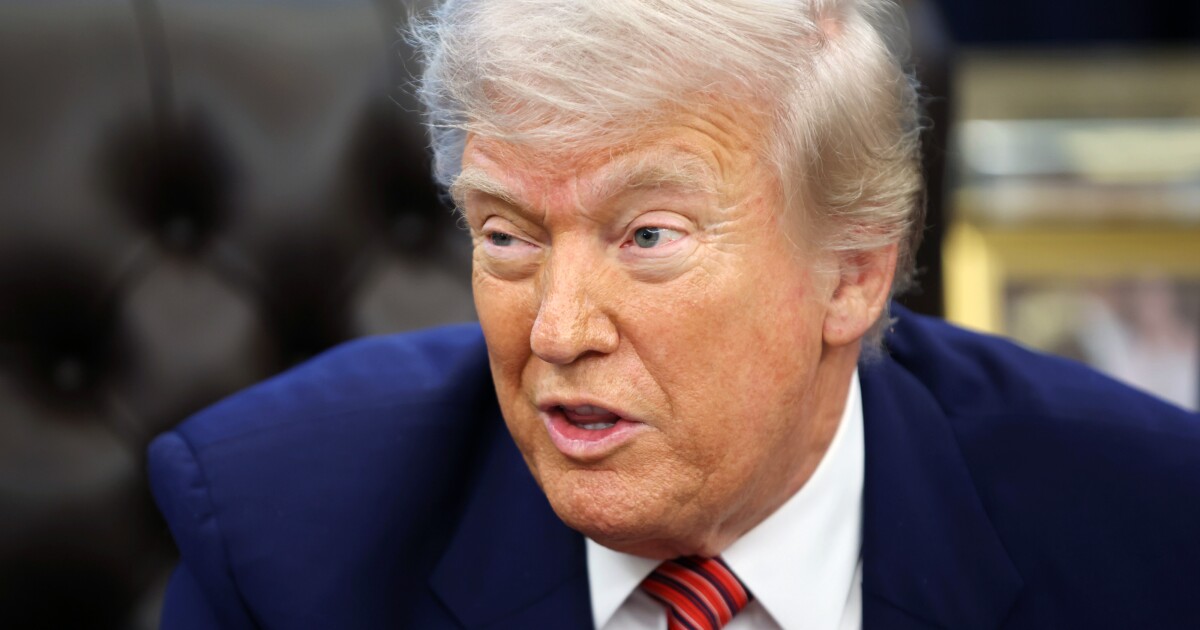

The vast majority of President Donald Trump’s global tariffs were deemed illegal and blocked by the U.S. trade court, dealing a major blow to a pillar of his economic agenda.
A panel of three judges at the U.S. Court of International Trade in Manhattan issued a unanimous ruling Wednesday which sided with Democratic-led states and small businesses that accused Trump of wrongfully invoking an emergency law to justify the bulk of his levies. The court gave the administration 10 days to “effectuate” its order, but didn’t spell out any steps it must take to unwind the tariffs.
The order applies to Trump’s global flat tariff, elevated rates on China and others, and his fentanyl-related tariffs on China, Canada and Mexico. Other tariffs imposed under different powers, like so-called Section 232 and Section 301 levies, are unaffected, and include the tariffs on steel, aluminum and automobiles.
The Justice Department filed a notice of appeal with the U.S. Court of Appeals for the Federal Circuit. The U.S. Supreme Court may ultimately have the final say in the high-stakes case that could impact trillions of dollars in global trade. For now, the ruling permanently blocks the tariffs unless the appeals court allows Trump to reinstate them during litigation.
U.S. stock-index futures jumped on the ruling, with contracts on the Nasdaq 100 Index rising as much as 2.1%. The dollar strengthened and the yen tumbled.
The decision is one of the biggest setbacks in court for Trump amid a wave of lawsuits over executive orders testing the limits of presidential power. Others are challenging Trump’s mass firings of federal workers, restrictions on birthright citizenship and efforts to slash federal spending already approved by Congress.
The judges rejected the government’s argument that Trump had authority to unilaterally issue tariffs under a law intended to address financial transactions during national emergencies. The ruling was a so-called summary judgment, meaning a final victory for the plaintiffs in lower court without the need for a trial.
Trump’s executive orders invoked the International Emergency Economic Powers Act to justify the sweeping global tariffs. The law grants the president authority over a variety of financial transactions during certain emergencies, typically with sanctions.
The president cited the U.S. trade deficits and drug trafficking at the U.S. border as national emergencies that allowed him to invoke the law. The judges said Trump’s lawyers had stated during court hearings that the intention was to “pressure” other nations into striking better deals.
“The government’s ‘pressure’ argument effectively concedes that the direct effect of the country-specific tariffs is simply to burden the countries they target,” wrote the panel, which includes one judge appointed by Trump, one by Barack Obama and one by Ronald Reagan.
Global markets
Global markets have fluctuated wildly since Trump announced the so-called reciprocal levies in a sweeping executive order on April 2. Since then, trillions of dollars in market value have been shed and regained amid weeks of delays, reversals and announcements about potential trade deals, particularly with China.
In response to the latest court ruling, White House spokesman Kush Desai said “it is not for unelected judges to decide how to properly address a national emergency.”
“Foreign countries’ nonreciprocal treatment of the Unites States has fueled America’s historic and persistent trade deficits,” Desai said in a statement. “These deficits have created a national emergency that has decimated American communities, left our workers behind, and weakened our defense industrial base – facts that the court did not dispute.”
Emergency law
Trump has said he was permitted to use the emergency law to implement tariffs because the nation’s “large and persistent” annual trade deficits across the globe constituted “an unusual and extraordinary threat” to national security and the economy.
The panel of judges concluded that Trump’s initial executive order announcing global tariffs and subsequent order dealing additional levies on countries that retaliated both exceeded the president’s authority under the emergency law. A third executive order, hitting Mexico and Canada with tariffs over concerns about drug trafficking, were deemed to be illegal by the court because those levies do not ultimately attempt to address the trafficking problem.
A complaint brought by a conservative legal advocacy group on behalf of small businesses alleged Trump is misusing the law, essentially basing his tariffs on a bogus emergency. The Liberty Justice Center said the U.S. trade deficits are “neither an emergency nor an unusual or extraordinary threat.” Even if it were, the group said, the emergency law doesn’t allow a president to impose across-the-board tariffs.
The Democrat-led states alleged the tariffs amount to a massive tax on American consumers and infringe on the authority of Congress. The states also challenged Trump’s tariffs on Mexico and Canada, which cite the same emergency law based on claims about cartel activity and drug trafficking.
Drug trafficking
The states alleged that the broad nature of Trump’s tariffs undercut his claims about the purported emergency because they don’t target goods or services connected in any way to drug trafficking.
New York Governor Kathy Hochul hailed the ruling on social media.
BREAKING: We sued the Trump Administration over their ridiculous tariff policy — and we WON!
A tariff is just a backdoor tax. New York is fighting to stop these tariffs and put money back in your pocket. https://t.co/jJtF61BuFM
— Governor Kathy Hochul (@GovKathyHochul) May 28, 2025
The U.S. trade court is part of the nation’s federal court system and was created by Congress to handle specialized disputes around trade, including tariffs. Decisions are appealed on the same track as rulings from district courts, meaning a challenge by Trump would go to a federal appeals court and then the U.S. Supreme Court. As with other federal courts, the judges are appointed by sitting presidents.
Republicans in Congress have advanced legislation that would give the president broad authority to impose so-called reciprocal tariffs, but concern about the impact of Trump’s widespread levies is expected to limit the appetite for moving that measure now.
‘Second-guessing’
The Trump administration argued in court filings that the plaintiffs are improperly questioning his executive orders, “inviting judicial second-guessing of the president’s judgment.”
The government had asked the panel of judges to issue only a narrow ruling if they were to rule in favor of the plaintiffs, but the court concluded that wasn’t possible given the nature of the tariffs.
“There is no question here of narrowly tailored relief; if the challenged tariff orders are unlawful as to plaintiffs they are unlawful as to all,” the panel said.
The court said it didn’t need to weigh in on the plaintiffs’ argument that Trump had declared a false national emergency, saying that argument is moot for now because the president had used the law improperly regardless.
New York Attorney General Letitia James praised the ruling in a statement.
“These tariffs are a massive tax hike on working families and American businesses that would have led to more inflation, economic damage to businesses of all sizes, and job losses across the country if allowed to continue,” James said.
The cases are V.O.S. Selections v. Trump, 25-cv-00066, and Oregon v. Trump, 25-cv-00077, U.S. Court of International Trade (Manhattan).





Nvidia Q2 FY2027 Earnings beats Wall Street Expectation with Record $96.2 Billion Revenue

Treasury Bond Volatility Forces Bessent to Double Debt Buyback Size as Yields Swing

Nvidia Earnings Preview: What Wall Street Expects From the AI Bellwether’s Q2 Report

Armanino adds Strategic Accounting Outsourced Solutions

New 2023 K-1 instructions stir the CAMT pot for partnerships and corporations

Tax Strategy: Employee Retention Credit update
-

 Economics1 week ago
Nvidia’s Potential $3 Billion SB Energy Investment Could Reshape AI Infrastructure
-

 Economics4 days ago
Top 10 Largest Economies by 2030: IMF & World Bank GDP Projections for Global Powerhouses
-

 Stock News4 days ago
How to understand Intel $15B Stock Offering
-

 Technology1 week ago
U.S.-China AI Competition Intensifies as Washington Pushes Allies to Choose Sides
-
 Stock News1 day ago
Nvidia Earnings Preview: What Wall Street Expects From the AI Bellwether’s Q2 Report
-

 Economics4 days ago
Economic Profile of the United States of America (2026–2030 Horizon)
-

 Leaders3 days ago
Jackson Hole 2026: What the First Symposium Under Fed Chair Kevin Warsh Means for Markets
-

 Economics3 days ago
U.S. National Debt Surpasses $40 Trillion for the First Time: What It Means for the Economy