
Personal Finance
TSA PreCheck still has value amid airport screening changes: expert

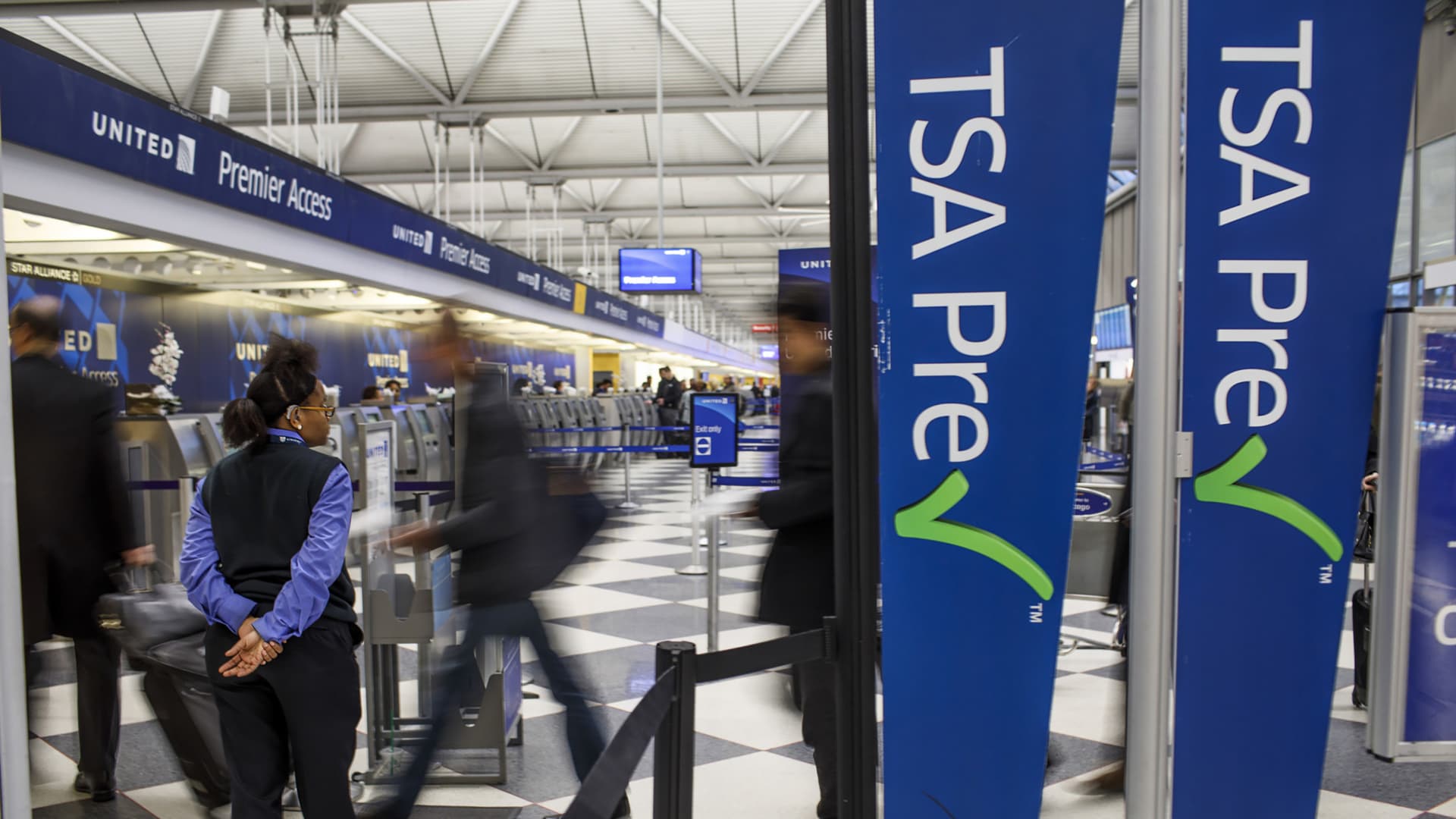
Passengers walk through the entrance of a TSA PreCheck in Terminal One at O’Hare International Airport Wednesday, Feb. 1, 2017, in Chicago. (Armando L. Sanchez/Chicago Tribune/Tribune News Service via Getty Images)
Armando L. Sanchez | Chicago Tribune | Getty Images
As airport security checkpoints undergo changes that may help travelers get through faster and with less hassle, experts say paid services offering modified security screenings — like TSA PreCheck, Global Entry and Clear — may still be worth the cost.
Earlier this month, Department of Homeland Security Secretary Kristi Noem announced that in certain airports, families will have their own dedicated screening lanes as part of a new initiative called “Families on the Fly.” That follows a change ending the Transportation Security Agency’s “shoes off” travel policy.
Noem has also floated the idea of allowing more liquids in carry-ons, which could also affect the speed of airport screenings.
The ability to keep shoes on through security was once a perk limited to TSA PreCheck enrollees. Qualifying travelers can go through the program’s screening without taking off items including shoes, belts and light jackets, or removing items from bags like travel-size liquids or laptops.
Even with some friendlier screening policies in play, experts say paid memberships still have value.
“There are still a lot of compelling benefits for PreCheck,” said Henry Harteveldt, founder of Atmosphere Research Group, a travel industry market research and advisory firm.
More from Personal Finance:
How to lower your capital gains taxes on home sales
Student loan forgiveness paused for borrowers on IBR plan
What Americans get wrong about Social Security
About 39% of surveyed travelers with TSA PreCheck said the biggest perk was having a less stressful experience, according to a survey by UpgradedPoints, a travel site. In March, the site surveyed 1,515 travelers, including 659 who had a TSA PreCheck membership.
It’s one of the five trusted traveler programs available through Homeland Security that provide modified screening for pre-approved members.
There are also private companies like Clear that offer their own paid memberships to get through the airport screening line faster.
Almost all, 99%, of TSA PreCheck passengers wait less than 10 minutes, while standard screening lanes typically take 30 minutes or less, according to the agency.
Enrollment, renewal costs may vary
Membership for TSA PreCheck is valid for five years, but enrollment and renewal fees depend on the servicer you choose to work with, and whether the process is done in-person or online.
“Each enrollment provider is allowed to set its own prices for enrollment and renewal fees with TSA approval,” according to a TSA spokesperson.
For instance, Telos, one of the three TSA-approved service providers, charges an enrollment cost of $85 and a renewal fee of $70 for both online and in-person.
Another TSA-approved service provider is Clear, which charges $77.95 to enroll in PreCheck. For renewals, the company charges $68.95 if done online and $77.95 if done in-person.
Meanwhile, a Clear Plus membership costs $209.
Several other trusted traveler programs include TSA PreCheck as part of their packages, such as Global Entry, which offers an expedited screening through U.S. Customs and Border Protection upon arrival from overseas. The membership costs $120 and lasts for five years.
“Travelers can select the enrollment provider that best suits their needs,” the TSA spokesperson told CNBC.
Here’s how to decide if a pre-screening membership is worth it for you, according to experts.
1. Assess how often you travel
Before you sign up or begin the application, factor in how often you travel every year, experts say.
If you only travel once or twice a year, it may not be worth going through the effort and the cost, said Sally French, a travel expert at NerdWallet.
To apply for TSA PreCheck, for example, you need to complete an online application. Then you need to visit an enrollment center — some might accept walk-ins, while others require appointments — where you bring necessary documents, have your photo taken and fingerprints scanned.
But if you travel more frequently, then TSA PreCheck “can be worth it,” said Harteveldt.
Some credit cards and loyalty programs will cover fees for enrollment in TSA PreCheck or other pre-screening memberships. That can make enrolling more worthwhile, even for infrequent travelers.
2. Pick the right program for your needs
If you travel internationally, Global Entry is another trusted traveler program to consider. Qualifying individuals can access expedited customs screening upon returning to the U.S. from other countries, and the membership also includes access to TSA PreCheck lanes.
However, think about how often you travel abroad, whether for business or leisure, and if you have an upcoming overseas trip.
Not only is the enrollment fee more expensive but there may be limited enrollment centers in your state, making the application process more onerous. You may need to travel long distances to your nearest center, and scheduling an appointment may be difficult.
“A lot of people have cited it’s difficult to even get an interview,” said French.

Meanwhile, the value of a Clear Plus membership may depend in part on where you travel, experts say: It’s in more than 60 airports, including some international locations.
Clear also “has value outside of airports” as its membership is available for lines in certain stadiums and arenas, said French.


Personal Finance
Next-Generation Retirement Planning: Managing Longevity Risk and Variable Income Streams


U.S.- Canada Trade Talks Collapse; Carney Says Retaliatory Tariffs Begin September 8

Flock Cameras and the Future of Public Security

AI Infrastructure Boom Hits Physical Limits: Power, Financing, and Supply Chain Strain

Armanino adds Strategic Accounting Outsourced Solutions

New 2023 K-1 instructions stir the CAMT pot for partnerships and corporations

Tax Strategy: Employee Retention Credit update
-

 Stock News1 week ago
Nvidia Earnings Preview: What Wall Street Expects From the AI Bellwether’s Q2 Report
-

 Accounting1 week ago
SEC’s Semiannual Reporting Proposal Faces Investor Pushback: What CFOs Need to Know
-

 Stock News1 week ago
Nvidia Q2 FY2027 Earnings beats Wall Street Expectation with Record $96.2 Billion Revenue
-

 Finance1 week ago
Treasury Bond Volatility Forces Bessent to Double Debt Buyback Size as Yields Swing
-
 Technology5 days ago
AI Infrastructure Boom Hits Physical Limits: Power, Financing, and Supply Chain Strain
-
 Technology3 days ago
Flock Cameras and the Future of Public Security
-
 Economics3 days ago
U.S.- Canada Trade Talks Collapse; Carney Says Retaliatory Tariffs Begin September 8