
Finance
UK to introduce stablecoin law in ‘months’: Circle’s Dante Disparte

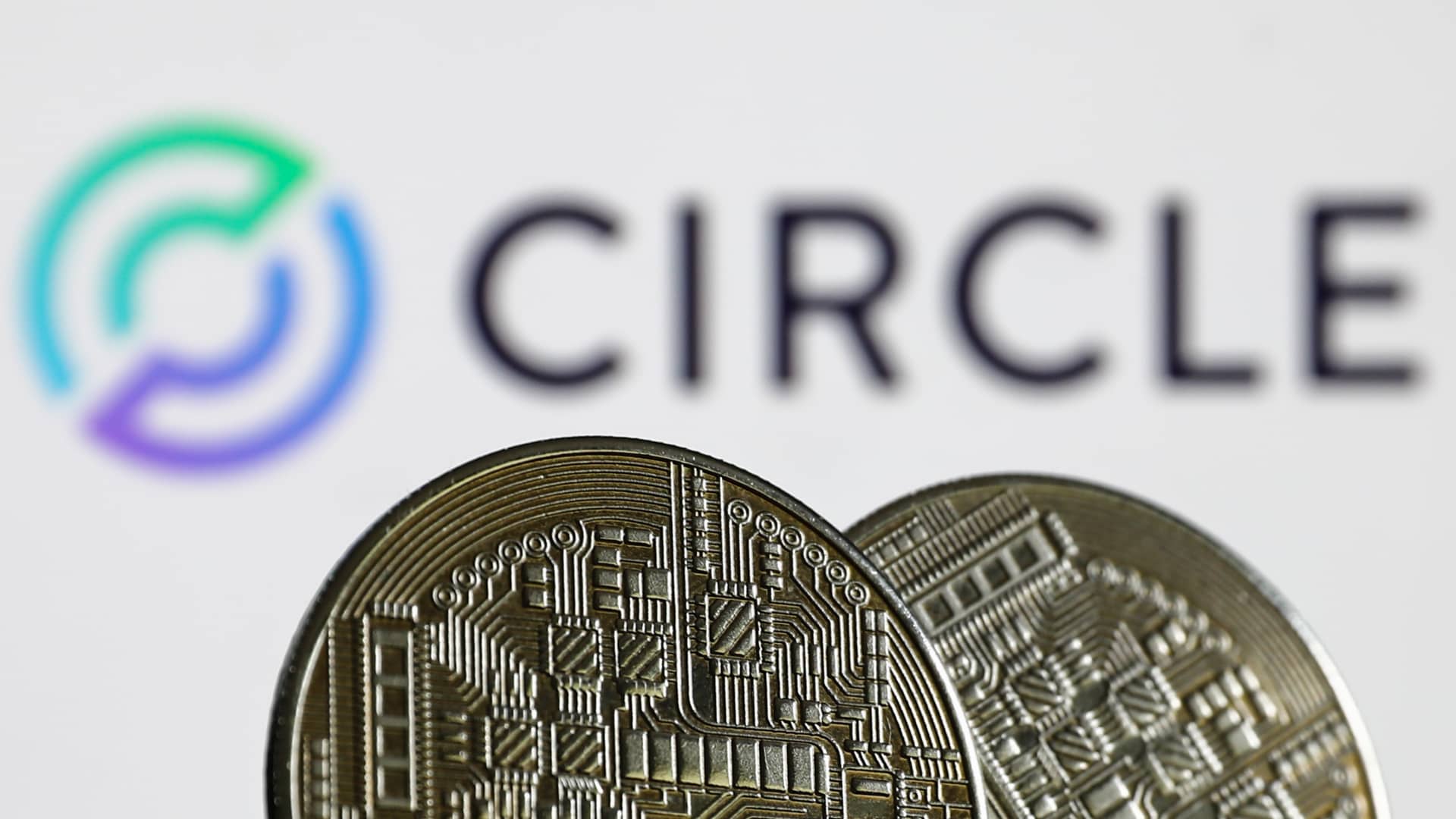
Launched in 2018 by crypto firm Circle, USDC is now the second-biggest stablecoin globally, with more than $30 billion worth of tokens in circulation.
Nurphoto | Getty Images
LONDON — The U.K. is likely to see stablecoin laws introduced in a matter of “months, not years,” according to crypto firm Circle’s top policy executive.
Dante Disparte, Circle’s global head of policy, said that he sees the U.K. will soon bring in legislation for stablecoins, a type of cryptocurrency that aims to maintain a constant peg to government currencies such as the U.S. dollar or British pound
“I think we’re within months, not years” of formal laws for the stablecoin market being introduced, Disparte told CNBC in an interview last week during a visit to London.
The Treasury and the Bank of England were not immediately available for comment when contacted by CNBC.
Disparte suggested the U.K.’s lengthier approach to introducing laws targeted at crypto may have been a good thing given events that transpired in 2022, such as the collapse of FTX, a crypto exchange once worth worth $32 billion, as well as other industry crises.
“You could also look back, and I think many in the U.K. and in other countries would argue that they’re vindicated in not having jumped in too quickly and fully regulating and bringing the environment onshore because of all the issues we’ve seen in crypto over the last few years,” Disparte said.
However, he added that more recently, there’s been a sense of urgency to introduce formal regulations for stablecoins, as well as trading in digital assets and other crypto-related activities.
By not bringing forth stablecoin-specific rules, the U.K. would risk missing out on the benefits of the technology. He added that the U.K. has some catching up to do with the European Union, which has begun enforcing regulation of stablecoins under its MiCa, or Markets in Crypto Assets, regulation. Singapore has also agreed formal laws for the stablecoin industry.
“In the spirit of protecting the U.K. economy from excess risk and crypto, there’s also a point in time in which you end up protecting the economy from job creation and the industries of the future,” Disparte said. He stressed that “you can’t have the economy of the future unless you have the money of the future.”
Among the benefits cited by Disparte are innovation in the wholesale banking industry, real-time payments, and the digitization of the British pound.
Officials at the Bank of England are currently exploring whether or not to introduce a digital version of the pound, which has previously been dubbed “Britcoin” by the media.

Dante said he had met with officials from the Bank of England recently and was reassured by their approach to so-called central bank digital currencies, or CBDCs.
What has the UK done so far?
Prime Minister Keir Starmer’s predecessor, Rishi Sunak, had previously envisioned Britain becoming a global crypto hub.
When the Conservative Party was in power, U.K. government officials had signaled that new legislation for stablecoins as well as crypto-related services such as staking, exchange and custody would be in place as early as June or July.
In April, the former government announced plans to become a “world leader” in the crypto space, outlining plans to bring stablecoins into the regulatory fold and consult on a regime for regulating trading of cryptoassets, like bitcoin.
Last October, Sunak’s administration issued a response to a consultation on regulation of the crypto industry, saying it would aim to introduce “phase 2 secondary legislation” in 2024, subject to parliamentary approval.
The new Labour government hasn’t been as vocal as the Conservatives were on crypto regulation. In January, the party released a plan for financial services, which included a proposal to make the U.K. a securities tokenization hub.
Securities tokens are digital assets that represent ownership of a real-world financial asset, such as a share or bond.
Stablecoins are a multibillion industry, worth more than $170 billion, according to CoinGecko data. Tether’s USDT token is the largest stablecoin by value, with a market capitalization of over $120 billion. Circle’s USDC is the second-largest, with the combined value of coins in circulation worth over $34 billion.
However, the market has been shrouded in controversies in the past. In 2022, Tether’s USDT dropped from its $1 peg after a rival stablecoin, terraUSD, collapsed to zero. The events raised doubts over whether USDT was truly backed 1:1 by an equal amount of dollars and other assets in Tether’s reserves.
For its part, Tether says its coin is backed by dollars and dollar-equivalent assets, including government bonds, at all times.





Treasury Bond Volatility Forces Bessent to Double Debt Buyback Size as Yields Swing

Nvidia Earnings Preview: What Wall Street Expects From the AI Bellwether’s Q2 Report

SEC’s Semiannual Reporting Proposal Faces Investor Pushback: What CFOs Need to Know

Armanino adds Strategic Accounting Outsourced Solutions

New 2023 K-1 instructions stir the CAMT pot for partnerships and corporations

Tax Strategy: Employee Retention Credit update
-

 Economics1 week ago
U.S. Retail Sales Fall for the First Time in Nine Months as Consumer Spending Slows
-

 Economics1 week ago
Nvidia’s Potential $3 Billion SB Energy Investment Could Reshape AI Infrastructure
-

 Economics4 days ago
Top 10 Largest Economies by 2030: IMF & World Bank GDP Projections for Global Powerhouses
-

 Stock News4 days ago
How to understand Intel $15B Stock Offering
-

 Technology1 week ago
U.S.-China AI Competition Intensifies as Washington Pushes Allies to Choose Sides
-

 Economics4 days ago
Economic Profile of the United States of America (2026–2030 Horizon)
-

 Leaders3 days ago
Jackson Hole 2026: What the First Symposium Under Fed Chair Kevin Warsh Means for Markets
-

 Economics3 days ago
U.S. National Debt Surpasses $40 Trillion for the First Time: What It Means for the Economy