
Personal Finance
Using buy now, pay later loans for concert tickets

Fans enjoy Taylor Swift’s performance during The Eras Tour at SoFi Stadium in Inglewood, California, Aug. 7, 2023.
Allen J. Schaben | Los Angeles Times | Getty Images
Many Americans have become accustomed to breaking up big purchases with buy now, pay later loans — including tickets for concerts and other live events.
Going to a live concert is not cheap: Tours of big-name artists including Taylor Swift, Beyoncé and Coldplay have in part spurred a rise in ticket prices for live events in recent years, a trend economists call “funflation.”
Admission fees to movies, theaters and concerts were up 3.9% in the 12 months through June, according to the latest Bureau of Labor Statistics figures. And while the Federal Trade Commission changed a rule in May to make ticket pricing more transparent, experts say the move won’t make costs go down.
More from Personal Finance:
Senate introduces bill for tariff rebate checks
Fed holds interest rates steady: What that means for your money
Trump’s tariffs could soon bring higher food prices, analysis finds
Almost a quarter, 23%, of respondents in a new survey by LendingTree said they have used buy now, pay later loans for concert or festival costs.
Rates are higher among younger generations, with 37% of Generation Z and 35% of millennials saying they’ve used the loans for these purposes. The site defined Gen Z as adults ages 18 to 28, and millennials as those ages 29 to 44.
To compare, 19% of Gen Xers, which the site defines as adults ages 45 to 60 — said they’ve used buy now, pay later loans for concerts, followed by 3% of baby boomers, those ages 61 to 79.
Carve out money in your budget as your ‘Beyoncé fund’ or your ‘Taylor Swift fund.’
Matt Schulz
chief credit analyst at LendingTree
LendingTree said it surveyed 2,050 adults in the U.S. in mid-June. Of those, 1,047 said they plan to attend a concert or festival in the summer or fall.
It’s not unusual to see Gen Zers and millennials leading the use of buy now, pay later loans, said Matt Schulz, chief credit analyst at LendingTree.
Young Americans are most familiar with the form of payment, and their use of it for concerts and festivals speaks to the “time of life” they’re in, he said.
“Part of the reason why I ended up in credit card debt in my 20s was because I was going to concerts and seeing my favorite bands,” Schulz said.

If concerts and other live events are important to you, he said, work the expenses into your budget and create a savings fund specifically with them in mind.
“Carve out money in your budget as your ‘Beyoncé fund‘ or your ‘Taylor Swift fund,'” Schulz said.
If you do need to stretch out the cost of attending a concert, here’s what to know about buy now, pay later loans versus credit cards.
Not all buy now, pay later plans are the same
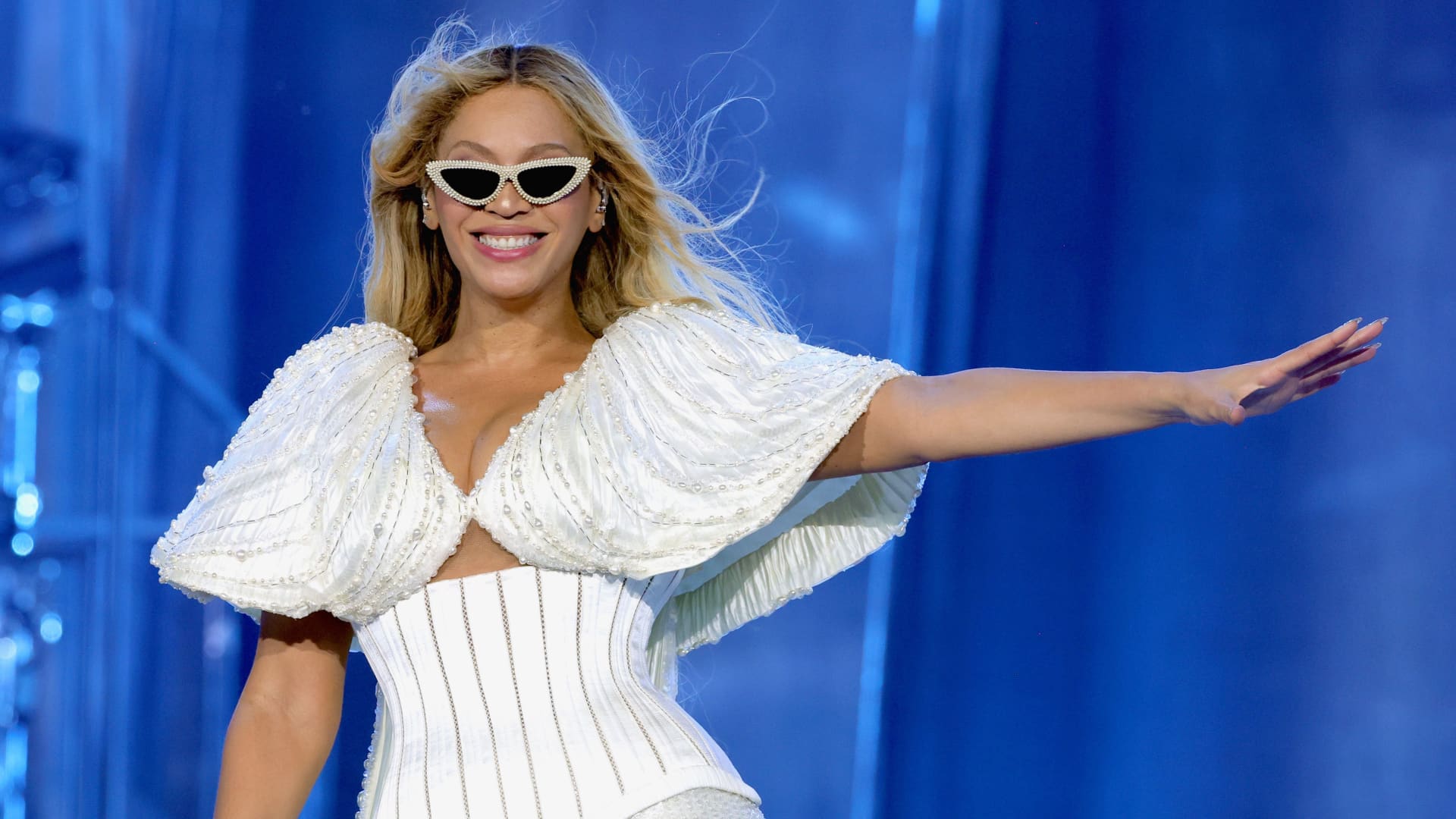
Beyoncé performs onstage during the Renaissance World Tour at SoFi Stadium in Inglewood, California, Sept. 1, 2023.
Kevin Mazur | Wireimage | Getty Images
Buy now, pay later plans have certain advantages, but they might not offer the same protections as credit cards, especially if things go wrong with the concert or live event, experts say.
The loans became a popular option because they allow consumers to spread the total cost over installment payments in a short time frame, often without interest, said Greg McBride, chief financial analyst at Bankrate.
However, the form of payment has evolved to the point where not all buy now, pay later plans are “cut from the same mold,” he said.
Most plans consist of four installment payments, but others have longer repayment terms. Those may charge an annual percentage rate, or interest, of up to 36%, according to NerdWallet.
Some plans also charge fees for late or rescheduled payments, which can cost up to $15 or even 25% of the purchase value, according to NerdWallet.
Credit cards can be pricier than buy now, pay later, experts say, but they have other advantages.
Like some buy now, pay later plans, credit cards charge late fees and interest on unpaid balances. While some cards offer new cardholders brief interest-free offers on purchases, the average credit card interest rate is just over 20%, according to Bankrate.
But most cards typically offer purchase protections that you might not get from a buy now, pay later plan, said McBride.
“Paying with a credit card can make it easier to get your money back if the concert gets canceled,” he said.
Some cards offer rewards such as cash back, points or miles on purchases. About 65% of those who plan to attend a concert or festival this year said they will use credit card rewards to help pay for their costs, according to LendingTree’s report.
Personal Finance
Next-Generation Retirement Planning: Managing Longevity Risk and Variable Income Streams


U.S.- Canada Trade Talks Collapse; Carney Says Retaliatory Tariffs Begin September 8

Flock Cameras and the Future of Public Security

AI Infrastructure Boom Hits Physical Limits: Power, Financing, and Supply Chain Strain

Armanino adds Strategic Accounting Outsourced Solutions

New 2023 K-1 instructions stir the CAMT pot for partnerships and corporations

Tax Strategy: Employee Retention Credit update
-

 Stock News1 week ago
Nvidia Earnings Preview: What Wall Street Expects From the AI Bellwether’s Q2 Report
-

 Accounting1 week ago
SEC’s Semiannual Reporting Proposal Faces Investor Pushback: What CFOs Need to Know
-

 Stock News1 week ago
Nvidia Q2 FY2027 Earnings beats Wall Street Expectation with Record $96.2 Billion Revenue
-

 Finance1 week ago
Treasury Bond Volatility Forces Bessent to Double Debt Buyback Size as Yields Swing
-
 Technology5 days ago
AI Infrastructure Boom Hits Physical Limits: Power, Financing, and Supply Chain Strain
-
 Technology3 days ago
Flock Cameras and the Future of Public Security
-
 Economics3 days ago
U.S.- Canada Trade Talks Collapse; Carney Says Retaliatory Tariffs Begin September 8