
Accounting
Washington State tax hikes target tech giants

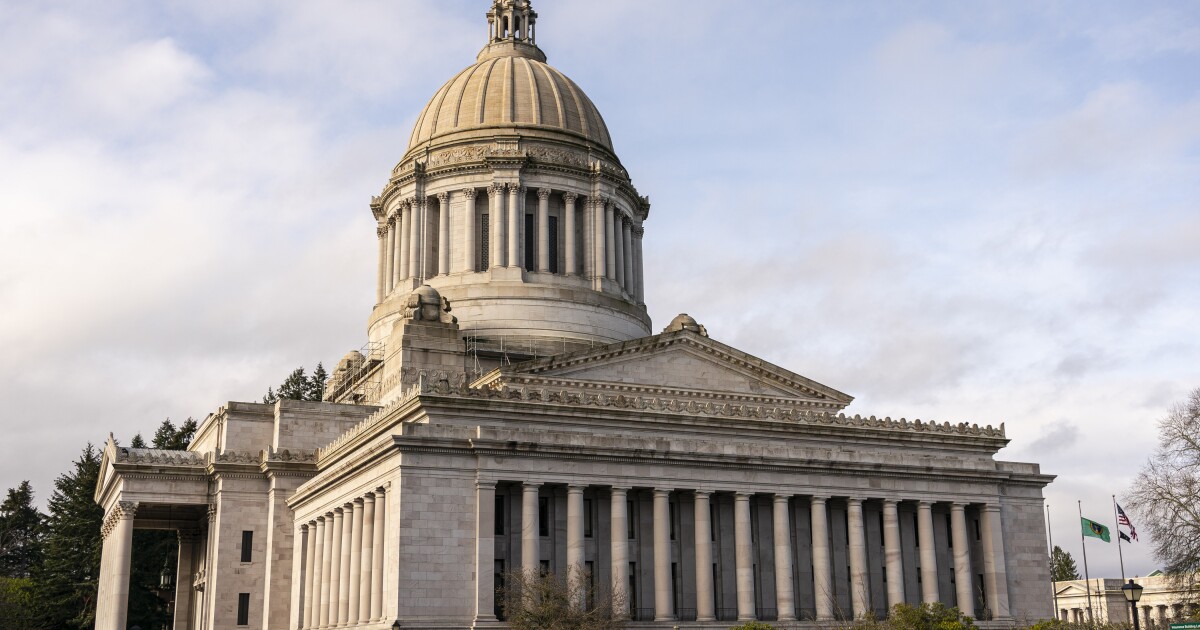

New taxes passed in the final days of Washington’s legislative session seek to bridge a record budget deficit by shifting more of the tax burden to technology companies like Amazon.com and Microsoft Corp.
The bills, currently awaiting Democratic Governor Bob Ferguson’s signature, will have a much broader impact, shifting business calculations across nearly every industry, including banks, grocery stores and hospitals.
The new levies — passed less than two weeks after they were introduced — inject additional uncertainty into an economy still recovering from the pandemic and bracing for supply chains disruptions from President Donald Trump’s tariffs. A pending Republican economic package also aims to pair federal tax cuts that could add trillions to the national debt with healthcare and other spending reductions.
Without a state income tax — on individuals or corporations — Washington legislators turned the dials up on several existing taxes. They expanded the kinds of services subject to sales tax, increased rates for the state’s nearly 100-year-old levy on gross receipts and added a new top tier for capital gains to be taxed at 10%.
“This budget forced us to make choices that no one would like to make,” said Senator June Robinson, who led the budget process for state Democrats. She said she’d been flooded with messages warning of “dire circumstances” for both spending cuts and tax increases. State law requires a balanced budget, unlike at the federal level where the government can run large deficits.
Big tech companies that fueled so much of the region’s growth — and inequality — over the past two decades were the primary target of the new tax hikes. The final package would raise more than $9 billion in additional revenue over the next four years.
The existing tax on corporate gross receipts, known as the Business and Occupation tax, was designed to have a low rate that is broadly applied. Now “advanced computing” companies would see that rate more than triple, including a 7.5% surcharge for companies earning more than $25 billion in the previous year. That tax obligation would be capped at $75 million.
The sales tax bill would repeal the exemption for digital automated services, including advertising.
That’s easier for Microsoft and Amazon, the world’s second- and fourth-largest companies, to absorb, but it’s harder for the rest of the local tech ecosystem that has grown out of the talent pool seeded by those behemoths.
These cumulative tax changes would add extra costs for a Seattle startup competing with a company in Austin, Texas, according to Kelly Fukai, head of the Washington Technology Industry Association, who said the tech industry accounts for 22% of Washington’s economy and pays $4.3 billion in taxes.
“While we’re trying to make it be more progressive, we’re just not getting there,” Fukai said of the tax package. “In fact, we’re probably hurting some of the people that we want to hurt the least.”
Even changes to the capital gains tax, aimed at wealthy investors, would also impact founders trying to sell their startups. A bill increases the top rate on long-term investments to 10% from 7% for sales of more than $1 million.
There’s still uncertainty over what Ferguson, who took office earlier this year, will do next. He has less than three weeks to decide if he’ll veto anything, and he could still call lawmakers back to Olympia for a special session. In a statement Sunday night, he said he intends to “carefully review all revenue increases.”
Ferguson dashed earlier Democratic proposals to raise even more taxes, including a first-in-the-nation wealth tax. The Senate on Sunday went ahead with a
Democrats said they consistently heard from constituents advocating for a “balanced approach” that didn’t rely just on cuts. Republicans argued that there was still more room to whittle down a nearly $78 billion biennial budget that spends 8% more than the last one, but Democrats said they cut as much as they could without gutting core services.
Business impact
Lawmakers on Sunday bemoaned the tough choices forced by a record budget deficit. Almost everyone who spoke in Olympia, Washington shortly before legislative business concluded for the year said it was the hardest session they’d ever seen.
Drastic cuts from the federal government are poised to further dent state finances and institutions. Emotions were heightened by the unexpected death of one senator and the wife of another just in the past week. More than one member cried.
In the case of hospitals, higher taxes mean cuts to services, according to Chelene Whiteaker, head of government affairs for the Washington State Hospital Association. She estimates that health care finances will face a $260 million hole by the time this year’s legislation is fully implemented in 2027.
“There are sometimes unintended consequences,” Whiteaker said. “Hospitals are seen as quote ‘the big guys.’ Yes, we employ a lot of people, but we’re operating at no-margin or low-margin.”
Tammie Hetrick, head of the Washington Food Industry Association, which represents independent supermarkets, convenience stores and their suppliers, warned that increasing the business and occupation tax on producers and wholesalers creates a pyramiding effect of higher costs at every step from farmer to shopper.
“We are looking at a significant amount of tax increases that will disproportionately impact independent grocers,” Hetrick said. She said she’s urging Ferguson to use his veto power “to protect the cost of food for consumers.”
The legislature passed other taxes as well, including higher rates on property and fuel. Lawmakers even passed a levy that appears to be
Fukai said businesses will look at the entirety of these new taxes, and even if they don’t pick up and leave, they’re likely to plan their growth for elsewhere.
“People love Washington, right? We all are here for a reason. We all love our communities,” Fukai said. “However, when we start adding these costs on like this, and especially of this magnitude, I think that’s where we’re hitting this sort of tipping point.”





S&P 500 September Outlook: Tech Rally Holds Index at 7,600

India Unveils ‘Saptadhara’ Reform Agenda Targeting Technology, Youth Skilling, and Growth

S&P 500 Outperforms Amid Strong Corporate Earnings as Treasury Yields Cap Equity Multiples

Armanino adds Strategic Accounting Outsourced Solutions

New 2023 K-1 instructions stir the CAMT pot for partnerships and corporations

Tax Strategy: Employee Retention Credit update
-

 Technology7 days ago
AI Infrastructure Boom Hits Physical Limits: Power, Financing, and Supply Chain Strain
-

 Economics4 days ago
U.S.- Canada Trade Talks Collapse; Carney Says Retaliatory Tariffs Begin September 8
-
 Stock News16 hours ago
S&P 500 September Outlook: Tech Rally Holds Index at 7,600
-

 Technology4 days ago
Flock Cameras and the Future of Public Security
-
 Finance17 hours ago
S&P 500 Outperforms Amid Strong Corporate Earnings as Treasury Yields Cap Equity Multiples
-

 Insights17 hours ago
Climate Resilience and Offshore Wind and Land Restoration Milestones
-

 Accounting17 hours ago
Mandatory ESG Reporting Standards Demand Standardized Non-Financial Audit Trails
-
 Leaders17 hours ago
India Unveils ‘Saptadhara’ Reform Agenda Targeting Technology, Youth Skilling, and Growth