
Personal Finance
What a ‘revenge tax’ in Trump’s spending bill means for investors

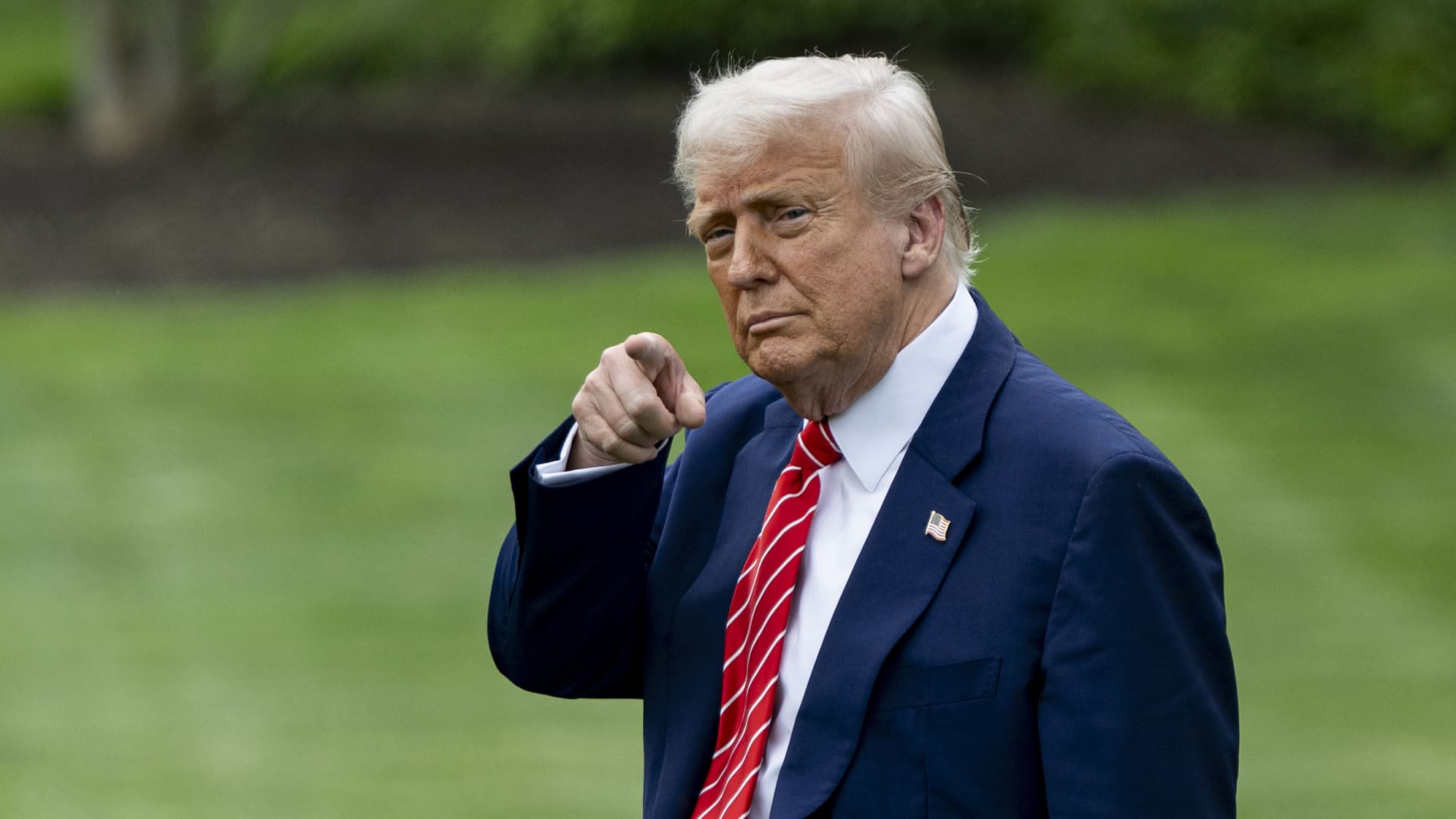
WASHINGTON DC, UNITED STATES – MAY 30: United States President Donald Trump departs at the White House to U.S. Steel’s Irvin Works in West Mifflin, Pennsylvania in Washington D.C May 30, 2025.
Celal Gunes | Anadolu | Getty Images
As the Senate weighs President Donald Trump‘s multi-trillion-dollar spending package, a lesser-known provision tucked into the House-approved bill has pushback from Wall Street.
The House measure, known as Section 899, would allow the U.S. to add a new tax of up to 20% on foreigners with U.S. investments, including multinational companies operating in the U.S.
Some analysts call the provision a “revenge tax” due to its wording. It would apply to foreign entities if their home country imposes “unfair foreign taxes” against U.S. companies, according to the bill.
“Wall Street investors are shocked by [Section] 899 and apparently did not see it coming,” James Lucier, Capital Alpha Partners managing director, wrote in a June 5 analysis.
More from Personal Finance:
The average 401(k) savings rate hit a record high. See if you’re on track
On-time debt payments aren’t a magic fix for your credit score. Here’s why
With ‘above normal’ hurricane forecasts, check your home insurance policy
If enacted as written, the provision could have “significant implications for the asset management industry,” including cross-border income earned by hedge funds, private equity funds and other entities, Ernst & Young wrote on June 2.
Passive investment income could be subject to a higher U.S. withholding tax, as high as 50% in some cases, the company noted. Some analysts worry that could impact future investment.
The Investment Company Institute, which represents the asset management industry serving individual investors, warned in a May 30 statement that the provision is “written in a manner that could limit foreign investment to the U.S.”
But with details pending as the Senate assesses the bill, many experts are still weighing the potential impact — including who could be affected.
Here’s what investors need to know about Section 899.
How the ‘revenge tax’ could work
As drafted, Section 899 would allow the U.S. to hike existing levies for countries with “unfair foreign taxes” by 5% per year, capped at 20%.
Several kinds of tax fall under “unfair foreign taxes,” according to the provision. Those include the undertaxed profits rule, which is associated with part of the global minimum tax negotiated by the Biden administration. The term would also apply to digital services taxes and diverted profits taxes, along with new levies that could arise, according to the bill.
The second part of the measure would expand the so-called base erosion and anti-abuse tax, or BEAT, which aims to prevent corporations from shifting profits abroad to avoid taxes.
“Basically, all businesses that are operating in the U.S. from a foreign headquarters will face that,” said Daniel Bunn, president and CEO of the Tax Foundation. “It’s pretty expansive.”
The retaliatory measures would apply to most wealthy countries from which the U.S. receives direct foreign investment, which could threaten or harm the U.S. economy, according to Bunn’s analysis.
Notably, the proposed taxes don’t apply to U.S. Treasuries or portfolio interest, according to the bill.
‘Strong priority’ for House Republicans
Section 899 still needs Senate approval, and it’s unclear how the provision could change amid alarm from Wall Street.
But the measure has “strong support” from others in the business community, and it’s a “strong priority” for Republican House Ways and Means Committee members, Capital Alpha Partners’ Lucier wrote.
House Ways and Means Committee Chairman Jason Smith, R-Mo., first floated the idea in a May 2023 bill, and has been outspoken, along with other Republicans, against the global minimum tax.

If enacted as drafted, Section 899 could raise an estimated $116 billion over 10 years, according to the Joint Committee on Taxation.
That could help fund other priorities in Trump’s mega-bill, and if removed, lawmakers may need to find the revenue elsewhere, Bunn said.
However, House Ways and Means Republicans may ultimately want foreign countries to adjust their tax policies before the new tax is imposed.
“If these countries withdraw these taxes and decide to behave, we will have achieved our goal,” Smith said in a June 4 statement.


Personal Finance
Next-Generation Retirement Planning: Managing Longevity Risk and Variable Income Streams


U.S.- Canada Trade Talks Collapse; Carney Says Retaliatory Tariffs Begin September 8

Flock Cameras and the Future of Public Security

AI Infrastructure Boom Hits Physical Limits: Power, Financing, and Supply Chain Strain

Armanino adds Strategic Accounting Outsourced Solutions

New 2023 K-1 instructions stir the CAMT pot for partnerships and corporations

Tax Strategy: Employee Retention Credit update
-

 Stock News1 week ago
Nvidia Earnings Preview: What Wall Street Expects From the AI Bellwether’s Q2 Report
-

 Accounting1 week ago
SEC’s Semiannual Reporting Proposal Faces Investor Pushback: What CFOs Need to Know
-

 Stock News1 week ago
Nvidia Q2 FY2027 Earnings beats Wall Street Expectation with Record $96.2 Billion Revenue
-

 Finance1 week ago
Treasury Bond Volatility Forces Bessent to Double Debt Buyback Size as Yields Swing
-
 Technology5 days ago
AI Infrastructure Boom Hits Physical Limits: Power, Financing, and Supply Chain Strain
-
 Technology3 days ago
Flock Cameras and the Future of Public Security
-
 Economics3 days ago
U.S.- Canada Trade Talks Collapse; Carney Says Retaliatory Tariffs Begin September 8