
Personal Finance
What it means for your money

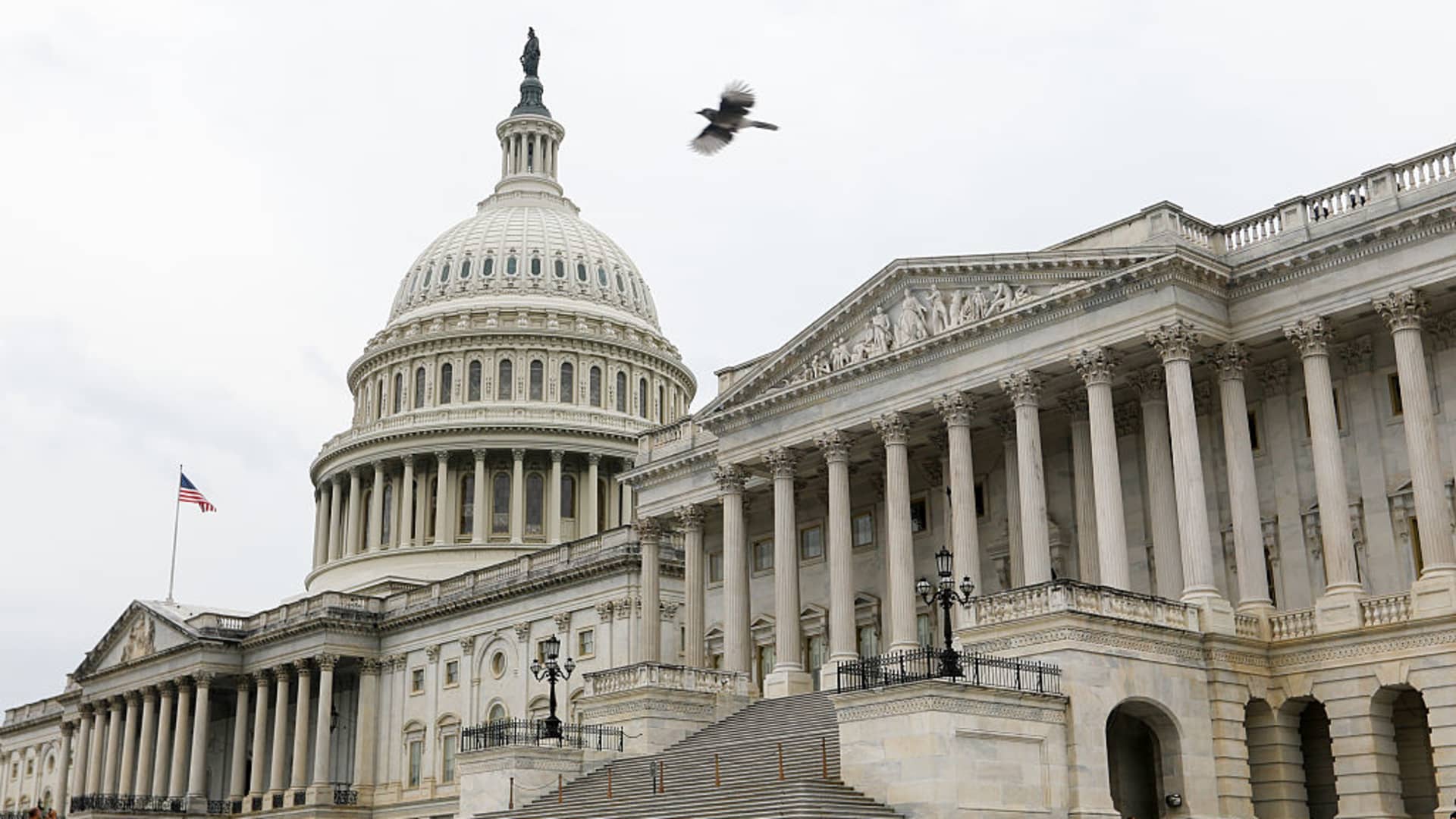
Photo by Yasin Ozturk/Anadolu via Getty Images
A government shutdown looms after midnight — and, depending on how long it lasts, could have far-reaching implications for household finances.
Those repercussions might include anything from delayed paychecks and layoffs for federal workers to broad effects for other Americans, including disrupted travel plans and an inability to get a mortgage, economists said.
Enhanced subsidies for the Affordable Care Act — also known as Obamacare — that have made health plans less expensive for millions of enrollees in recent years are also indirectly at stake.
Economists and market analysts are predicting that Democrats and Republicans won’t be able to reach an 11th-hour deal.
“Congressional gridlock has struck again, leaving the government grinding toward a potential shutdown beginning October 1,” Jennifer Timmerman, investment strategy analyst at the Wells Fargo Investment Institute, wrote in a note Monday.
What is a government shutdown?
Every year, Congress must pass legislation to fund the federal government for the coming fiscal year. A shutdown occurs if Congress can’t wrap up the appropriations process on time.
Oct. 1 marks the start of the 2026 fiscal year.
During a shutdown, the government halts all unfunded “nonessential” functions, Timmerman wrote.

By comparison, “essential” services related to public safety, such as air-traffic control or national security, will keep operating, she wrote.
Social Security checks and Medicare benefits — which are considered “mandatory” government spending — would continue flowing, Timmerman wrote.
The last shutdown happened during President Donald Trump’s first term. It was also the nation’s longest on record, starting in late December 2018 and running 35 days, Thomas Ryan, a North America economist at Capital Economics, wrote in a note Sept. 26.
What’s at stake during a government shutdown?
A shutdown that lasts for less than two weeks is unlikely to have a material or lasting impact on the U.S. economy or household finances — though the negative effects mount as the weeks pass, said Mark Zandi, chief economist at Moody’s.
Most immediately, federal workers deemed to be nonessential would be furloughed, economists said.
They wouldn’t be paid during a shutdown, though they’d receive paychecks retroactively, Zandi said.
Senate Minority Leader Chuck Schumer (D-NY) speaks during a press conference alongside House Minority Leader Hakeem Jeffries (D-NY), following a meeting between the Congressional Democratic leaders and President Trump and Congressional Republican leadership on funding the government, outside of the White House in Washington DC, United States on September 29, 2025.
Nathan Posner | Anadolu | Getty Images
Government contractors — from companies that provide cafeteria services, to those that provide strategic advice to the government — would start to feel the financial pain after about three to four weeks since they wouldn’t be getting paid for services, Zandi said.
However, unlike federal employees, federal contractors have historically not received back pay, according to the Committee for a Responsible Federal Budget.
This income loss could put financial stress on households — especially those in the D.C. area — that don’t have stopgap financial resources to weather a missed paycheck, he said.
However, the pain shouldn’t be too severe if the shutdown is short-lived, Zandi and other economists said.
“The direct costs of shutdowns are usually negligible, with most only lasting a few days,” wrote Ryan of Capital Economics. Many shutdowns have largely played out over the weekend, blunting the impact, according to the CRFB.
About 800,000 federal employees were either furloughed or worked without pay during the last shutdown, representing lost income of about $70 billion (or 0.3% of gross domestic product, in annualized terms), Ryan wrote.
House Speaker Mike Johnson (R-LA) speaks next to U.S. Vice President JD Vance, Office of Management and Budget (OMB) Director Russell Vought and Senate Majority Leader John Thune (R-SD) on the day U.S. President Donald Trump meets with top congressional leaders from both parties, just ahead of a September 30 deadline to fund the government and avoid a shutdown, at the White House in Washington, D.C., U.S., Sept. 29, 2025.
Jonathan Ernst | Reuters
That 2018-19 episode was only a partial government shutdown, since Congress had passed five out of 12 appropriations bills before the deadline, Timmerman wrote. The last full shutdown, like the one that looms, was in 2013 and lasted 16 days; about 850,000 workers were furloughed that year, according to the CRFB.
The Congressional Budget Office estimates about 750,000 federal workers could be furloughed each day of a government shutdown.
Here’s a good rule of thumb: Every week of a government shutdown shaves about a tenth of a percentage point from annualized GDP for the quarter, on average, Zandi said.
“Every tenth matters, but it doesn’t mean the world comes crashing down or that the economy will plummet into recession,” Zandi said. “Though the economy is quite vulnerable [right now]. It’s struggling, especially with regard to jobs.”
How does a shutdown affect consumers?
If a shutdown occurs, the federal flood insurance program would also immediately close to new policies until there’s a spending deal, according to Jaret Seiberg, financial services policy analyst at TD Cowen.
“That means no mortgages which require federal flood insurance will be originated,” Seiberg wrote in a Sept. 26 note.
Financial firms likely moved up mortgage closings ahead of the Sept. 30 deadline, softening the impact, though extended shutdowns “will block mortgages from being made,” he wrote.
More from Personal Finance:
How workers can prepare financially for a government shutdown
Ahead of EV tax credit deadline, IRS delays create ‘anxiety’ for car dealers
Education Department opens FAFSA ahead of schedule
Travelers could face disruptions, too.
Federal parks and monuments would close, for example, and staff deemed to be essential — like Transportation Security Administration officers and air traffic controllers — must work without pay, Ryan wrote.
Some TSA agents may choose not to show up for work, as happened during the last shutdown, causing long lines at airports, delaying travel and disrupting tourism, Zandi said.
How does a shutdown affect investors?
The release of key economic reports would also likely be delayed, economists said.
For example, the Labor Department wouldn’t issue its monthly jobs report slated to be published on Friday. The bureau is also supposed to release its monthly consumer price index on Oct. 15.
The Federal Reserve, which is next convening Oct. 28-29, uses such data to guide its decisions on interest-rate policy.
The central bank would be “kind of flying blind” without such data at its fingertips, Zandi said. A shutdown of more than a month could lead to “some serious errors,” Zandi said, with implications for the job market and borrowing costs.

For investors, the stock market has generally “demonstrated resiliency” in past shutdowns as investors have looked past the political noise toward companies’ long-term earnings prospects, wrote Timmerman of Wells Fargo.
In fact, any pullback would likely be short-lived and pose a good opportunity for investors to “incrementally add exposure” to certain sectors, she wrote.
The S&P 500 stock index has risen 4.4%, on average, during past shutdowns, which suggests other macroeconomic factors play a bigger role for investor outcomes, according to a Sept. 29 report by Monica Guerra, head of U.S. policy at Morgan Stanley Wealth Management.
However, a lengthy shutdown could pressure investor confidence in the nation’s governance and add to existing jitters about the relative safe-haven status of the U.S. for investor assets, Zandi said.
How does a shutdown affect student loans?
Federal student loan bills will still be due during a government shutdown, said higher education expert Mark Kantrowitz.
The country’s $1.6 trillion outstanding student debt portfolio is managed mostly by independent contractors, and these companies shouldn’t be too disrupted if Congress is delayed in reaching a deal to continue government funding.
However, applications to the U.S. Department of Education for student loan forgiveness, which are already experiencing processing delays, “will be further disrupted,” Kantrowitz said.
Borrowers may also find it temporarily harder to enroll in one of the department’s repayment plans or to reach someone at the agency for assistance with their loans.
How long might a shutdown last?
The US Capitol in Washington, DC, US, on Monday, Sept. 29, 2025.
Al Drago | Bloomberg | Getty Images
While shutdowns typically don’t last long, this one may be drawn out due to political dynamics at play, analysts said.
“A shutdown could go for a while,” Chris Krueger, managing director at TD Cowen’s Washington Research Group, wrote Sept. 29.
Republicans need 60 votes in the Senate to advance legislation that would fund the government, and need some Democratic votes to meet that threshold.
Congressional Democrats want Republicans to make concessions on health-care policy as a condition of their support.
Specifically, Democrats want to extend enhanced subsidies for health insurance premiums for ACA enrollees, which are slated to expire at year’s end absent congressional action. If they expire, that would raise premiums an estimated 75% next year, on average, according to KFF, a nonpartisan health policy research group.
Roughly 22 million Americans receive those healthcare subsidies. They’re estimated to cost about $30 billion per year to extend. Republicans say negotiations on continuing those credits should happen after the Senate approves a funding resolution.
Both sides seem dug in, experts said.
The only “action-forcing catalyst” to end a shutdown is the Nov. 1 open enrollment for ACA health plans, Krueger wrote.
‘A whole different ball game’
There’s another reason this shutdown could play out differently than others in the past, experts said: President Donald Trump has threatened to fire — not furlough — thousands of non-essential workers if Congress can’t reach a deal. These would be permanent instead of temporary layoffs.
“That’s the fodder for potential recession, in the current context” of the U.S. labor market, Zandi said.
It would increase the unemployment rate by about a half percentage point if roughly 750,000 non-essential workers were laid off, he said.
“I don’t see that happening,” Zandi said. “But if it does, it’s a whole different ball game. The impacts would be very significant, very quick.”
CNBC personal finance reporter Annie Nova contributed reporting.


Personal Finance
Next-Generation Retirement Planning: Managing Longevity Risk and Variable Income Streams


U.S.- Canada Trade Talks Collapse; Carney Says Retaliatory Tariffs Begin September 8

Flock Cameras and the Future of Public Security

AI Infrastructure Boom Hits Physical Limits: Power, Financing, and Supply Chain Strain

Armanino adds Strategic Accounting Outsourced Solutions

New 2023 K-1 instructions stir the CAMT pot for partnerships and corporations

Tax Strategy: Employee Retention Credit update
-

 Stock News1 week ago
Nvidia Earnings Preview: What Wall Street Expects From the AI Bellwether’s Q2 Report
-

 Accounting1 week ago
SEC’s Semiannual Reporting Proposal Faces Investor Pushback: What CFOs Need to Know
-

 Stock News1 week ago
Nvidia Q2 FY2027 Earnings beats Wall Street Expectation with Record $96.2 Billion Revenue
-

 Finance1 week ago
Treasury Bond Volatility Forces Bessent to Double Debt Buyback Size as Yields Swing
-
 Technology5 days ago
AI Infrastructure Boom Hits Physical Limits: Power, Financing, and Supply Chain Strain
-
 Technology2 days ago
Flock Cameras and the Future of Public Security
-
 Economics2 days ago
U.S.- Canada Trade Talks Collapse; Carney Says Retaliatory Tariffs Begin September 8