
Personal Finance
What shutting down Education Department may mean for students

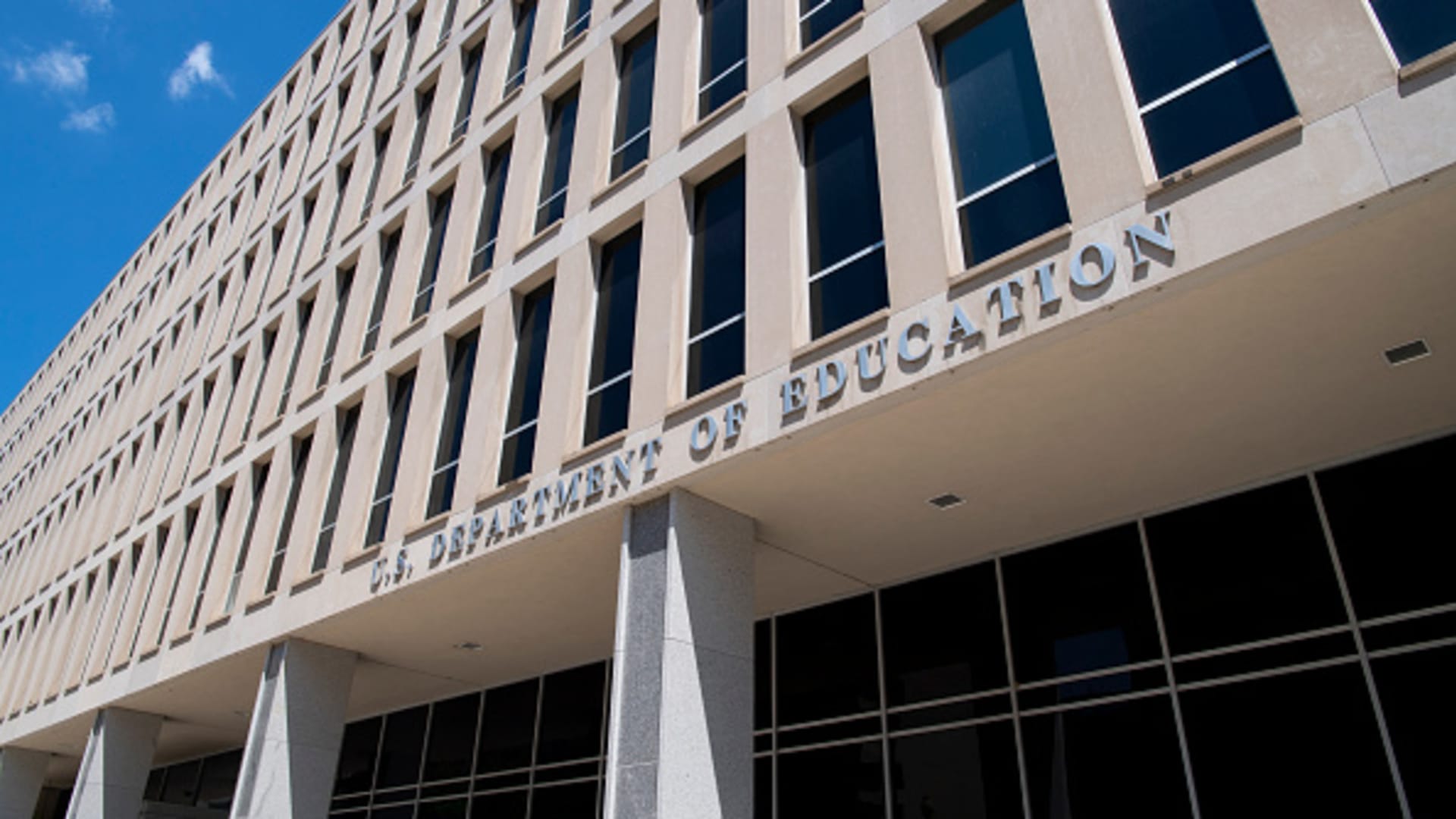

The Trump administration has already begun carrying out its plans to close parts or all of the Department of Education, which is responsible for underwriting student loans, disbursing college aid and ensuring equal access to education.
President Donald Trump campaigned on a pledge to “find and remove the radicals who have infiltrated the federal Department of Education,” and suggested that Linda McMahon, his nominee for Education secretary, would help gut the department.
McMahon’s Senate confirmation hearing began Thursday morning.
“I want Linda to put herself out of a job,” Trump said at a White House press conference Feb. 4.
The U.S. Department of Education in Washington, D.C.
Caroline Brehman | CQ-Roll Call, Inc. | Getty Images
Former President Jimmy Carter established the U.S. Department of Education in 1979. Since then, the department has faced other existential threats. Former President Ronald Reagan called for its end, and Trump, during his first term, attempted to merge it with the Labor Department.
Efforts by the Trump administration to dismantle the Education Department will face criticism.
To that point, 61% of likely voters say they would oppose the Trump administration’s use of an executive order to abolish the Education Department, according to a poll conducted by Data for Progress on behalf of the Student Borrower Protection Center and Groundwork Collaborative. Meanwhile, just 34% of respondents approve of such a move. The survey of 1,294 people was conducted Jan. 31 to Feb. 2.
Deep cuts already underway
As an agency authorized by Congress, the Education Department cannot be eliminated without congressional approval.
But in the meantime, the Trump administration, Elon Musk and his advisory group known as the Department of Government Efficiency can slowly cripple it.
Already, the Institute of Education Sciences, the research arm of the Education Department, was scaled down significantly by Musk’s DOGE team.
In a statement Monday, the American Educational Research Association and the Council of Professional Associations on Federal Statistics said 169 contracts were canceled, including some related to the collection and reporting of education statistics.
“Sensible public policy for education depends on strong research and basic collection and availability of data on institutional performance and student outcomes,” said Sameer Gadkaree, president and CEO of The Institute for College Access & Success. “Without it, Americans will be in the dark on shifts in debt, student success, and how public dollars should be invested to increase effectiveness.”
More from Personal Finance:
How Musk’s DOGE took over the Education Department
$2.7 billion Pell Grant shortfall poses a threat for college aid
Student loan debt swelled under Biden, despite forgiveness
Some experts say further dismantling the Education Department could have serious economic consequences.
“Most of the Department’s budget funds federal student aid for higher education, subsidies for elementary and secondary schools with large shares of students from low-income families, and special education programs for children with special needs,” said Brett House, economics professor at Columbia Business School.
“While some of the Department’s funding programs may be transferred to other agencies, there is no guarantee that they would be continued at the same scale or impact,” House said.
Student loans could be administered by Treasury
Even if the Education Department no longer existed, another government agency would likely administer the task of distributing student financial aid funds, experts say.
Some experts have speculated that the Treasury Department would be the next most logical agency to administer student debt. However, it’s uncertain whether Treasury would be as focused on students as the Education Department, said former U.S. Under Secretary of Education James Kvaal.
“People take out student loans at a very young age, and Congress created all these benefits that are available on student loans that aren’t available on other types of credit,” Kvaal said. “There’s a question if the Treasury would have the same ethic of prioritizing students.”
Instead, “Would they [the Treasury] prioritize loan collection?” Kvaal asked.
“One of the intents [of the administration’s actions] is to redistribute funding from the federal department of education to states and localities,” said Tomas Philipson, a professor of public policy studies at the University of Chicago and former acting chair of the White House Council of Economic Advisers.
“If such a redistribution takes place, this will likely improve, as opposed to hurt, learning as state and locals are better suited to address their heterogeneous needs,” Philipson said. “The one-size-fits-all nature of federal regulations and spending programs can often be improved upon.”
Still, no other agency is equipped to service a $1.6 trillion student loan program, according to Karen McCarthy, vice president of public policy and federal relations at the National Association of Student Financial Aid Administrators.
“It wouldn’t be an easy process to make that transfer,” McCarthy said. “Our biggest concern is that if something like that were to happen, it wouldn’t go smoothly.”
The process could potentially unsettle millions of current college students, as well as the more than 42 million borrowers with federal student loan debt, she said.

Personal Finance
Next-Generation Retirement Planning: Managing Longevity Risk and Variable Income Streams


U.S.- Canada Trade Talks Collapse; Carney Says Retaliatory Tariffs Begin September 8

Flock Cameras and the Future of Public Security

AI Infrastructure Boom Hits Physical Limits: Power, Financing, and Supply Chain Strain

Armanino adds Strategic Accounting Outsourced Solutions

New 2023 K-1 instructions stir the CAMT pot for partnerships and corporations

Tax Strategy: Employee Retention Credit update
-

 Stock News1 week ago
Nvidia Q2 FY2027 Earnings beats Wall Street Expectation with Record $96.2 Billion Revenue
-
 Technology5 days ago
AI Infrastructure Boom Hits Physical Limits: Power, Financing, and Supply Chain Strain
-
 Technology3 days ago
Flock Cameras and the Future of Public Security
-
 Economics3 days ago
U.S.- Canada Trade Talks Collapse; Carney Says Retaliatory Tariffs Begin September 8