
Personal Finance
What that means for you

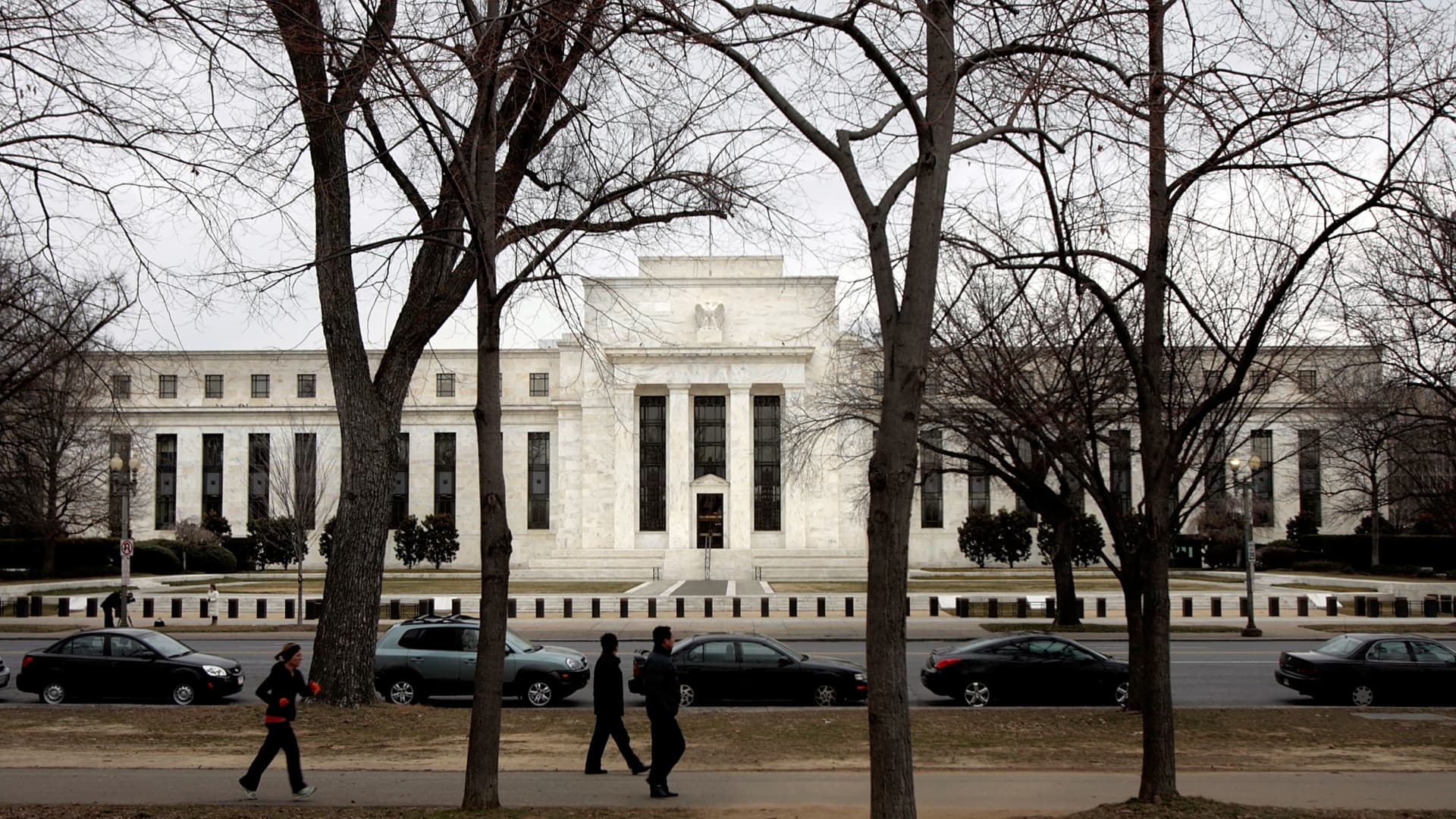

The Federal Reserve announced Wednesday it will leave interest rates unchanged as inflation continues to run above the Fed’s 2% mandate.
The move comes after the central bank cut its benchmark interest rate by a full percentage point last year and in the wake of President Donald Trump‘s comment during his first week back in office that he’ll “demand that interest rates drop immediately.”
The latest CNBC Fed Survey showed expectations for only two rate cuts later in the year, the same number penciled in by Federal Reserve officials in their recent forecasts.
“While inflation concerns have significantly abated, they still remain,” said Michele Raneri, vice president and head of U.S. research and consulting at TransUnion. “As a result, it is quite possible that there will be fewer rate cuts over the course of next year than anticipated only a few months ago.”
For consumers struggling under the weight of high prices and high borrowing costs, that means there will be little relief to come. It also means Trump may further challenge the Fed’s independence.
More from Personal Finance:
IRS announces the start of the 2025 tax season
What the Trump administration could mean for your money
House Republicans push to extend Trump tax cuts
Inflation has been an ongoing issue since the pandemic, when price increases soared to their highest levels since the early 1980s. The Fed responded with a series of interest rate hikes that took its benchmark rate to its highest level in more than 22 years.
On the campaign trail, Trump said inflation and high interest rates are “destroying our country.”
The federal funds rate, which is set by the U.S. central bank, is the rate at which banks borrow and lend to one another overnight. Although that’s not the rate consumers pay, the Fed’s moves still affect the borrowing and savings rates they see every day.
The spike in interest rates caused most consumer borrowing costs to skyrocket, putting many households under pressure.
Even though the central bank has already started cutting its benchmark rate and more rate cuts are on the horizon, consumers won’t see their borrowing costs come down significantly, according to Greg McBride, Bankrate’s chief financial analyst.
“The rate cuts are not going to be big enough or often enough to do the heaving lifting for you,” he said.
From credit cards and mortgage rates to auto loans and savings accounts, here’s a look at where those rates could go in 2025.
Credit cards
Since most credit cards have a variable rate, there’s a direct connection to the Fed’s benchmark. In the wake of the rate hike cycle, the average credit card rate rose from 16.34% in March 2022 to more than 20% today — near an all-time high.
Annual percentage rates will continue to come down as the central bank reduces rates, but they are only easing off extremely high levels. With only a few potential quarter-point cuts on deck, APRs aren’t likely to fall much, according to Matt Schulz, chief credit analyst at LendingTree.
“Anyone hoping for the Fed to ride in as the cavalry and rescue you from high interest rates anytime soon is going to be really disappointed,” he said.
Try consolidating and paying off high-interest credit cards with a lower-interest personal loan or switching to an interest-free balance transfer credit card, Schulz advised: “A 0% balance transfer credit card can be an absolute lifesaver.”
Mortgage rates
Although 15- and 30-year mortgage rates are fixed, and tied to Treasury yields and the economy, anyone shopping for a new home has lost considerable purchasing power, partly because of inflation and the Fed’s policy moves.
The average rate for a 30-year, fixed-rate mortgage is now just above 7%, according to Bankrate.
Going forward, McBride expects mortgage rates to “spend most of the year in the 6% range,” he said. But since most people have fixed-rate mortgages, their rate won’t change unless they refinance or sell their current home and buy another property.
Auto loans
Even though auto loans are fixed, payments are getting bigger and less affordable because car prices have been rising along with the interest rates on new loans.
The average rate on a five-year new car loan is 5.3%, according to January data from Edmunds compiled for CNBC.
“With the Fed signaling that any rate cuts in 2025 will be gradual, affordability challenges are likely to persist for most new vehicle buyers,” said Joseph Yoon, Edmunds’ consumer insights analyst.
“The average transaction price of a new vehicle remains near $50,000, driving average loan amounts to record highs,” he said. “Although further rate cuts in 2025 could provide some relief, the continued upward trend in new vehicle pricing makes it difficult to anticipate significant improvements in affordability for consumers in the new year.”
Student loans
Federal student loan rates are also fixed, so most borrowers aren’t immediately affected by any Fed moves.
However, undergraduate students who took out direct federal student loans for the 2024-25 academic year are paying 6.53%, up from 5.50% in 2023-24. Interest rates for the upcoming school year will be based in part on the May auction of the 10-year Treasury note.
Private student loans tend to have a variable rate tied to the prime, Treasury bill or another rate index, which means those borrowers are typically paying more in interest. How much more, however, varies with the benchmark.
Savings rates
While the central bank has no direct influence on deposit rates, the yields tend to be correlated to changes in the target federal funds rate.
In recent years, top-yielding online savings accounts have offered the best returns in over a decade and still pay nearly 5%.
“While the Fed putting the brakes on interest rate cuts stinks for those with debt, it is welcome news for savers,” Schulz said. “That means that it is still a really opportune time to shop for a high-yield savings account. Sure, you’ve missed out on the peak, but there are still plenty of good returns to be found.”


Personal Finance
Next-Generation Retirement Planning: Managing Longevity Risk and Variable Income Streams


U.S.- Canada Trade Talks Collapse; Carney Says Retaliatory Tariffs Begin September 8

Flock Cameras and the Future of Public Security

AI Infrastructure Boom Hits Physical Limits: Power, Financing, and Supply Chain Strain

Armanino adds Strategic Accounting Outsourced Solutions

New 2023 K-1 instructions stir the CAMT pot for partnerships and corporations

Tax Strategy: Employee Retention Credit update
-

 Stock News1 week ago
Nvidia Q2 FY2027 Earnings beats Wall Street Expectation with Record $96.2 Billion Revenue
-
 Technology5 days ago
AI Infrastructure Boom Hits Physical Limits: Power, Financing, and Supply Chain Strain
-
 Technology3 days ago
Flock Cameras and the Future of Public Security
-
 Economics3 days ago
U.S.- Canada Trade Talks Collapse; Carney Says Retaliatory Tariffs Begin September 8