
Personal Finance
What to expect ahead of Federal Reserve’s first rate cut in years

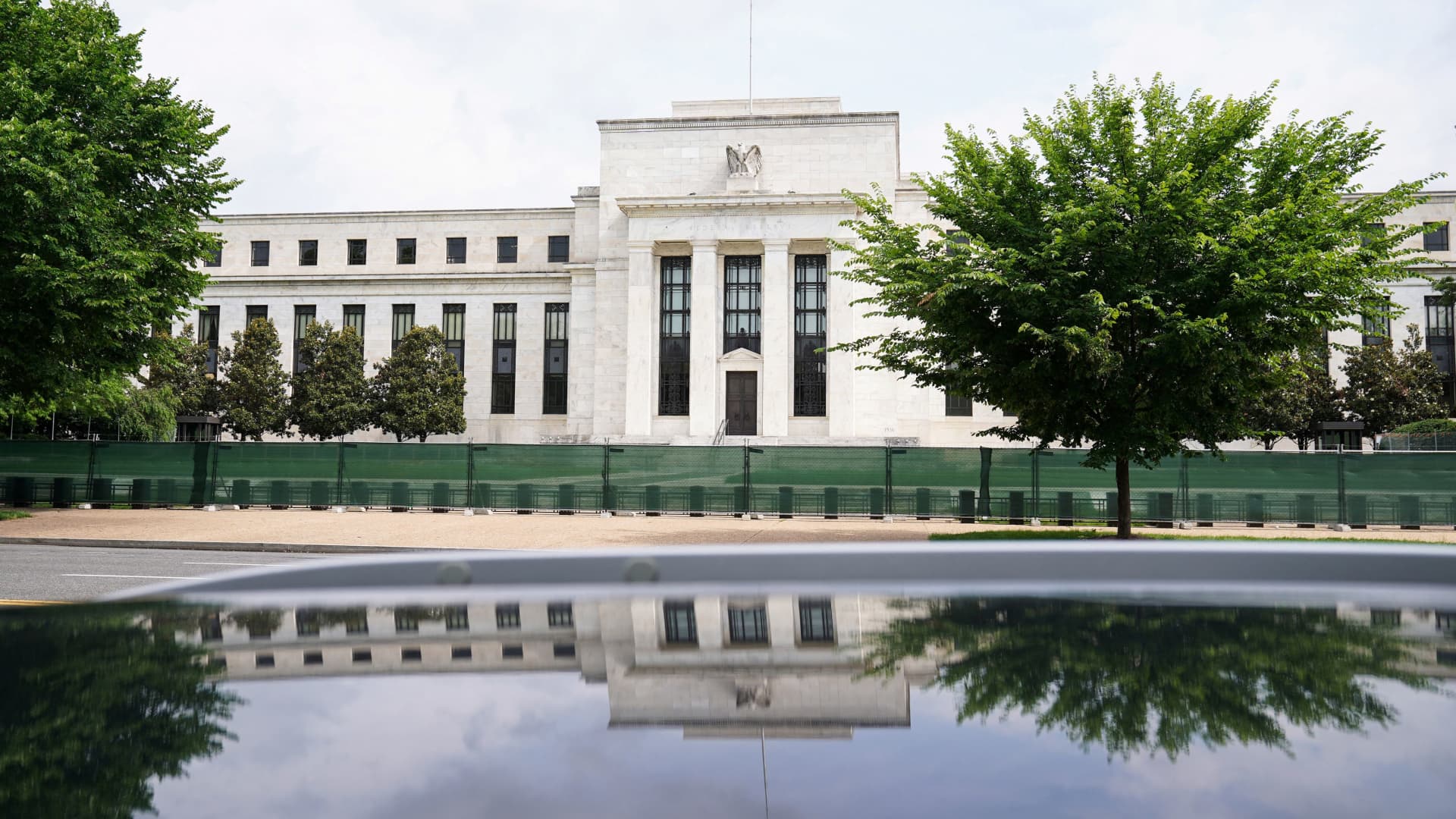

Recent signs of cooling inflation are paving the way for the Federal Reserve to cut rates when it meets next week, which is welcome news for Americans struggling to keep up with the elevated cost of living and sky-high interest charges.
“Consumers should feel good about [an interest rate reduction] but it’s not going to deliver sizeable immediate relief,” said Brett House, economics professor at Columbia Business School.
Inflation has been a persistent problem since the Covid-19 pandemic, when price increases soared to their highest levels in more than 40 years. The central bank responded with a series of interest rate hikes that took its benchmark rate to the highest level in decades.
The spike in interest rates caused most consumer borrowing costs to skyrocket, putting many households under pressure.
More from Personal Finance:
The ‘vibecession’ is ending as the economy nails a soft landing
‘Recession pop’ is in: How music hits on economic trends
More Americans are struggling even as inflation cools
“The cumulative progress on inflation — evidenced by the CPI now at 2.5% after having peaked at 9% in mid-2022 — has given the Federal Reserve the green light to begin cutting interest rates at next week’s meeting,” said Greg McBride, chief financial analyst at Bankrate.com, referring to the consumer price index, a broad measure of goods and services costs across the U.S. economy.
However, the impact from the first rate cut, expected to be a quarter percentage point, “is very minimal,” McBride said.
“What borrowers can be optimistic about is that we will see a series of rate cuts that cumulatively will have a meaningful impact on borrowing costs, but it will take time,” he said. “One rate cut is not going to be a panacea.”
Markets are pricing in a 100% probability that the Fed will start lowering rates when it meets Sept. 17-18, with the potential for more aggressive moves later in the year, according to the CME Group’s FedWatch measure.
That could bring the the Fed’s benchmark fed funds rate from the current range of 5.25% to 5.50% to below 4% by the end of next year, according to some experts.
The federal funds rate, which the U.S. central bank sets, is the rate at which banks borrow and lend to one another overnight. Although that’s not the rate consumers pay, the Fed’s moves still affect the borrowing and savings rates they see every day.
Everything from credit cards to car loans and mortgages will be impacted once the Fed starts trimming its benchmark. Here’s a breakdown of what to expect:
Credit cards
Since most credit cards have a variable rate, there’s a direct connection to the Fed’s benchmark. In the wake of the rate hike cycle, the average credit card rate rose from 16.34% in March 2022 to more than 20% today — near an all-time high.
For those paying 20% interest — or more — on a revolving balance, annual percentage rates will start to come down when the Fed cuts rates. But even then they will only ease off extremely high levels, according to Bankrate’s McBride.
“The Fed has to do a lot of rate cutting just to get to 19%, and that’s still significantly higher than where we were just three years ago,” McBride said.
The best move for those with credit card debt is to switch to a 0% balance transfer credit card and aggressively pay down the balance, he said. “Rates won’t fall fast enough to bail you out.”
Mortgage rates
While 15- and 30-year mortgage rates are fixed and mostly tied to Treasury yields and the economy, they are partly influenced by the Fed’s policy. Home loan rates have already started to fall, largely due to the prospect of a Fed-induced economic slowdown.
As of Sept. 11, the average rate for a 30-year, fixed-rate mortgage was around 6.3%, nearly a full percentage point drop from where rates stood in May, according to the Mortgage Bankers Association.
But even though mortgage rates are falling, home prices remain at or near record highs in many areas, according to Jacob Channel, senior economist at LendingTree.
“This cut isn’t going to totally reshape the economy, and it’s not going to make doing things like buying a house or paying off debt orders of magnitude easier,” he said.
Auto loans
“Auto loan rates will head lower, too, but you shouldn’t expect the blocking and tackling around car shopping to change anytime soon,” said Matt Schulz, chief credit analyst at LendingTree.
The average rate on a five-year new car loan is now around 7.7%, according to Bankrate.
While anyone planning to finance a new car could benefit from lower rates to come, the Fed’s next move will not have any material effect on what you get, said Bankrate’s McBride. “Nobody is upgrading from a compact to an SUV on a quarter-point rate cut.” The quarter percentage point difference on a $35,000 loan is about $4 a month, he said.
Consumers would benefit more from improving their credit scores, which could pave the way to even better loan terms, McBride said.
Student loans
Federal student loan rates are also fixed, so most borrowers won’t be immediately affected by a rate cut. However, if you have a private loan, those loans may be fixed or have a variable rate tied to the T-bill or other rates, which means once the Fed starts cutting interest rates, the rates on those private student loans will come down as well.
Eventually, borrowers with existing variable-rate private student loans may also be able to refinance into a less expensive fixed-rate loan, according to higher education expert Mark Kantrowitz.
However, refinancing a federal loan into a private student loan will forgo the safety nets that come with federal loans, he said, “such as deferments, forbearances, income-driven repayment and loan forgiveness and discharge options.” Additionally, extending the term of the loan means you ultimately will pay more interest on the balance.
Savings rates
While the central bank has no direct influence on deposit rates, the yields tend to be correlated to changes in the target federal funds rate.
As a result of the Fed’s string of rate hikes in recent years, top-yielding online savings account rates have made significant moves and are now paying well over 5%, with no minimum deposit, according to Bankrate’s McBride.
With rate cuts on the horizon, those “deposit rates will come down,” he said. “But the important thing is, what is your return relative to inflation — and that is the good news. You are still earning a return that’s ahead of inflation, as long as you have your money in the right place.”


Personal Finance
Next-Generation Retirement Planning: Managing Longevity Risk and Variable Income Streams


U.S.- Canada Trade Talks Collapse; Carney Says Retaliatory Tariffs Begin September 8

Flock Cameras and the Future of Public Security

AI Infrastructure Boom Hits Physical Limits: Power, Financing, and Supply Chain Strain

Armanino adds Strategic Accounting Outsourced Solutions

New 2023 K-1 instructions stir the CAMT pot for partnerships and corporations

Tax Strategy: Employee Retention Credit update
-

 Stock News1 week ago
Nvidia Q2 FY2027 Earnings beats Wall Street Expectation with Record $96.2 Billion Revenue
-
 Technology6 days ago
AI Infrastructure Boom Hits Physical Limits: Power, Financing, and Supply Chain Strain
-
 Economics4 days ago
U.S.- Canada Trade Talks Collapse; Carney Says Retaliatory Tariffs Begin September 8
-
 Technology4 days ago
Flock Cameras and the Future of Public Security