
Personal Finance
Why some women opt out of work


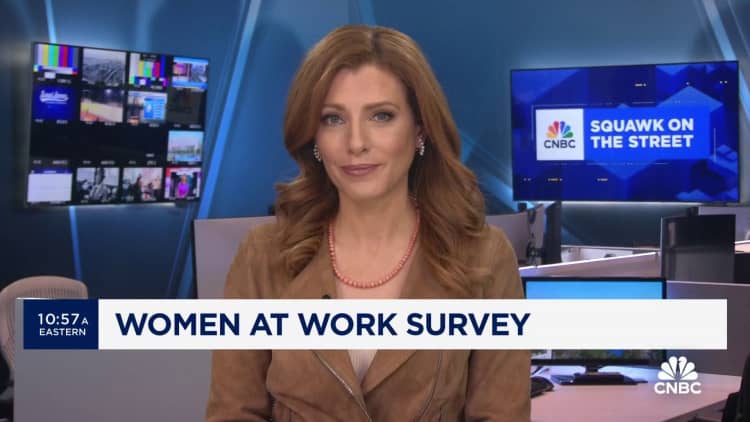
If TikTok is any guide, more women are taking a traditional approach to romantic partnerships: Some say they are even opting out of the workforce entirely in favor of the so-called “soft life,” centered around their home, their family and their own wellbeing.
(Re-)enter the “tradwife,” one of social media’s growing trends. It shows a curated look at women embracing domesticity as the antithesis of what other young women are experiencing, who are “working hard and barely scraping by,” said Casey Lewis, a social media trend forecaster.
“The thing about tradwives is that it feels very different; it is an escape from a lot of people’s reality,” she said.
Experts say it’s a facade. Evidence shows this is something few women are actually doing, and it’s not a realistic lifestyle to aspire to.
When it comes to women and money, the data largely isn’t favorable.
Although women are achieving increasing levels of education and representation in senior leadership positions at work, they still earn just 84 cents for every dollar earned by men — a dynamic that has shown no significant signs of improvement in decades. As a result, women are more likely to be financially vulnerable and have less saved for retirement and other long-term goals.
Even as women’s economic standing improves, they still lag their male counterparts by almost every financial measure. “I can understand individuals that say it’s just too much,” said Stacy Francis, a certified financial planner and president and CEO of Francis Financial in New York.
‘There’s nothing new here’
These are old ideas with fresh taglines, “Fair Play” author Eve Rodsky says of tradwives and the related social media trend of stay-at-home girlfriends, or SAHGs: “That is the definition of patriarchy — there’s nothing new here.”
“Tradwives are pretending they have agency over their choices,” Rodsky said. But forgoing paid labor comes at an economic cost. “The tradwife or stay-at-home girlfriends are taking huge economic risks,” she added. “What that really means is that you don’t have economic security.”
Francis, who is a member of CNBC’s Financial Advisor Council, advises her female clients to consider that they “at some point in their life are going to be solely responsible for making financial decisions on their own.”
Social media portrays a glamorized view of what that life looks like but “that is not realistic,” Francis said. Financial dependence can also mean a loss of power or control, she added.
For SAHGs, creating an imbalance in a relationship at the outset is more troubling, said Heather Boneparth, co-author of The Joint Account, a money newsletter for couples. “For the stay-at-home girlfriend, the power dynamic is even more skewed in favor of their partner because they really have everything to lose.”

Staying at home also necessitates a degree of privilege that fewer young adults have these days. In reality, most people are living paycheck to paycheck. More than three-quarters, or 78%, of millennials in the U.S. are in a “dual career couple,” compared with baby boomers at 47%, according to the Berkeley Haas Center for Equity, Gender and Leadership.
Two partners working full-time is increasingly necessary to achieve the American dream — which for many people involves some combination of owning a home, getting married, having kids and making enough after expenses to save for retirement and spend on leisure.
Today’s young adults are having a harder time reaching those key milestones, at least compared with their parents a generation ago, according to a recent report by the Pew Research Center.
‘Step back and do less’
There is a disillusionment taking hold among younger Americans, studies show. Generation Z is increasingly less motivated by the daily grind and adopting a more relaxed approach to their long-term financial security, according to a recent Prosperity Index study by Intuit.
In the current climate, newly minted adults between the ages of 18 and 25 are more interested in experiences that promote personal growth and emotional well-being, the report found.
Young women, whether they’re married or not, are expressing a desire to “take a step out of the professional rat race,” Lewis said.
“There’s a lot of pressure on young women,” she said. Being a stay-at-home girlfriend or tradwife is “an excuse to step back and do less.”
But if anything, women are working more now, not less.
“Prime-age women, including mothers, are participating in the labor force more than ever before,” said Julia Pollak, chief economist at ZipRecruiter.
By 2023, women’s employment had recovered from pandemic-era losses. In 2024, the labor force participation rate for women ages 25-54 neared an all-time high, according to the Bureau of Labor Statistics.
In other words, you can choose to be a tradwife if you have a tradhusband.
Julia Pollak
Chief economist at ZipRecruiter
Of course, even in households where both partners work, many marriages still adhere to traditional gender roles. In cases where men are the primary breadwinners, it’s more often women who take on the bulk of the caretaking responsibilities, experts say.
“In other words, you can choose to be a tradwife if you have a tradhusband,” Pollak said.
‘A big change happening’
In at least some marriages or partnerships, couples are reevaluating ideas about work and family and striking a balance between the two.
Recently, it’s actually men who are choosing to scale back at work, particularly high earners with higher levels of education, according to a 2023 working paper published by the National Bureau of Economic Research.
“The pandemic may have motivated people to re-evaluate their life priorities and also gotten them accustomed to more flexible work arrangements (e.g., work from home), leading them to choose to work fewer hours, especially if they can afford it,” the researchers wrote.
“There’s a great new set of men who are saying that overwork is not their first priority anymore,” Rodsky said of those men who may have already logged long hours and are now dialing back.
“The dark side of the pandemic was this ‘banana-bread-tradwife’ recycling of old ideas; the exciting side is this big change happening.”


Personal Finance
Next-Generation Retirement Planning: Managing Longevity Risk and Variable Income Streams


U.S.- Canada Trade Talks Collapse; Carney Says Retaliatory Tariffs Begin September 8

Flock Cameras and the Future of Public Security

AI Infrastructure Boom Hits Physical Limits: Power, Financing, and Supply Chain Strain

Armanino adds Strategic Accounting Outsourced Solutions

New 2023 K-1 instructions stir the CAMT pot for partnerships and corporations

Tax Strategy: Employee Retention Credit update
-

 Stock News1 week ago
Nvidia Q2 FY2027 Earnings beats Wall Street Expectation with Record $96.2 Billion Revenue
-
 Technology5 days ago
AI Infrastructure Boom Hits Physical Limits: Power, Financing, and Supply Chain Strain
-
 Technology3 days ago
Flock Cameras and the Future of Public Security
-
 Economics3 days ago
U.S.- Canada Trade Talks Collapse; Carney Says Retaliatory Tariffs Begin September 8