
Personal Finance
Why uncertainty makes the stock market go haywire

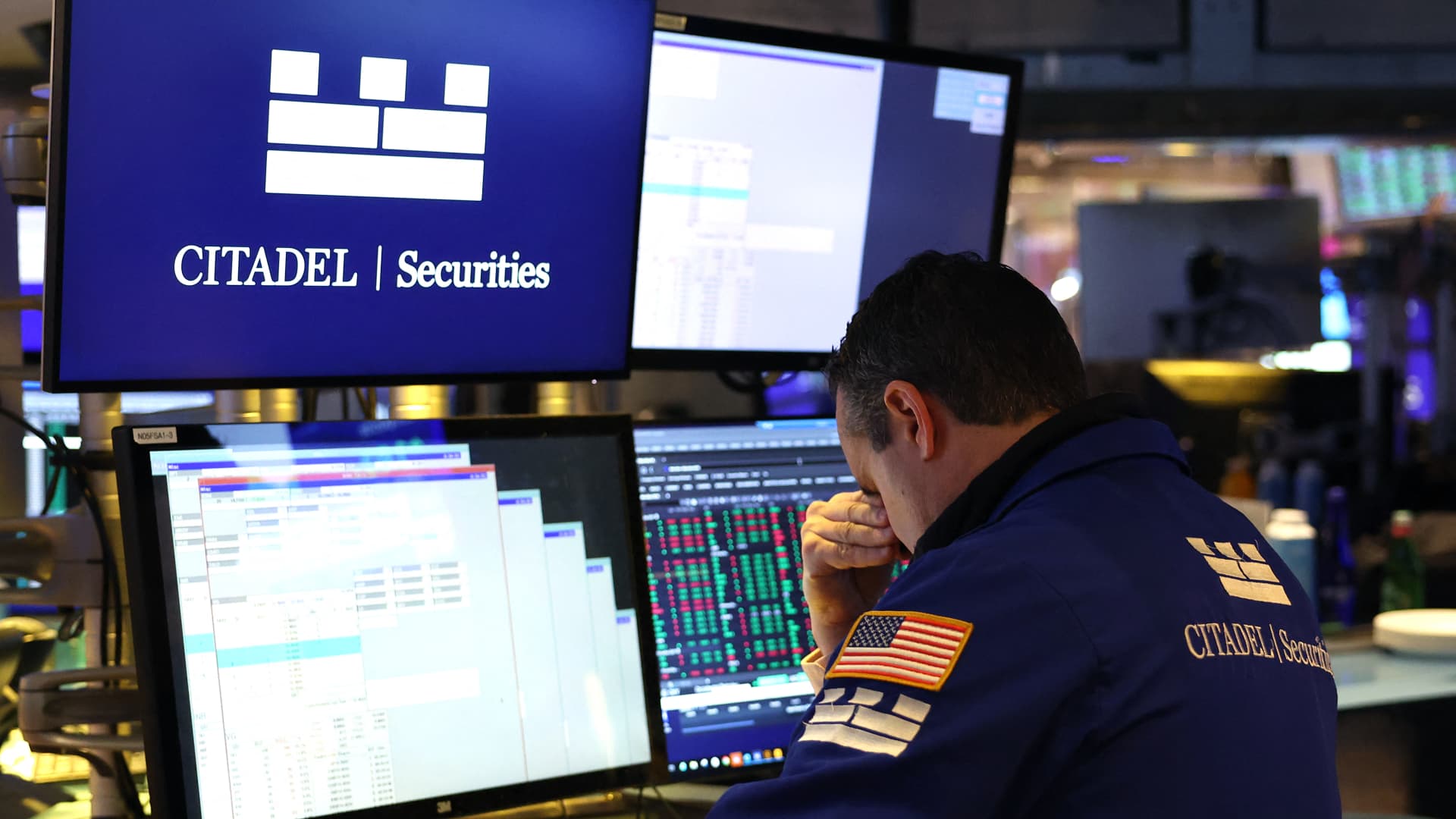
Traders on the floor of the New York Stock Exchange on March 14, 2025, at the opening bell.
Timothy A. Clary | Afp | Getty Images
Uncertainty isn’t in short supply these days — and investors have taken notice.
See-sawing policy from the White House has given investors whiplash on many fronts — with tariffs being among the biggest question marks, market experts say.
Coupled with uncertainty around federal job cuts, negotiations to end the war in Ukraine and other issues, the combination has been “disorienting to market sentiment,” Paul Christopher, head of global investment strategy at the Wells Fargo Investment Institute, wrote Wednesday.
Stocks have wobbled amid the vertigo.
The S&P 500 entered a correction last week, meaning the U.S. stock index fell 10% from its recent high mark in February. The index has recovered a bit but teetered on the edge of a correction Tuesday afternoon.
The benchmark is down about 5% in 2025.

Uncertainty makes investors jittery — and stock markets volatile — because they don’t know how policy and other events will impact companies’ ability to make money, said Barry Glassman, a certified financial planner and founder of Glassman Wealth Services.
Worried consumers might pull back on spending, crimping profits, for example. Tariffs raise costs for certain companies to import or produce goods — and it’s unclear how other nations might retaliate. While economists generally don’t think federal trade policy and job cuts will push the U.S. into recession, Trump hasn’t ruled out that possibility.
“All of this comes down to corporate profits,” said Glassman, a member of CNBC’s Advisor Council. “People will put more dollars where they have greater confidence in the investments,” he added.
Many ‘unanswered’ questions
There’s always uncertainty in the stock market, but it may feel more acute right now than at other times, experts said.
A recent (and perhaps counterintuitive) example of that uncertainty came on March 6, when President Donald Trump reversed course and delayed 25% tariffs on many imports from Canada and Mexico by a month. That delay came two days after the tariffs had taken effect.
Despite that “reprieve,” the S&P 500 sold off sharply during the day’s trading session, BeiChen Lin, senior investment strategist at Russell Investments, said recently.
More from Personal Finance:
Wholesale egg prices have ‘plunged’
How to manage your student loan payments after a layoff
Harvard announces free tuition for families making under $200K annually
“There are still a lot of questions that remain unanswered,” Lin said.
For example, Lin said, what would happen after the 30-day delay? How might Mexico and Canada respond? Will the U.S. impose tariffs on other countries or products?
National Economic Council director Kevin Hassett warned Monday of “some uncertainty” over Trump’s tariff policy in coming weeks. Treasury Secretary Scott Bessent said last week that the Trump administration is more focused on long-term health of the U.S. economy instead of short-term volatility.
‘It’s all based on emotion’
Brad Klontz, a certified financial planner and behavioral finance expert, said he thinks the stock market turmoil ties into something more primitive than corporate profits: Human psychology.
“Quite frankly, it’s all based on emotion,” said Klontz, managing principal of YMW Advisors in Boulder, Colorado, and a member of CNBC’s Advisor Council.
“We like to feel like we can predict the future. When we feel the future is unpredictable, when we don’t have faith in our leaders, that’s when we start to panic,” Klontz said.
“There’s a ton of fear” right now, he added.

Amid fear, it’s important for investors to put the recent market moves into perspective, advisors said.
A 10% pullback isn’t shocking after two consecutive years of annual stock returns exceeding 20%, Glassman said.
“This is normal,” Glassman said of the market’s temper tantrums.
However, investors often make bad financial choices by engaging in catastrophic thinking (believing the markets may never recover, for example), Klontz said. They buy high and sell low, he said.
Historically, the market has always bounced back higher.
“If you lost $40,000, you have to ask yourself, did you really lose it?” Klontz said. “If you didn’t sell, I’m not sure you lost it. If you sold, you guaranteed lost that $40,000.”
Focus on what you can control
During times of uncertainty, investors should focus on what they can control, Klontz said.
It’s a good time for investors to look at their asset allocation, and ensure their overall stock-bond holdings haven’t gotten too risky or conservative over time, for example, Klontz said.
The recent volatility has also shown the value of diversification among different asset classes in an investment portfolio, Glassman said.
For example, international stocks in both developed and emerging markets are up this year, even though U.S. stocks are down, Glassman said. Bond returns have also been positive, he said.
Ultimately, investor behavior is the biggest threat to stock returns, not the federal government, Klontz said.


Personal Finance
Next-Generation Retirement Planning: Managing Longevity Risk and Variable Income Streams


U.S.- Canada Trade Talks Collapse; Carney Says Retaliatory Tariffs Begin September 8

Flock Cameras and the Future of Public Security

AI Infrastructure Boom Hits Physical Limits: Power, Financing, and Supply Chain Strain

Armanino adds Strategic Accounting Outsourced Solutions

New 2023 K-1 instructions stir the CAMT pot for partnerships and corporations

Tax Strategy: Employee Retention Credit update
-

 Stock News1 week ago
Nvidia Q2 FY2027 Earnings beats Wall Street Expectation with Record $96.2 Billion Revenue
-
 Technology5 days ago
AI Infrastructure Boom Hits Physical Limits: Power, Financing, and Supply Chain Strain
-
 Technology3 days ago
Flock Cameras and the Future of Public Security
-
 Economics3 days ago
U.S.- Canada Trade Talks Collapse; Carney Says Retaliatory Tariffs Begin September 8