
Finance
Will you get a tax refund this year? Experts have ideas on how to use the money

Check out what’s clicking on FoxBusiness.com.
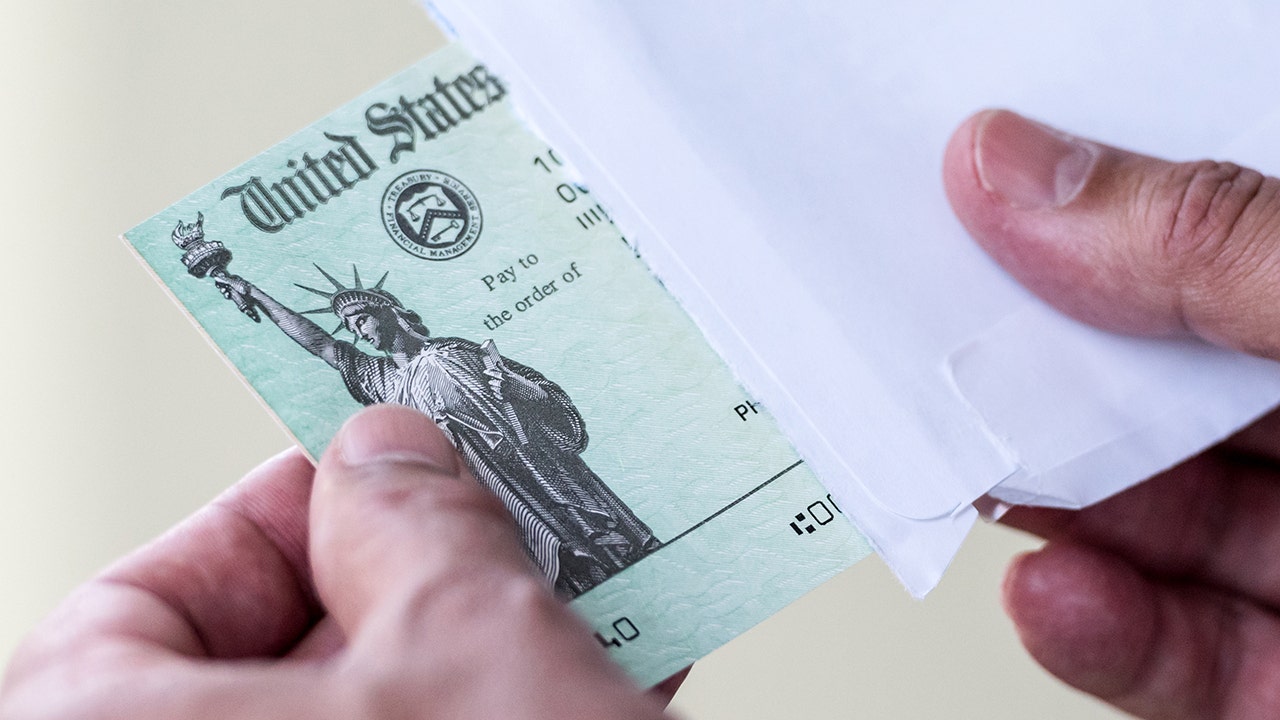
The Internal Revenue Service has doled out millions of tax refunds amid the ongoing 2025 tax filing season.
More than 8 million tax refunds have gone out during the 2025 season as of Feb. 7 and, according to the IRS, those refunds have averaged $2,065 each.
When taxpayers receive their refunds, addressing debt, socking away money in an emergency fund and contributing to retirement are some good avenues for using those funds, experts said.
TAX TIP: DON’T FILE UNTIL YOU GET ALL NECESSARY DOCUMENTS
Debt
Jonathan Ford Jr., president of JFJ Advisory Services, said paying high-interest debt “would be one of my top recommendations” for people looking to put their tax refund to use.
“Any outstanding credit card debt would be very good to pay down, personal loans, anything financed at especially double-digit percentage rates but anything really above the current market rates could be a really good target for paying down,” he told FOX Business.
Meanwhile, Karla Dennis, the CEO and founder of tax strategy firm KDA, Inc., said tackling high credit card debt, specifically, could be a good use of someone’s tax refund.
U.S. household credit card debt amounted to a collective $1.21 trillion at the end of December, according to the Federal Reserve Bank of New York.

A woman holding credit cards. (iStock / iStock)
“The cost of their debt is eating away at the money that they could be spending on something else so I would definitely pay down all of my credit card debt” if possible, Dennis said.
Emergency Fund
“The next thing that I would do with the refund is, I would make sure I had some emergency money, at least $1,000 of emergency cash,” Dennis said.
Emergency funds give people the ability to “purchase things in the event of an emergency,” she said.
“If you maybe this month can’t make your rent, you can pull from your emergency fund,” Dennis continued. “With the price of consumer goods going up, especially food, you can utilize your emergency fund for that, but it really does need to be for an emergency-type situation. I think a lot of consumers look at saved money as ‘oh, let me use this money for want.’ It really needs to be a need.”

As record high inflation has prompted consumer prices to soar, many U.S. households are feeling uneasy about their emergency savings, a new survey released by Bankrate finds. (iStock / iStock)
Ford said putting money in an emergency fund “would probably be [his] top” recommendation for a tax refund, especially if someone doesn’t already have one or hasn’t fully funded theirs.
A recent U.S. News survey indicated 42% of Americans lack one.
“The emergency fund is pretty much always the number one thing that I have to look at before I come up with any plan, is make sure that we’re building out the emergency savings,” he explained. “The benefit of having the emergency fund is just being able to sleep at night and if you do have a $1,000 or $2,000 expense pop up … then you can pay that expense, and it doesn’t interrupt any other aspect of your financial life.”
He said he tells his clients to try to sock away “three to six months” in an emergency fund because it “provides a little deeper safety net.”
Retirement
Both Ford and Dennis also said tax refund recipients should consider setting some aside for retirement.
“Once I established my emergency fund, I would then invest some of that money, maybe in an IRA or a Roth IRA, even if I only put in a couple hundred bucks or $500,” Dennis told FOX Business. “I think consumers need to know that investing builds up over time, and you may or may not have the full contribution amount of, say, $7,000 or $6,000, to fully fund your retirement account, but if you could start building a nest egg now, which is putting in a little amount, I think that would be very helpful.”
Ford said he often tells clients to invest in a Roth IRA.
GET FOX BUSINESS ON THE GO BY CLICKING HERE
“There’s additional tax savings there because in the Roth you only pay taxes on the money you contribute,” he explained. “Whereas with the traditional, you pay on the money you withdraw, and so you’re getting taxes on the growth as well, whereas you don’t in the Roth.”

Businessman in suit is holding piggy bank. Finance Savings concept (iStock / iStock)
More than 42% of U.S. households had some form of IRA in 2023, according to a report from the Investment Company Institute.
Should tax refunds be used on things other than finances?
With the arrival of one’s tax refund, there may be a desire to use some of it on something other than improving your finances.
“I do recommend, and I have myself always recommended, taking a small, small percentage of that – maybe less than 25% – and maybe treat yourself to something nice, if there’s something you’ve been having your eye on for a while,” Ford told FOX Business. “I do think buying something to make yourself happy is an important step in making sure you are able to stay on track with your financial goals.”
Dennis said it “depends on what your finances look like” whether you should treat yourself with your tax refund.
“Tax refund money is your money that you’ve allowed the government to keep all year,” she said. “You really need to establish a budget and, within your budget, there should be an allocation of a certain amount of money to go for fun things if you can afford it. But I think a lot of taxpayers are under the misnomer ‘Oh, this is extra money coming in to me.’ No, it’s your money that the government has kept.”
How long does it take for the IRS to distribute refunds?
The time it takes to receive a tax refund can vary, depending on how one filed their taxes, the IRS said.
TAXPAYERS LEAVING THOUSANDS OF DOLLARS ON THE TABLE AT TAX TIME: EXPERT
Taxpayers who filed electronically usually get them within 21 days, the agency’s website said. For amended or paper tax returns, refunds usually take four weeks or longer.
The IRS has a webpage where taxpayers can check up on the status of their refund.





Nvidia Q2 FY2027 Earnings beats Wall Street Expectation with Record $96.2 Billion Revenue

Treasury Bond Volatility Forces Bessent to Double Debt Buyback Size as Yields Swing

Nvidia Earnings Preview: What Wall Street Expects From the AI Bellwether’s Q2 Report

Armanino adds Strategic Accounting Outsourced Solutions

New 2023 K-1 instructions stir the CAMT pot for partnerships and corporations

Tax Strategy: Employee Retention Credit update
-

 Economics1 week ago
Nvidia’s Potential $3 Billion SB Energy Investment Could Reshape AI Infrastructure
-

 Economics4 days ago
Top 10 Largest Economies by 2030: IMF & World Bank GDP Projections for Global Powerhouses
-

 Stock News4 days ago
How to understand Intel $15B Stock Offering
-

 Technology1 week ago
U.S.-China AI Competition Intensifies as Washington Pushes Allies to Choose Sides
-
 Stock News1 day ago
Nvidia Earnings Preview: What Wall Street Expects From the AI Bellwether’s Q2 Report
-

 Economics4 days ago
Economic Profile of the United States of America (2026–2030 Horizon)
-

 Leaders3 days ago
Jackson Hole 2026: What the First Symposium Under Fed Chair Kevin Warsh Means for Markets
-

 Economics3 days ago
U.S. National Debt Surpasses $40 Trillion for the First Time: What It Means for the Economy