
Personal Finance
With gas above $4, drivers across the U.S. say they’re cutting back

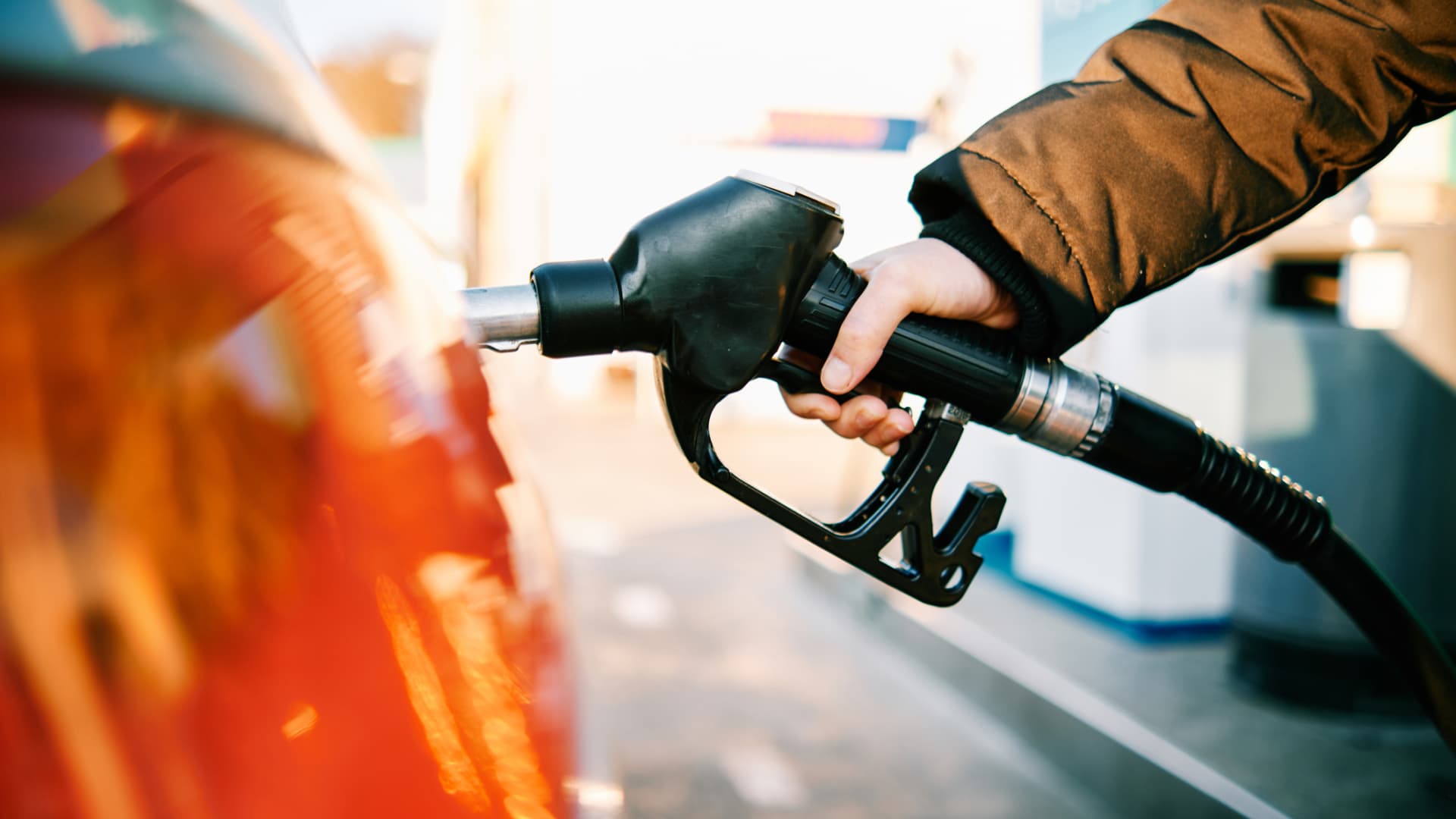
Gas prices remain above $4 a gallon nationwide, and drivers across the U.S. say they’re already starting to change their spending habits, if they can.
Some say they have little choice but to keep paying more. “I have to spend—there’s no other way,” said Miranda Alcalá, a Queens resident who drives between boroughs for work.
U.S. gas prices have climbed by nearly $1 a gallon since the beginning of March to a national average of $4.14 as of Tuesday afternoon, according to the American Automobile Association. The increase comes as the war with Iran pushes oil prices higher and raises the risk of supply disruptions.
Around $4 a gallon is often where drivers start to change their behavior: About 59% of Americans say they would change their driving habits or lifestyle at that level, AAA reports. That share rises to roughly three-quarters if prices hit $5.
CNBC spoke with drivers at gas stations across the country who say they’re trying to cut back where they can — driving less, combining trips or trimming other spending — but many say their commutes and daily routines leave little room to avoid higher costs.
New York: ‘There’s no other way’
At a gas station in Brooklyn, regular gas cost about $3.89 per gallon with cash and $4.09 with credit on Thursday.
Alcalá, who works two restaurant jobs and drives between Queens, Brooklyn and Long Island, said she has seen her gas costs nearly double in recent weeks. “I used to pay like 20, 25 bucks for a full tank … now I pay 40, which is crazy,” she said.
The added cost is unavoidable because taking the train isn’t a practical alternative, she said.
Alcalá said rising costs are adding up across her budget, from gas to food. “Now I just cook at home because it’s less expensive,” she said, adding that she may cut back on going out with friends if gas prices keep rising.
At the same gas station, Barbara Skenderis, 53, a Queens mother, said driving isn’t optional. “I need gas. How else am I going to get around — take the train?” she said.
Skenderis said her days often involve long trips across the city, including taking her kids to baseball games and practices, and that she is filling up more frequently as a result.
At a BP station in Queens, regular gas was priced at $4.09 with cash and $4.19 with credit on Thursday. Deron Davis, a Brooklyn-based carpenter who drives daily and covers his own fuel costs, said the price caught him off guard as he pulled up to fill his tank.
The 42-year-old estimates he spends about $60 a week on gas and said prices at the Astoria station were far higher than what he typically pays in Brooklyn. Rather than filling up there, he put in just enough to get back to a cheaper station.
At current levels, Davis said, prices feel high: “Nobody wants to go over $4.”
Washington, D.C.: ‘I have to curtail what I would normally do’
A man looks at gas prices listed on a gas pump at an Exxon station on March 13, 2026 in Washington, DC.
Heather Diehl | Getty Images News | Getty Images
In Logan Circle, just north of downtown Washington, D.C., regular gas was listed at $4.09 a gallon as of Thursday, with premium at $4.79.
Tanner Harris, 31, an attorney who lives in Bethesda, Md., and commutes into the city several days a week, said rising gas prices are already affecting her budget, but her schedule leaves few alternatives.
“I can’t really do anything about the driving because I work late most days,” she said, adding that she’s “hesitant to rely on public transportation” for that reason.
For some, the changes are more discretionary. Zainab Kareem, 70, a retired Washington, D.C., resident who primarily drives for leisure, said she has already begun cutting back.
“I have to curtail what I would normally do in terms of driving different places, because the gas is really too expensive,” she said.
Corinne Candilis, 30, a Washington, D.C., resident who works for the government and drives every workday, said she is limiting driving outside of her commute and is more concerned about how higher fuel costs could affect the price of other goods.
She said she is not cutting back yet, but is preparing to adjust her spending. “I’m definitely looking at my budget to see where I’ll be able to make those cuts,” Candilis said.
Nashville: ‘Ridiculous prices’
At a Kroger Fuel Center about three miles from downtown Nashville, regular gas was priced at $3.89 per gallon on Thursday morning, April 2, after rising sharply in recent weeks, according to AAA.
“Ridiculous prices,” said Mary Sawyers, 63, a retired Nashville resident who helps care for children in her extended family.

Sawyers drives a family member’s SUV to shuttle three children between school, daycare and other activities. While she does not usually pay for gas herself, she said the cost would be difficult to absorb.
“If I had my own car right now, I think that I would have moved out of town,” she said.
The children’s mother, who relies on the car for work, has not cut back.
“It doesn’t affect her at all mentally,” Sawyers said of the children’s mother, who is more focused on getting to work and having her kids picked up.
Delaware and Maryland: ‘You have to absorb the cost somewhere’
In Middletown, Del., regular gas was priced at $3.89 per gallon at a Royal Farms station on Wednesday, April 1.
Rebecca Johnson, 66, who is semi-retired and works part-time in social services, said the rise in gas prices has been “a significant increase.”
“It’s affecting me, but not to the point where I have to cut back on medications or food,” Johnson said. “I just watch where I go now.”
Rather than taking the freeway and paying tolls, she now takes the back roads. “Instead of convenience, it takes me a minute or two more, but you have to absorb the cost somewhere,” Johnson said.
Some drivers say they are bracing for even higher prices as they absorb the current jump.
“It’s more money, but no matter what, you need gas so you’re going to pay for it,” said Kyle Fletcher, 34, at a Royal Farms in Cecilton, Md., where the price per gallon of regular gas was $3.99 last Wednesday.
“It’s not something I think about very often. I just pull up and put gas in the car, but of course I’d like to see [the price] come down.”
So far, he said, he hasn’t had to adjust his budget. “But if what they’re predicting for [gas prices] is right, I’m sure that’ll be coming soon,” said Fletcher, who works in construction.
About 10 miles away, at Molly’s Mart in Kennedyville, Md., the price for a gallon of regular gas was $4.19 per gallon.
Mark Garver, 62, said the higher cost “affects all the middle class, in a negative way.”
“They already eat us up on groceries, and now they eat us up on oil,” said Garver, who is an independent Medicare broker.
He said he has responded to the higher prices by driving less. “It’s making sure you take one trip instead of three trips,” he said.
Los Angeles: ‘It’s pretty crazy’ at nearly $7 a gallon
On Monday, at a Shell station in downtown Los Angeles, regular gas was priced at $6.99 per gallon with cash and $7.19 with credit or debit.
Emanuel Gonzalez, 28, a contractor who recently moved from Virginia and works on flooring, painting and drywall projects, said the price difference has been jarring.
“I’m used to $4.20, $4.30 [in Virginia]. So moving to the West Coast and dealing with $6.99, $7.09, I think it’s pretty crazy,” he said.
Gonzalez said his manager has asked workers to avoid filling up in high-cost areas like downtown Los Angeles or Koreatown. But with his tank nearly empty, he said he had little choice.
“I was told to go somewhere else, but when I’m stuck with no gas, I have no choice but to hit the local Shell in downtown LA,” he said. Even so, he added, he only put $10 worth of gas in his tank to make it to a cheaper station.
Rising fuel costs are also changing how jobs are scheduled. Gonzalez said his manager is pushing crews to complete work in a single visit to avoid return trips.
“My manager, he’s telling me, do not waste a lot of time as far as going to properties and having to come back or not finishing the work all the way through to come back, because gas is expensive, man. At that point, we’re just losing profit margins,” he said.
At a USA Gasoline station in the Lincoln Heights neighborhood, regular gas was priced at $5.79 per gallon.
Martín Diaz, 17, who recently graduated from high school and lives in the area, said higher prices have changed how he drives and spends.
“I used to go out and waste money a lot. Now I have to think about, ‘OK, do I really need this?'” he said. He said he is changing how he drives to further stretch each tank of gas.
“It just sucks,” he said. “I’m wondering, when is it gonna go down? I feel like everybody is.”

Personal Finance
Next-Generation Retirement Planning: Managing Longevity Risk and Variable Income Streams


U.S.- Canada Trade Talks Collapse; Carney Says Retaliatory Tariffs Begin September 8

Flock Cameras and the Future of Public Security

AI Infrastructure Boom Hits Physical Limits: Power, Financing, and Supply Chain Strain

Armanino adds Strategic Accounting Outsourced Solutions

New 2023 K-1 instructions stir the CAMT pot for partnerships and corporations

Tax Strategy: Employee Retention Credit update
-

 Stock News1 week ago
Nvidia Earnings Preview: What Wall Street Expects From the AI Bellwether’s Q2 Report
-

 Accounting1 week ago
SEC’s Semiannual Reporting Proposal Faces Investor Pushback: What CFOs Need to Know
-

 Stock News1 week ago
Nvidia Q2 FY2027 Earnings beats Wall Street Expectation with Record $96.2 Billion Revenue
-

 Finance1 week ago
Treasury Bond Volatility Forces Bessent to Double Debt Buyback Size as Yields Swing
-
 Technology4 days ago
AI Infrastructure Boom Hits Physical Limits: Power, Financing, and Supply Chain Strain
-
 Economics2 days ago
U.S.- Canada Trade Talks Collapse; Carney Says Retaliatory Tariffs Begin September 8
-
 Technology2 days ago
Flock Cameras and the Future of Public Security