Connect with us

Accounting

Xero to buy payments platform Melio for $2.5 billion

Published

on

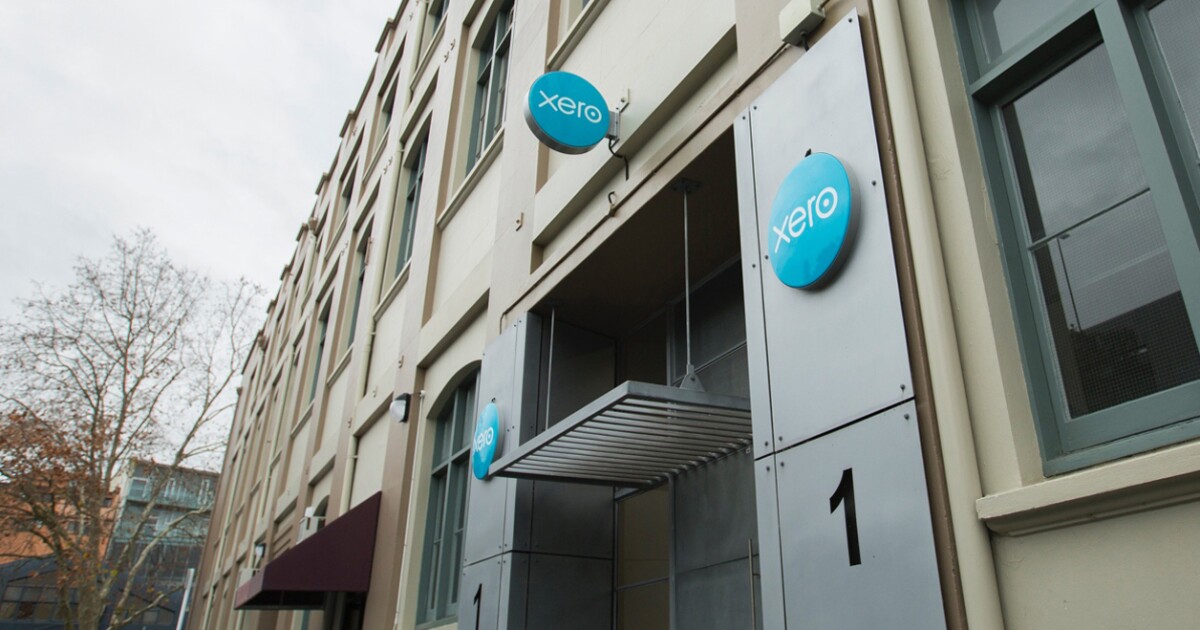
Cloud accounting platform Xero announced it will acquire payments solution provider Melio

The acquisition is expected to be funded through a mix of cash and equity. The upfront consideration will be $2.5 billion in cash and equity consideration. Additional contingent consideration, deferrals and rollovers is payable to Melio employees of up to $0.5 billion payable over three years. The majority is linked to delivering against certain pre-agreed outperformance targets, and the remainder subject to the passage of time, annual business objectives and continued employment. The purchase, strategically, will allow Xero to have a native bill pay solution all its own, versus relying on third party integrations (Melio has been integrated with Xero since 2023. )

Xero CEO Sukhinder Singh Cassidy said the purchase aligns well with a key pillar of the company’s broader strategy centered around winning the “3 by 3.” Cassidy last year said this refers to Xero’s three largest market opportunities of the U.S., the U.K. and Australia; as well as the three “super jobs” of core accounting, accounts payable and receivable, and payroll.

“We’re thrilled to announce we’re acquiring Melio, a leading US B2B payments platform that strongly aligns with our 3×3 strategy and US growth ambitions. Adding Melio’s world-class team, technology platform, and innovative A/P solutions to Xero enables a step change in our North America scale and the potential to help millions of US SMBs and their accountants better manage their cash flow and accounting on one platform. Xero and Melio are highly complementary — together they complete the key jobs to be done for US SMBs, extend reach across customer segments, provide both direct and syndicated offerings, and deliver multiple revenue drivers,” said Cassidy in a statement. 

Melio.com will continue to operate independently and support all small businesses in the U.S., said a spokesperson from Xero. Nothing changes in Melio’s product. Meanwhile, in parallel, Xero will embed Melio’s features into Xero’s core platform. As part of Xero’s commitment to an open ecosystem, the company will also continue to support other payments providers on our platform just as they have done before, in the event they would prefer not to switch.

The transaction is targeted to complete within 6 months of signing subject to conventional conditions precedent to closing, including satisfaction of various customary regulatory conditions and approvals for a business of this nature as described below. On completion, Matan Bar, Melio’s CEO and Founder will be responsible for the combined US business (reporting to the Xero CEO) that will bring together Xero and Melio’s teams across Accounting, Payments and Melio’s syndication network. All 600+ Melio employees in offices across New York and Tel Aviv will join Xero. Integration planning will commence immediately as the two companies explore how to bring their businesses together, with existing Xero teams already working closely with Melio. This includes adding Melio’s capability to Xero’s platform and GTM engine, continuing to invest in their standalone product, and exploring syndication opportunities.

The transaction will be effected by way of a merger of Melio Limited and a newly incorporated wholly owned subsidiary of Xero Limited. Completion is subject to conventional conditions precedent to closing including (i) satisfaction of various customary regulatory conditions and approvals for a business of this nature including change of control consents for relevant state Money Transmitter Licences and US anti-trust approval (Hart-Scott-Rodino or HSR); (ii) no “Material Adverse Change” in the Melio business and; (iii) valid shareholder vote by Melio shareholders approving the merger. 

As at the date of this announcement Xero has received covenants to vote in favour of the merger from more than the required number of Melio shareholders. Xero has agreed to pay a break fee of $37.5 million in the event that the acquisition does not close solely due to failure to secure HSR approval.

“Joining Xero is an incredible opportunity for the Melio team to further our mission to reinvent the way businesses pay each other. Having worked closely with the Xero team, we’re excited by our shared purpose to scale in the US and combine Xero’s accounting capabilities with Melio’s accounts payable and receivable solutions to create comprehensive product offerings for our collective, valued customer base,” said Melio Co-founder and CEO Matan Bar. 

Continue Reading

Accounting

SEC’s Semiannual Reporting Proposal Faces Investor Pushback: What CFOs Need to Know

Published

on

U.S. Securities and Exchange Commission (SEC)

A proposal from the U.S. Securities and Exchange Commission to potentially shift some public companies away from quarterly financial reporting toward a semiannual model is drawing significant pushback from investors, even as it continues moving through the regulatory process. The debate has direct implications for corporate finance teams, auditors, and the broader transparency of U.S. capital markets.

What the SEC Proposed

According to a summary published by accounting advisory firm Cohen & Co., the SEC issued a proposed rule on May 19, 2026, aimed at simplifying financial reporting requirements for many U.S. public companies. The proposal would potentially reduce the frequency of certain mandatory disclosures from quarterly to semiannual, a structural change that has not been made to core U.S. reporting requirements in decades.

The proposal follows an extended debate within U.S. policy circles, with proponents arguing that reduced reporting frequency could lower compliance costs and free up management time for longer-term strategic planning rather than quarter-to-quarter results management.

Why Investors Are Pushing Back

Comment letters submitted in response to the proposal have been extensive, and according to Cohen & Co.’s review of the public record, investors “appear to be largely opposed” to the shift, viewing frequent interim reporting as a core benefit of U.S. capital markets relative to other jurisdictions.

Accounting and law firms have taken a more measured position, generally urging any changes to remain aligned with the Financial Accounting Standards Board (FASB), whose existing disclosure requirements and guidance are built around a quarterly reporting cadence. A shift to semiannual reporting without corresponding changes to FASB guidance could create friction between SEC filing requirements and GAAP-based disclosure expectations.

Lessons From the U.K. Experience

The debate is not without precedent. The United Kingdom moved away from mandatory quarterly reporting for listed companies in 2014, returning to a semiannual disclosure requirement. According to Cohen & Co.’s analysis, that experience offers a cautionary data point: there was no measurable increase in capital expenditure or R&D investment following the change, while analyst coverage of affected companies declined as reliable interim information became less available — a particular risk for smaller and newly public companies that rely on analyst coverage to maintain investor visibility.

Practical Implications for Finance Teams

Beyond the debate over disclosure philosophy, the proposal carries practical complications. Many companies have debt covenants and credit agreements structured around quarterly financial delivery; a shift to semiannual reporting could require renegotiating those terms. Reduced reporting frequency would also extend the “window of market silence” between disclosures, a factor that governance and investor-relations teams would need to manage carefully to avoid information asymmetry.

Separately, and unrelated to the reporting-frequency debate, the SEC and FASB have continued finalizing more routine updates this year. New Accounting Standards Updates are taking effect for December 31, 2026, fiscal year-ends covering income tax disclosures, credit loss measurement, induced debt conversions, and stock compensation, according to Eide Bailly’s review of 2026 ASU activity. Additional guidance on paid-in-kind dividends and environmental credits is also on the near-term horizon.

What to Watch Next

The semiannual reporting proposal remains in the comment and review phase, and no final rule has been adopted as of this writing. Finance leaders should monitor the SEC’s regulatory agenda for further movement, while treating the current quarterly reporting requirement as the operative standard until any final rule is issued and an effective date is set.

Given the extent of investor opposition documented in the comment file, a full shift to mandatory semiannual reporting appears more likely to result in either a scaled-back compromise or continued study rather than swift adoption — though the SEC’s ultimate direction remains uncertain.


Continue Reading

Accounting

AI-Driven Automation and Continuous Accounting Frameworks

Published

on

The accounting profession is undergoing a fundamental structural transition as enterprise finance departments shift from periodic month-end closes toward automated continuous accounting models. By integrating specialized machine learning algorithms directly into enterprise resource planning (ERP) platforms, chief accounting officers are transforming financial reporting from a retrospective exercise into a real-time operational asset.

The Shift from Periodic Close to Continuous Financial Reporting
Traditional accounting workflows heavily relied on manual data reconciliation, spreadsheet calculations, and multi-week closing cycles at the end of each fiscal period. In contrast, continuous accounting frameworks utilize automated software agents to process, validate, and post transactional data in real time as business activities occur.

Automated bank reconciliation tools cross-reference incoming bank feeds, invoice records, and purchase orders automatically. By resolving transactional variances instantly throughout the month, corporate accounting teams eliminate the traditional workload spikes associated with quarterly and annual closes.

Machine Learning in Audit Trails and Anomaly Detection
Advanced natural language processing (NLP) and machine learning tools are redefining internal audit and financial control environments. Automated systems analyze 100% of general ledger entries, identifying anomalous transactions, duplicate payments, and unauthorized journal entries in real time.

Rather than relying on random statistical sampling, corporate internal auditors can focus their attention on high-risk flags automatically surfaced by algorithmic monitoring platforms. This continuous risk assessment strengthens internal controls over financial reporting (ICFR) and significantly reduces fraud risk.

Evolving Roles for Accounting Professionals
As routine data entry and manual reconciliation tasks become fully automated, the skill set required for accounting professionals is shifting toward data analysis, system design, and strategic business advisory.
– Systems Governance: Accountants are increasingly responsible for monitoring algorithmic accuracy and managing data integration pipelines.
– Business Partnership: Finance professionals leverage real-time financial dashboards to advise operational leaders on margin management and working capital allocation.
– Regulatory Compliance Management: Accounting teams utilize automated platforms to ensure compliance with dynamic tax codes and international accounting standards.

Core Implementation Recommendations
1. Deploy Automated Reconciliation Tools: Integrate continuous transaction processing modules into existing enterprise ERP architectures.
2. Establish Algorithmic Governance Controls: Implement strict internal testing protocols to ensure automated accounting rules comply with GAAP/IFRS standards.
3. Reskill Accounting Teams: Invest in training finance staff on data analytics, workflow automation, and predictive financial modeling.

Continue Reading

Accounting

Global ESG Reporting Standards and Double Materiality Compliance

Published

on

Corporate accounting departments face expanding reporting expectations as international sustainability disclosure standards achieve regulatory enforcement across major global jurisdictions. Chief Accounting Officers (CAOs) and corporate controllers are establishing rigorous internal accounting controls to treat Environmental, Social, and Governance (ESG) metrics with the same data precision, auditability, and governance as traditional financial statements.

Regulatory Harmonization Under Global Sustainability Frameworks
The implementation of standardized sustainability reporting frameworks—notably rules established by international sustainability accounting boards—has created unified expectations for public and large private enterprises. Corporations must report standardized metrics covering greenhouse gas emissions (Scope 1, 2, and material Scope 3), energy utilization, workforce demographics, and supply chain governance.

In Europe and other participating international jurisdictions, double materiality principles are mandatory. Under double materiality, organizations must report both how external sustainability risks impact corporate financial performance, and how internal corporate operations affect surrounding environmental and social structures.

Integrating Sustainability Metrics into Core ERP Systems
To provide auditable non-financial data, enterprise organizations are integrating specialized carbon accounting and ESG management platforms directly into core ERP systems. Automated data collectors capture energy utility invoices, logistics fuel consumption metrics, and vendor compliance records in real time.

Establishing automated, traceable data pipelines ensures that non-financial reporting is supported by clear audit trails. This structured approach allows external financial auditors to provide reasonable assurance on sustainability disclosures during annual corporate reporting cycles.

Financial Impacts and Capital Market Disclosure
Accurate ESG reporting directly influences corporate cost of capital and institutional credit ratings. Commercial lenders and institutional asset managers systematically incorporate sustainability metrics into risk pricing models. Companies that demonstrate transparent, verifiable progress in operational energy efficiency and climate risk mitigation benefit from expanded access to green bond markets and lower debt pricing.

Action Steps for Accounting Leadership
1. Implement Double Materiality Frameworks: Conduct comprehensive assessments to identify material financial and operational sustainability metrics.
2. Build Auditable Non-Financial Data Pipelines: Automate ESG data collection within core accounting software to ensure data integrity.
3. Align Sustainability with Annual Financial Filings: Prepare non-financial disclosures concurrently with financial statements to satisfy regulatory audit expectations.

Continue Reading

Trending