
Finance
7-Eleven’s parent company rejects takeover proposal, says offer ‘grossly undervalues’ company

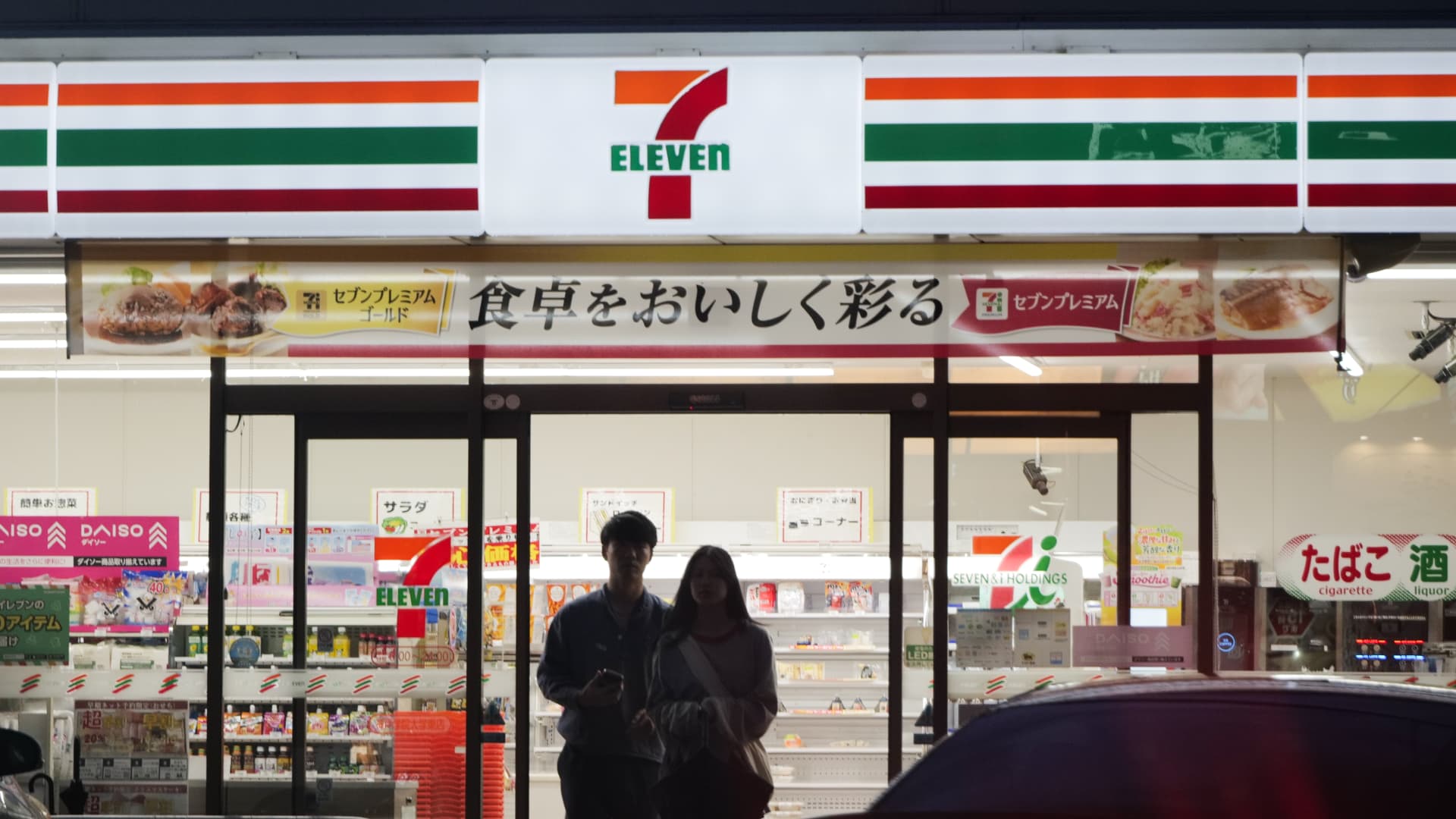
Customers exit a 7-Eleven convenience store, operated by Seven & i Holdings Co., in Kobe, Japan, on Friday, Aug. 30, 2024. Alimentation Couche-Tard Inc. had made a preliminary non-binding proposal to buy Seven & i, which operates more than 85,000 stores across the globe, and the deal would be the biggest-ever foreign takeover of a Japanese company. Photographer: Soichiro Koriyama/Bloomberg via Getty Images
Bloomberg | Bloomberg | Getty Images
Seven & i Holdings has rejected the takeover offer from Canadian convenience store operator Alimentation Couche-Tard, saying the offer “is not in the best interest” of its shareholders and stakeholders.
In a filing with the Tokyo Stock Exchange, the owner of 7-Eleven revealed that Couche-Tard had offered to acquire all outstanding shares of Seven & i for $14.86 per share.
Stephen Dacus, chairman of the special committee that Seven & i had formed to evaluate Couche-Tard’s proposal, called the proposal “opportunistically timed and grossly undervalues our standalone path and the additional actionable avenues we see to realize and unlock shareholder value in the near- to medium-term.”
In April, Seven & i announced a restructuring plan for the company, aimed at growing 7-Eleven’s presence globally as well as divesting its underperforming supermarket business.

Dacus wrote that even if Couche-Tard increases its offer “very significantly,” the proposal does not consider the “multiple and significant challenges” the takeover would face from U.S. anticompetition agencies.
“Beyond your simple assertion that you do not believe that a combination would unfairly impact the competitive landscape and that you would ‘consider’ potential divestitures, you have provided no indication at all of your views as to the level of divestitures that would be required or how they would be effected,” he wrote in a letter that appeared to be addressed to ACT Chair Alain Bouchard that was published in the Tokyo Stock Exchange filing.
He also pointed out that the Couche-Tard proposal did not indicate any timeline for clearing regulatory hurdles or whether the company was “prepared to take all necessary action to obtain regulatory clearance, including by litigating with the government.”
Dacus said Seven & i is open to sincerely considering proposals that are in the best interests of the company’s stakeholders and shareholders, but warned it will also resist one that “deprives our shareholders of the company’s intrinsic value or that fails to specifically address very real regulatory concerns.”
Shareholder speaks out
Speaking to CNBC’s “Squawk Box Asia” shortly before the response was filed on Friday, Ben Herrick, associate portfolio manager at Artisan Partners, said the Couche-Tard offer “highlights the fact that this management team and the board have not done all of the things in their power to increase the corporate value of this organization.”
Artisan Partners is a U.S. fund that holds a stake of just over 1% in Seven & i. In August, the firm had reportedly urged Seven & i Holdings to “seriously consider” the buyout offer and solicit offers for the company’s Japanese subsidiaries “as quickly as possible.”
Herrick explained Artisan asked Seven & i to consider the offer because the fund feels that capital allocation overseas has been overlooked.
He said Seven & i’s Japanese convenience store business does not need much change, but said there’s a “huge opportunity” in international licensees operating outside the United States.
“You have more than 50,000 stores, or about 50,000 stores that are generating about $100 million or just over $100 million of operating profit for for the company. So I think there’s a big mismatch there,” he said.
Herrick also thinks that Seven & i has been slow to adopt changes due to insufficient oversight and accounting.
“We really need the company to enact its plan at a faster pace here. So [Seven and i President Ryuichi] Isaka came out with his 100 day plan in 2016 to reform [general merchandise store] Ito-Yokado. And we’re approaching day 3,000 here. So I don’t think that speed has been a big part of this culture, and that needs to change,” he pointed out.
On Monday, Richard Kaye, portfolio manager at independent asset management group Comgest, disagreed in an interview on CNBC’s “Squawk Box Asia,” saying: “I don’t think there’s a case for a radical reform to be to be done by a foreign acquirer.”
The company is doing a “phenomenal job” in terms of logistics and product innovation and “I think it’s very hard to assume that that could be done an awful lot better,” he added.





Treasury Bond Volatility Forces Bessent to Double Debt Buyback Size as Yields Swing

Nvidia Earnings Preview: What Wall Street Expects From the AI Bellwether’s Q2 Report

SEC’s Semiannual Reporting Proposal Faces Investor Pushback: What CFOs Need to Know

Armanino adds Strategic Accounting Outsourced Solutions

New 2023 K-1 instructions stir the CAMT pot for partnerships and corporations

Tax Strategy: Employee Retention Credit update
-

 Economics1 week ago
U.S. Retail Sales Fall for the First Time in Nine Months as Consumer Spending Slows
-

 Economics1 week ago
Nvidia’s Potential $3 Billion SB Energy Investment Could Reshape AI Infrastructure
-

 Economics4 days ago
Top 10 Largest Economies by 2030: IMF & World Bank GDP Projections for Global Powerhouses
-

 Stock News4 days ago
How to understand Intel $15B Stock Offering
-

 Technology1 week ago
U.S.-China AI Competition Intensifies as Washington Pushes Allies to Choose Sides
-

 Economics4 days ago
Economic Profile of the United States of America (2026–2030 Horizon)
-

 Leaders3 days ago
Jackson Hole 2026: What the First Symposium Under Fed Chair Kevin Warsh Means for Markets
-

 Economics3 days ago
U.S. National Debt Surpasses $40 Trillion for the First Time: What It Means for the Economy