
Finance
China’s wealthy are looking overseas for business investment

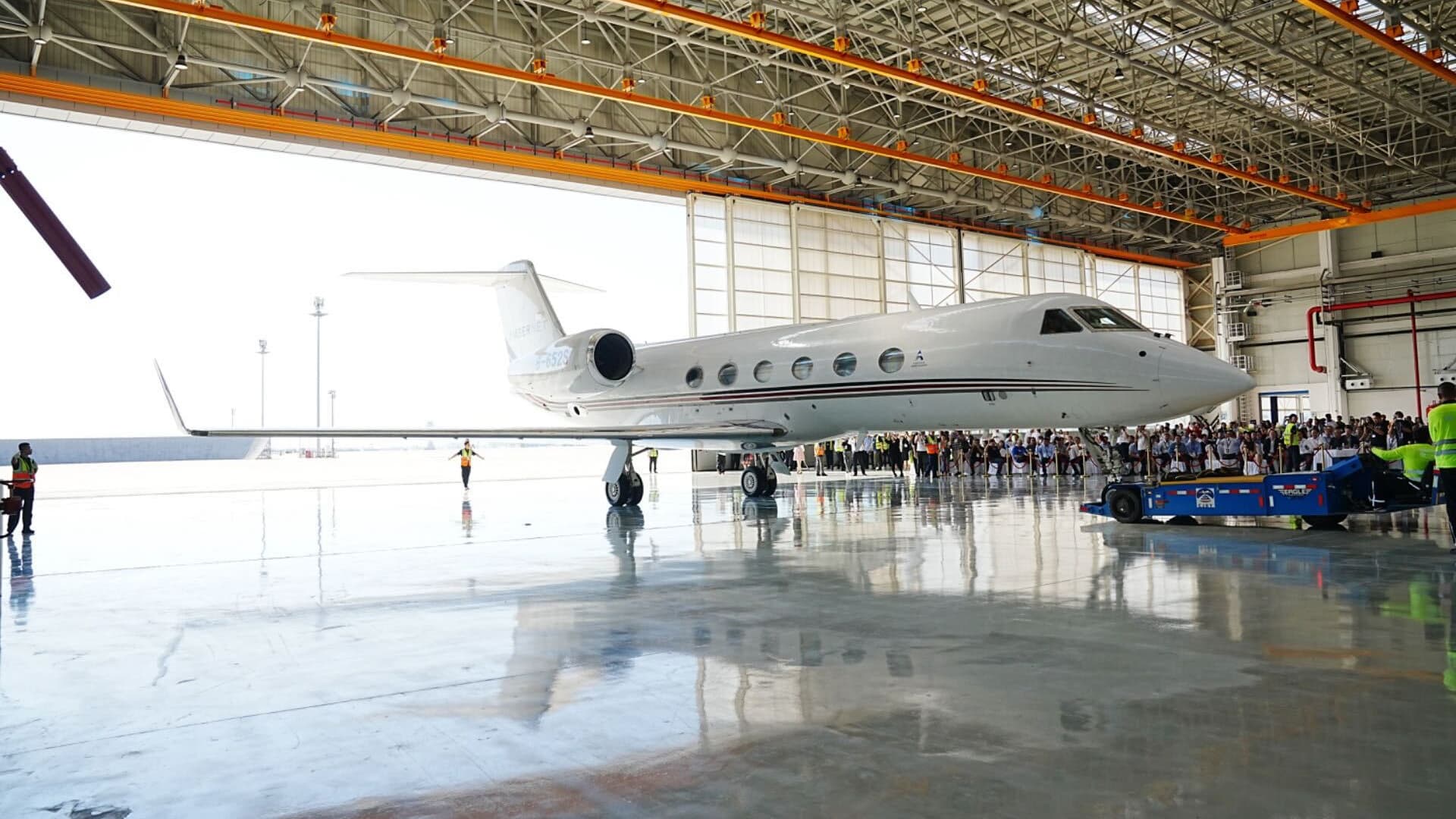
Instead of high-net-worth individuals, C-suite executives in China are increasingly using business jets, said Paul Desgrosseilliers, general manager at ExecuJet Haite General Aviation Services. The company opened a new service center at Beijing Daxing International Airport on Aug. 27, 2024.
ExecuJet Haite
BEIJING — China’s wealthy are increasingly looking for ways to move capital outside the mainland to pursue business opportunities, rather than just chasing investment returns, according to asset managers and consultants.
This year, there’s been a “very significant” trend of requests from Chinese family offices that want to acquire smaller businesses in Japan, said Ryota Kadogaki, co-founder and global CEO of Monolith, a Japan-based consulting firm for family offices.
“I’m studying Chinese as well, and I’m thinking to hire Chinese speakers in my company right now,” he said, noting that slower growth in China and a weaker Japanese yen are supporting the increased interest. Even with recent strengthening to around 20 yen versus the Chinese yuan, that’s still weaker than the 15 level seen in 2020.
Investors based in mainland China increased their non-financial direct investments overseas by 16.2% to the equivalent of $83.55 billion during the January to July period, according to the Ministry of Commerce. It said the investments covered more than 6,100 businesses in 152 countries and regions.
“Most of our clients are China-rooted entrepreneurs who are looking to further globalize,” Grant Pan, CFO of China-based wealth management firm Noah Holdings, told CNBC. “Obviously they are at least keeping their eyes open for opportunities for their businesses all over the world. Obviously there’s slowdown pressure in terms of domestic markets for many industries.”

“Many of our clients appear to be busier than before,” he said. “As they are exploring new markets, they travel more frequently, which more or less gives them a better perspective of global allocation.”
Noah Holdings said the number of its overseas registered clients rose by 23% from a year ago to nearly 16,800 as of the end of June. The company’s active overseas clients rose by nearly 63% year on year to 3,244.
Overseas assets under management rose nearly 15% to $5.4 billion from a year earlier, while mainland China assets under management fell over 6% to $15.8 billion, according to Noah’s quarterly earnings report.
Mainland China keeps a tight control on capital with an official limit of $50,000 in overseas foreign exchange a year. That’s meant affluent Chinese have long looked for alternative ways to grow wealth outside the country.
Kadogaki noted that buying foreign companies is a way for Chinese investors to move assets abroad. He also shared examples of how a fund investing in a tech company in China might now look to acquire a retail store in Japan to expand potential revenue.
In June 2023, Kadogaki said his company started working with Canopy, a Singapore-based wealth management software company working with many China-related funds, to help them localize in Japan. “We can be a gateway for their clients to invest in Japan,” he said.
Right now, Canopy says its system supports English, simplified and traditional Chinese and German. The company claims it works with more than 300 custodians with more than $160 billion in assets under reporting.
A ‘rational’ shift after the post-Covid rush
“Typically we deal with the professionals that help manage the money for the wealth owners,” said Mu Chen, executive director at Canopy. “What we are hearing from them is that the fastest growth in terms of interest from Chinese clients [occurred] in the post-Covid [period to] early last year.”
“In 2022, 2023, maybe it was more a reactionary behavior to think about going overseas,” he said. “I think now it becomes more rational and it’s more about these families, and these families planning not just their assets globally, but planning their assets, their business, their family globally using Hong Kong or Singapore as a base to look more outward.”
This interest in moving their wealth abroad to tap business opportunities comes as many Chinese companies have accelerated their global expansion in the last few years. That’s largely due to slower domestic growth, following years of rapid expansion.
That contrasts with how an earlier generation of Chinese entrepreneurs primarily tapped global markets by simply exporting China-made goods, or acquiring overseas real estate.
Noah Holdings’ Pan pointed out that many of the company’s affluent clients have set up offices and alternative residences in Hong Kong, Singapore or Japan as a way to explore global business opportunities while keeping proximity to China operations.
“Many entrepreneurs don’t have a very clear distinction between enterprise and family,” Pan said. “They get their wealth from operating such business and sometimes they inject capital back [to the family.]”
Affluent Chinese residents’ attempts to increasingly venture into global markets can also be witnessed in the demand for private, international travel.
“Whether it’s Southeast Asia, the Middle East, Africa, there’s been a lot of growth in these areas for Chinese conglomerates, so I think that the executives from China have a need to utilize [private] long-range aircraft … We see a lot of flights going there,” said Paul Desgrosseilliers, general manager at ExecuJet Haite General Aviation Services, which operates maintenance centers for private planes.
As part of a multi-year plan, ExecuJet Haite opened on Aug. 27 a maintenance, repair and operations center for private jets at Beijing Daxing International Airport. The center, which claims to be the largest for business aviation in Asia Pacific, can access a designated channel at the airport for international immigration processing and customs.
Tackling slower growth
Desgrosseilliers said international business jet flights across ExecuJet Haite’s other facilities at Beijing Capital Airport and in Tianjin have recovered, but not yet to pre-pandemic levels.
Major U.S. and Chinese corporations have also noted a slowdown in Chinese consumer demand in their second-quarter earnings.
The trend of affluent Chinese looking to expand their businesses globally is still in relatively early stages, and not every family will choose to go abroad, Canopy’s Chen said. He cited how a family of a seasoning products business in China, whose founder is getting older, didn’t feel the need to globalize their business or wealth planning.
“As the newer generations’ founders, entrepreneurs think more globally, they also think [about] their business more globally.”





Treasury Bond Volatility Forces Bessent to Double Debt Buyback Size as Yields Swing

Nvidia Earnings Preview: What Wall Street Expects From the AI Bellwether’s Q2 Report

SEC’s Semiannual Reporting Proposal Faces Investor Pushback: What CFOs Need to Know

Armanino adds Strategic Accounting Outsourced Solutions

New 2023 K-1 instructions stir the CAMT pot for partnerships and corporations

Tax Strategy: Employee Retention Credit update
-

 Economics1 week ago
U.S. Retail Sales Fall for the First Time in Nine Months as Consumer Spending Slows
-

 Economics1 week ago
Nvidia’s Potential $3 Billion SB Energy Investment Could Reshape AI Infrastructure
-

 Economics4 days ago
Top 10 Largest Economies by 2030: IMF & World Bank GDP Projections for Global Powerhouses
-

 Stock News4 days ago
How to understand Intel $15B Stock Offering
-

 Technology1 week ago
U.S.-China AI Competition Intensifies as Washington Pushes Allies to Choose Sides
-

 Economics4 days ago
Economic Profile of the United States of America (2026–2030 Horizon)
-

 Leaders3 days ago
Jackson Hole 2026: What the First Symposium Under Fed Chair Kevin Warsh Means for Markets
-
 Economics3 days ago
U.S. National Debt Surpasses $40 Trillion for the First Time: What It Means for the Economy