
Personal Finance
Why travel insurance may not protect you in the government shutdown

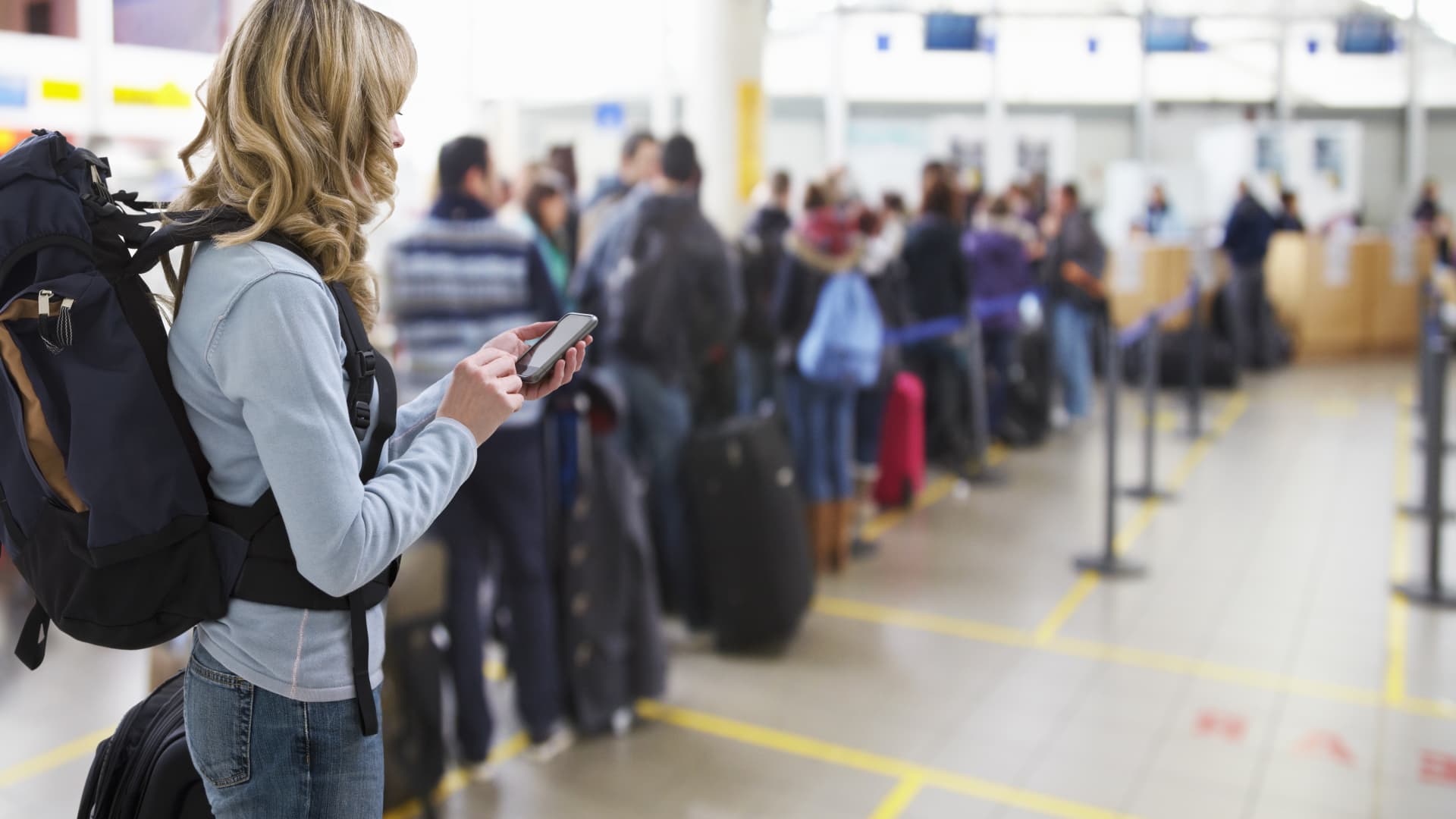
Andrew Bret Wallis | DigitalVision | Getty Images
More consumers are buying travel insurance during the federal government shutdown — but these insurance policies may not offer the catch-all protection that buyers expect.
Much depends on the fine print, experts said.
Squaremouth, an online platform for comparing travel insurance policies, has seen the volume of insurance quotes increase 8.5% year-over-year between Oct. 1 and 27. Sales have risen by 7.9% over the same period.
Buyers seem to be hedging against the financial risk of the government shutdown upending their travel plans, experts said. Air traffic controllers and TSA agents are essential government employees working without pay, and in previous shutdowns, travel has been disrupted.
Hopper, a travel website, has seen purchases of “disruption assistance,” which offers certain protections in the event of flight cancellations or delays, increase 35% between mid-September (before the shutdown) and early October (after it began).
“We see it time and again when flight delays or cancellations are in the news a lot,” Patrick Steadman, Hopper’s head of disruption assistance.
Travel delays are already mounting
Elijah Nouvelage/Bloomberg via Getty Images
“Essential” workers like air traffic controllers and TSA agents work without pay during a shutdown, while others are furloughed. That raises the odds of staff shortages and resulting airport delays.
Flight delays have already increased during the shutdown, and airlines have warned in recent weeks of likely flight delays the longer the political impasse drags on.
The shutdown, which started Oct. 1, is already the second-longest in U.S. history.
Meanwhile, the end-of-year holidays, historically among the busiest seasons for travel, are fast-approaching. For example, more than 3 million people were screened at U.S. airports on the Sunday after Thanksgiving in 2024, breaking a single-day record.
About 45% of Americans plan to spend money on flights or hotels this holiday season, according to a NerdWallet poll published in October. They expect to spend an average $2,586 for such expenses, and a collective $311 billion, it found.
“Ultimately, [travel] is (in our mind) what probably brings this shutdown to a close,” Chris Krueger, a strategist at Washington Research Group, wrote in a note Oct. 29. “Once TSA begins missing paychecks, airport lines (and coverage) will likely force resolution like in previous shutdowns,” he wrote.
Air traffic controllers, already in short supply, missed their first full paychecks on Tuesday.
The longest U.S. shutdown, during President Donald Trump’s first term in office, lasted 35 days and came to an end after a shortage of air traffic controllers snarled air travel in the New York area. TSA screeners called out sick in elevated numbers as they were asked to work without pay.
What travel insurance does and doesn’t cover
Flight delays or cancellations may, in certain cases, lead consumers to shoulder unforeseen costs for lodging and meals, or miss out on prepaid activities like tours, for example.
But travel insurance won’t always cover consumers for such costs if the shutdown upends their itineraries.
For example, travelers likely wouldn’t be covered if they miss a flight due to being stuck in a long airport security line, said Terra Baykal, senior marketing manager at World Nomads, a travel insurer.
She recommends people arrive at least three hours before departure, even for domestic flights, as the shutdown persists to prevent long lines from derailing a trip.

World Nomads typically sees its insurance sales fall at this time of year, but they have declined less than usual with the shutdown, Baykal said.
In 2024, the company saw a 17% drop in U.S. travel insurance plans sold, from the Sept. 5 to 30 period to Oct. 1 to 26. They dropped by a lesser amount, 10%, this year, suggesting there’s been more demand amid the shutdown, Baykal said.
Travel insurance is largely meant to cover unforeseeable events, said Chrissy Valdez, senior director of operations at Squaremouth.
However, the shutdown is now a foreseeable event, Valdez said. That means policies purchased on or after Oct. 1 likely wouldn’t cover certain claims.
For example, a federal worker who bought travel insurance after Oct. 1 and then subsequently was laid off or furloughed due to the shutdown may not be able to cancel their trip and claim insurance benefits under a “cancel for work reasons” clause, Valdez said.
Travelers can get indirect coverage during the shutdown in some cases, depending on their insurance policy and airlines’ stated rationale for a flight disruption, experts said.
Most insurers require there be a “common carrier” disruption, like a mechanical failure, in order to pay benefits, Valdez said.
As long as an airline categorizes any sort of disruption — such as a lack of air traffic controllers — as a “common carrier” delay or interruption, travelers may qualify for insurance reimbursement, wrote Squaremouth spokesperson Lauren McCormick in a recent blog post.
“Even during a government shutdown, many disruptions to travel are covered under the ‘common carrier’ category,” she wrote. “Essentially, this is a loophole that may allow you to claim reimbursement as an indirect result of the shutdown,” she added.

There are generally caveats and limits to travel insurance policies, too, such as dollar limits on certain benefits and the requirement that a delay last for a minimum amount of time.
Certain optional policy benefits, like “cancel for any reason” provisions, may grant travelers additional flexibility if they want to cancel an upcoming trip rather than risk the headache of a delay or cancellation, said Baykal, of World Nomads.
However, these benefits also come with caveats: For example, many insurers require policyholders to cancel at least two days before their trip starts. Insurers also generally don’t reimburse policyholders for the full cost of the trip; they may reimburse 75% of nonrefundable trip costs, for example, Baykal said.
“We always recommend a customer reads through policy details if it comes to the point of making a claim,” she said.
Separately, airlines have made varying financial commitments to travelers who experience flight disruptions, which are detailed on a dashboard maintained by the U.S. Department of Transportation.


Personal Finance
Next-Generation Retirement Planning: Managing Longevity Risk and Variable Income Streams


U.S.- Canada Trade Talks Collapse; Carney Says Retaliatory Tariffs Begin September 8

Flock Cameras and the Future of Public Security

AI Infrastructure Boom Hits Physical Limits: Power, Financing, and Supply Chain Strain

Armanino adds Strategic Accounting Outsourced Solutions

New 2023 K-1 instructions stir the CAMT pot for partnerships and corporations

Tax Strategy: Employee Retention Credit update
-

 Stock News1 week ago
Nvidia Earnings Preview: What Wall Street Expects From the AI Bellwether’s Q2 Report
-

 Accounting1 week ago
SEC’s Semiannual Reporting Proposal Faces Investor Pushback: What CFOs Need to Know
-

 Stock News1 week ago
Nvidia Q2 FY2027 Earnings beats Wall Street Expectation with Record $96.2 Billion Revenue
-

 Finance1 week ago
Treasury Bond Volatility Forces Bessent to Double Debt Buyback Size as Yields Swing
-
 Technology5 days ago
AI Infrastructure Boom Hits Physical Limits: Power, Financing, and Supply Chain Strain
-
 Technology3 days ago
Flock Cameras and the Future of Public Security
-
 Economics3 days ago
U.S.- Canada Trade Talks Collapse; Carney Says Retaliatory Tariffs Begin September 8