Connect with us

Finance

U.S. Treasury Introduces New $1 Coin Featuring President Trump for America’s 250th Anniversary

Published

on

U.S. Treasury Introduces New $1 Coin Featuring President Trump for America’s 250th Anniversary
Commemorative Coin Sparks National Attention and Debate

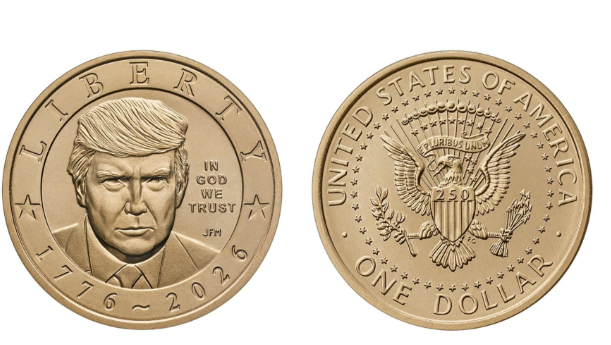
The U.S. Treasury Department has announced the production of a new commemorative $1 coin featuring President Donald Trump as part of the nation’s celebration of the 250th anniversary of the Declaration of Independence. Treasury officials say the limited-edition coin is intended to honor the country’s Semiquincentennial in 2026 and will be produced by the U.S. Mint later this year.

The gold-colored coin displays Trump’s portrait on the front alongside patriotic inscriptions, while the reverse features the Great Seal of the United States. Although the coin has a gold finish, it is not struck from precious metal. Officials describe it as a commemorative issue rather than a circulating replacement for the traditional dollar coin.

Historic Release Generates Mixed Reactions

The announcement has generated significant public discussion because U.S. currency has traditionally avoided depicting living presidents. While historical exceptions exist, many numismatic experts note that such releases are uncommon and often generate legal and political debate. Critics have questioned whether the decision aligns with long-standing traditions, while supporters argue the coin commemorates a historic milestone during Trump’s presidency.

Treasury Secretary Scott Bessent said the commemorative coin celebrates America’s enduring legacy as the nation approaches its 250th birthday. Collectors and investors are already showing strong interest, with many anticipating high demand when the coin becomes available through the U.S. Mint.

Interest From Collectors Continues to Grow

Commemorative coins often become popular collectibles because of their limited production and historical significance. While the new Trump dollar is expected to attract political attention, its long-term collectible value will likely depend on production numbers, market demand, and future historical significance.

Collectors should remember that commemorative coins are generally produced for collecting purposes and are not intended to replace everyday circulating currency. As America’s 250th anniversary approaches, the new dollar coin is expected to become one of the most talked-about numismatic releases of 2026, reflecting both the nation’s history and the continuing public interest surrounding President Trump.

Finance

Private Credit Expansion: How Alternative Lending Platforms Are Reshaping Corporate Liquidity

Published

on

How Alternative Lending Platforms Are Reshaping Corporate Liquidity

Private credit has firmly established itself as a foundational pillar of global financial markets in 2026, transitioning from an alternative asset class into a dominant mechanism for middle-market corporate financing. Reports published in mid-July 2026 show that direct lending assets under management have expanded significantly, as corporate borrowers increasingly bypass traditional syndication desks in favor of customized private debt solutions. This structural migration has fundamentally altered corporate liquidity dynamics, providing middle-market enterprises with reliable access to tailored capital packages even during periods of regulatory bank tightening.

The primary driver of this continued growth is the structural flexibility inherent in private debt agreements. Unlike public bond markets or conservative commercial bank loans—which often carry rigid covenants and slow underwriting timelines—private credit funds offer speed of execution, flexible payment-in-kind structures, and customized debt-service frameworks. For companies undertaking strategic acquisitions, capital expenditures, or complex balance sheet recapitalizations, the ability to negotiate directly with a unified syndicate of private lenders provides significant certainty and confidentiality.

However, the expansion of private credit is attracting heightened regulatory attention and risk scrutiny. Financial regulatory bodies are closely evaluating the lack of secondary market price discovery and the potential concentration of illiquidity risks within non-bank financial institutions. Because private debt instruments are held to maturity and marked to model rather than marked to market, evaluating real-time enterprise valuations during economic shifts requires robust internal credit assessment standards. Analysts note that as loan portfolios mature, performance variations between disciplined lenders and aggressive underwriters will become increasingly apparent.

For corporate financial officers and institutional portfolio managers, private credit represents both a powerful strategic tool and a vital diversification strategy. Borrowers must weigh the higher nominal coupon rates of private debt against the tangible value of operational flexibility and execution certainty. Meanwhile, investors must maintain rigorous credit due diligence, prioritizing funds with proven restructuring capabilities and deep operational expertise in underwriting resilient middle-market businesses.

Continue Reading

Finance

Tokenized Real-World Assets: Institutional Ledger Adoption Achieves Scale in July 2026

Published

on

Institutional Ledger Adoption Achieves Scale in July 2026

The integration of blockchain technology with legacy financial markets has reached a decisive tipping point in July 2026, driven by the rapid scaling of Real-World Asset (RWA) tokenization. Major global investment banks, custodial entities, and asset managers are actively shifting sovereign debt, commercial paper, and private fund shares onto permissioned distributed ledgers. Recent industry data confirms that the aggregate market capitalization of tokenized treasury products and private credit funds has surged past major milestones, illustrating that ledger-based settlement is no longer experimental, but core financial infrastructure.

The fundamental value proposition of asset tokenization rests on operational efficiency, continuous liquidity, and automated compliance execution. By embedding regulatory checks, investor accreditation limits, and automated coupon distributions directly into smart contract code, financial institutions eliminate vast amounts of manual back-office reconciliation. Furthermore, fractionalized ownership structures allow high-value asset classes—such as prime commercial real estate and private equity funds—to be split into accessible units, significantly expanding liquidity pools and enabling real-time collateral optimization.

A key catalyst behind this institutional momentum is the establishment of comprehensive regulatory clarity across major financial jurisdictions. The implementation of standardized digital asset frameworks in the United States and Europe has provided institutional compliance officers with the legal certainty required to deploy capital on-chain. As a result, premier custodian banks are now offering unified digital asset custody, seamlessly bridging traditional securities depositories with programmable ledger ecosystems.

Looking forward, the maturation of tokenized assets will continue to transform secondary market trading and treasury management. Corporate treasurers can now yield-optimize idle cash in real time by moving into tokenized money market instruments that settle instantaneously on a 24/7 basis. To remain competitive, financial leaders must ensure their institutional architectures are interoperable with modern digital ledger protocols, positioning their organizations at the forefront of modern capital market efficiency.

Continue Reading

Finance

South Korea Raises Interest Rates to 2.75% for the First Time in More Than Three Years

Published

on

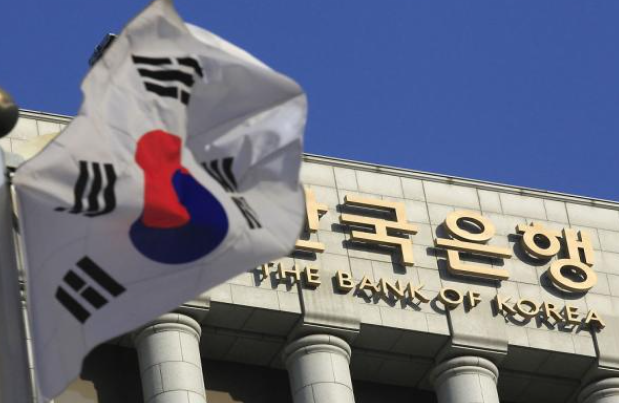
Bank of Korea

Bank of Korea Tightens Monetary Policy as Inflation and Economic Growth Accelerate

The Bank of Korea (BOK) has raised its benchmark interest rate by 25 basis points to 2.75%, marking the country’s first interest rate increase in more than three years. The widely anticipated move reflects the central bank’s efforts to contain persistent inflation, stabilize the South Korean won, and address growing financial stability risks while the economy continues to outperform earlier expectations.

The rate hike ends a prolonged period of accommodative monetary policy that began in early 2023. Policymakers unanimously supported the decision, citing stronger economic growth, rising consumer prices, and expanding exports as key reasons for tightening monetary conditions. The central bank also indicated that additional rate increases could be considered if inflation remains elevated.

Inflation and Strong Exports Drive the Decision

South Korea’s economy has shown renewed strength in 2026, largely fueled by booming semiconductor exports and continued global demand for artificial intelligence technologies. Strong investment and resilient export activity have pushed economic growth above previous forecasts, giving the Bank of Korea greater confidence to focus on controlling inflation.

Consumer prices have remained above the central bank’s 2% inflation target for several consecutive months. Higher energy prices, geopolitical uncertainty in the Middle East, and a weaker Korean won have all contributed to rising inflationary pressures. At the same time, policymakers remain concerned about increasing household debt and elevated property prices in Seoul.

Financial Markets React

Following the announcement, South Korean financial markets experienced increased volatility. The benchmark KOSPI index declined as investors reassessed borrowing costs and the outlook for technology stocks, particularly semiconductor manufacturers. Higher interest rates typically increase financing costs for businesses and consumers, while also influencing investment decisions across financial markets.

What the Rate Hike Means

The latest policy decision signals that South Korea is prioritizing price stability while maintaining confidence in the country’s economic recovery. Although higher borrowing costs may slow consumer spending and business investment in the short term, policymakers believe the move will help prevent inflation from becoming entrenched.

Looking ahead, investors will closely monitor future inflation data, export performance, and global economic conditions. If inflation remains above target, additional interest rate increases could follow, making monetary policy one of the key factors shaping South Korea’s economy through the remainder of 2026.

Continue Reading

Trending