Connect with us

Personal Finance

High-Yield Optimization: Structuring Personal Cash Reserves in a Sustained Rate Environment

Published

on

Structuring Personal Cash Reserves in a Sustained Rate Environment

In the financial environment of mid-2026, personal cash management has re-emerged as a vital component of holistic wealth building. With central bank policy rates holding firm to maintain long-term price stability, yield-bearing instruments such as money market funds, high-yield savings accounts (HYSAs), and short-term Treasury bills continue to offer compounding returns around 4% to 5%. For individual investors, effectively structuring cash reserves requires shifting away from passive bank deposits toward active yield optimization.

A frequent pitfall in personal asset management is leaving substantial liquid capital in traditional checking or low-yield savings accounts, where real returns are continuously eroded by baseline inflation. By implementing a disciplined ‘cash ladder’ strategy—allocating liquid funds across tiered maturities using ultra-short Treasury instruments and FDIC-insured high-yield accounts—individuals can secure maximal yields while retaining immediate liquidity for emergency expenses or tactical investment opportunities.

Simultaneously, investors must evaluate the tax efficiency of their cash holdings based on their tax bracket and geographic location. For high earners situated in states with high local income taxes, direct holdings in short-term U.S. Treasury bills often yield a higher net post-tax return than standard high-yield savings accounts, as Treasury interest is strictly exempt from state and local taxation. Understanding these nuanced tax distinctions allows individuals to capture significant incremental gains without taking on additional market risk.

Ultimately, personal financial health in late 2026 hinges on intentional liquidity management. Cash reserves should not be viewed merely as static emergency funds, but as a dynamic asset class that contributes positively to net worth growth. Regularly auditing yield terms, automating cash transfers, and optimizing for post-tax efficiency ensures that personal capital remains fully productive across all economic conditions.

Continue Reading
Click to comment

Leave a Reply

Your email address will not be published. Required fields are marked *

Personal Finance

Algorithmic Wealth Management: Balancing Automated Financial Planning with Human Oversight

Published

on

Balancing Automated Financial Planning with Human Oversight

The personal finance industry in July 2026 is experiencing a technological evolution, driven by the wide deployment of next-generation algorithmic wealth management tools. Modern digital financial platforms have expanded far beyond basic automated index investing; today’s robo-advisors utilize real-time tax-loss harvesting, dynamic portfolio rebalancing, and hyper-personalized spending analysis to optimize retail investor outcomes. However, as these digital solutions become ubiquitous, investors face the crucial challenge of balancing automated execution with human strategic judgment.

The core advantage of automated financial planning platforms lies in their ability to remove emotional bias from investment execution. During periods of market volatility or localized sector realignments, automated algorithms systematically rebalance portfolios back to target asset allocations without falling victim to panic selling or speculative enthusiasm. Furthermore, integrated cash-flow monitoring algorithms analyze individual spending patterns in real time, automatically sweeping surplus income into designated retirement or debt-liquidation accounts to accelerate net worth accumulation.

Despite these operational advantages, algorithmic tools have inherent structural limitations when addressing complex, highly personalized financial life events. Decisions involving multi-generational estate planning, highly complex tax strategies, small business exits, or nuanced real estate transactions require contextual human judgment that software models cannot replicate. Relying solely on automated models without periodic human professional review can result in misaligned risk profiles or overlooked tax liabilities during major life transitions.

The optimal approach for personal financial planning in late 2026 is a hybrid advisory model. Individuals should utilize automated platforms for routine asset allocation, continuous tax optimization, and low-cost passive index tracking, while engaging qualified human financial advisors for periodic strategic planning, estate structuring, and qualitative risk evaluations. This dual approach ensures maximum cost efficiency and disciplined execution while retaining essential strategic guidance.

Continue Reading

Personal Finance

The Rise of Mindful Spending

Published

on

The Rise of Mindful Spending

Navigating your money has taken a fascinating turn. Rising costs and stubborn everyday expenses are prompting a major shift toward what experts call financial realism.

According to recent data from Intuit’s Financial Wellness survey, more than half of all consumers report an increase in financial stress, pointing to money as their primary life stressor. Yet, instead of giving up or resorting to overly restrictive budgets, people are getting creative.

If you want to protect your wallet without sacrificing your happiness, you need to master the core personal finance trends of 2026.

1. The Death of the Rigid Budget

For years, the gold standard of money management was the zero-tolerance budget. You calculated every single penny and felt guilty if you overspent on a single cup of coffee.

In 2026, that rigid approach is officially out. Today, 43% of consumers are opting for a balanced, flexible mindset. Rather than cutting out all discretionary expenses, the focus has shifted to consistent tracking that allows room for life’s inevitable surprises and little joys.

2. Practicing “Financial Gymnastics”

People are refusing to abandon the things that bring them happiness, even when inflation bites. Instead, they are participating in a trend known as financial gymnastics.

  • The Weekend Pivot: Nearly half of consumers (49%) report living intentionally frugal lifestyles during the workweek so they can afford their weekend plans and social dinners.
  • Value-Based Spending: Over 40% feel entirely justified spending on things that actively make them happy—like travel or dining out—while cutting back heavily on passive or mindless subscriptions.

3. Cutting the Impulse Leaks

Mindless scroll-and-click shopping is the ultimate budget killer. Roughly 45% of people admit that impulse buying has derailed their long-term wealth goals in the past. To combat this, 59% of consumers are clamping down on daily micro-purchases.

Before making a non-essential purchase, try implementing a 48-hour pause. This cooling-off period helps ensure you are spending on true priorities rather than chasing a quick hit of dopamine.

Summary Checklist for 2026 Wealth Building

To help keep your accounts healthy this year, focus on these three fundamentals:

1.Adopt Consistent Tracking: Week 1.

Ditch the restrictive spreadsheets. Use a flexible app to track your cash flow while allowing a buffer for personal happiness.

2.Target High-Interest Credit Debt: Month 1.

With interest rates remaining sticky, clear any compounding credit balances immediately to free up your monthly cash flow.

3.Automate Your True Savings: Ongoing.

Set up automatic transfers to a high-yield savings account the day you get paid. Even small, consistent deposits add up significantly over twelve months.

Ultimately, managing your money this year isn’t about deprivation. It’s about intentionality. By adopting mindful spending, you ensure that every dollar you part with is contributing meaningfully to your life.

Continue Reading

Personal Finance

What that means for consumer loans

Published

on

Fed in 'neutral' as consumers are feeling okay but not great: The Conference Board CEO Steve Odland

The Federal Reserve held interest rates steady at the conclusion of its policy meeting on Wednesday. 

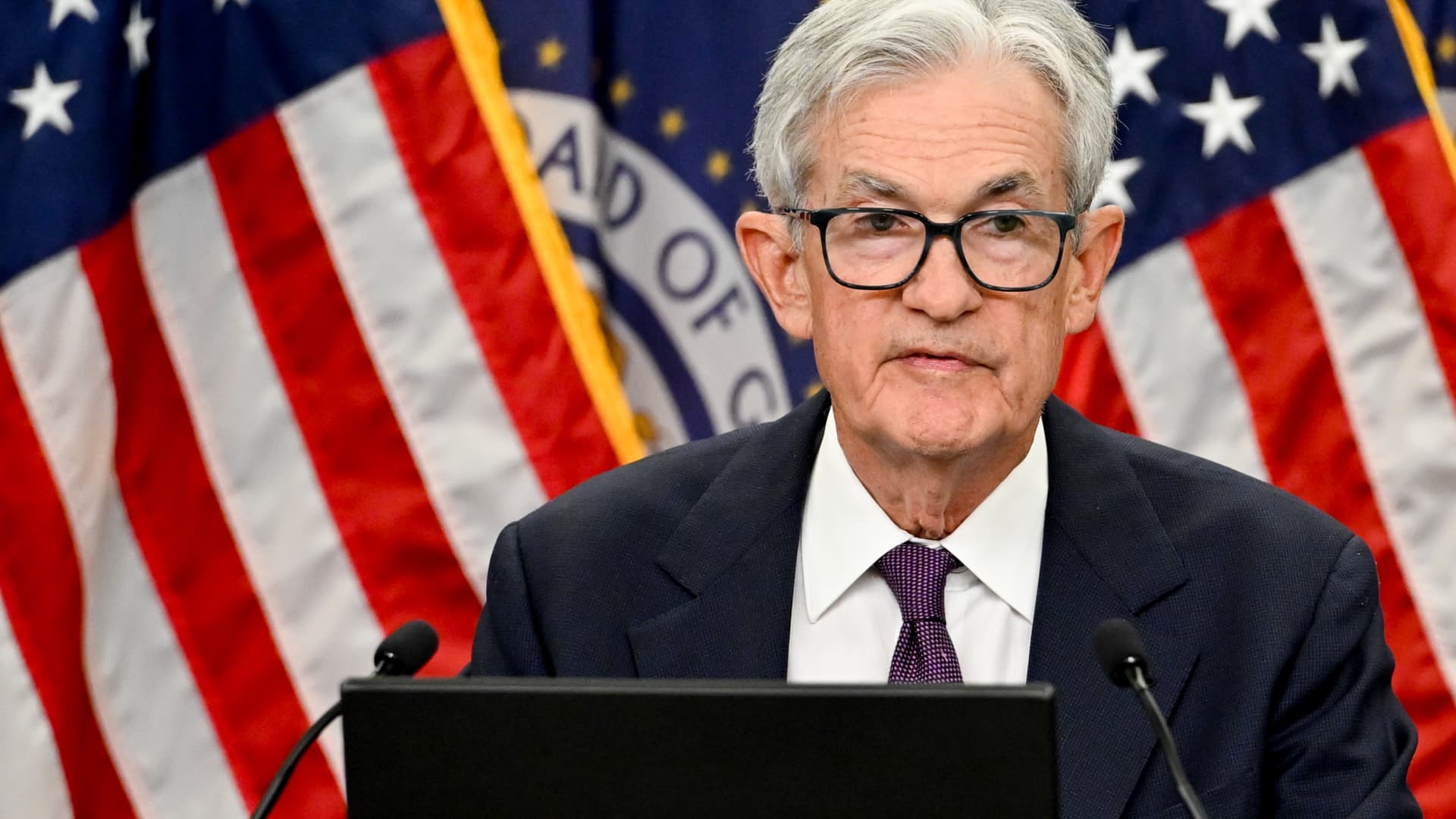
In what could be Jerome Powell’s last as chair before President Donald Trump’s yet-to-be-confirmed nominee Kevin Warsh takes the helm, central bankers maintained the federal funds rate in a target range of 3.5% to 3.75%. 

Inflation has surged since the war with Iran began, leaving policymakers with limited room to act, according to Sean Snaith, the director of the University of Central Florida’s Institute for Economic Forecasting. “We’re in a kind of suspended animation — between Iran and the Fed transition,” Snaith said.

Read more CNBC personal finance coverage

Before the oil shock, inflation was holding above the Fed’s 2% target but not worsening. Now the jump in energy costs could have longer-term inflationary effects, economists say.

For Americans struggling in the face of higher gas prices and overall affordability challenges, the central bank’s decision to keep interest rates unchanged does little to ease budgetary pressures. “The cavalry isn’t coming anytime soon,” Snaith said.

How the Fed decision impacts you

The Fed’s benchmark sets what banks charge each other for overnight lending, but also has a trickle-down effect on many consumer borrowing and savings rates.

Short-term rates are more closely pegged to the prime rate, which is typically 3 percentage points above the federal funds rate. Longer-term rates, such as home loans, are more influenced by inflation and other economic factors.

Credit cards

Most credit cards have a short-term rate, so they track the Fed’s benchmark.

After the Fed cut rates three times in the second half of 2025, the average annual percentage rate has stayed just under 20%, according to Bankrate.

“Without Fed rate cuts, there’s not much reason to expect meaningful declines anytime soon, so carrying a balance will remain very expensive,” said Matt Schulz, chief credit analyst at LendingTree. 

Mortgage rates

Fixed mortgage rates, on the other hand, don’t directly track the Fed but typically follow the lead of long-term Treasury rates. 

Concerns about how the Iran war will impact the U.S. economy have already pushed the average rate for a 30-year, fixed-rate mortgage up to 6.38% as of Tuesday, from 5.99% at the end of February, according to Mortgage News Daily.

That leaves homeowners with existing low mortgage rates “feeling stuck,” said Michele Raneri, vice president and head of U.S. research and consulting at TransUnion. “Mortgages, more than any other credit type, work on a churn,” she said, referring to how a dip in rates can boost borrowing activity.

Student loans

Federal student loan rates are also fixed and based in part on the 10-year Treasury note, so most borrowers are somewhat shielded from Fed moves and recent economic uncertainty.

Current interest rates on undergraduate federal student loans made through June 30 are 6.39%, according to the U.S. Department of Education. Interest rates for the upcoming school year will be based in part on the May auction of the 10-year note.

Car loans

Auto loan rates are tied to several factors, including the Fed’s benchmark. Because financing costs remain elevated, new car buyers are taking on longer loans to keep their monthly payments manageable, according to the latest data from Edmunds.

Even so, with the rate on a five-year new car loan near 7%, the average monthly payment on a new car rose to $773 in the first quarter of 2026, an all-time high.

“Car buyers are in a tough spot right now because they’re getting squeezed from both ends: high sticker prices and high interest rates, with neither showing any signs of letting up,” said Joseph Yoon, consumer insights analyst at Edmunds.

“Until the rate picture shifts, buyers will keep stretching loan terms to make payments work, which only adds to the total cost of ownership down the road,” Yoon said.

Savings rates

While the Fed has no direct influence on deposit rates, the yields tend to be correlated with changes in the target federal funds rate. So, although rates on certificates of deposit and high-yield savings accounts have fallen from recent highs, they are holding above the annual rate of inflation.

For now, top-yielding online savings accounts and one-year CD rates pay around 4%, according to Bankrate.

“Yields on high-yield savings accounts and certificates of deposit are down from their peaks of a few years ago, but they’re still strong compared to what we’ve seen for most of the past decade,” Schulz said.

Subscribe to CNBC on YouTube.

Choose CNBC as your preferred source on Google and never miss a moment from the most trusted name in business news.

Continue Reading

Trending