Connect with us

Leaders

Adaptive Governance in Turbulent Times: Leadership Strategies for the Late-2026 Landscape

Published

on

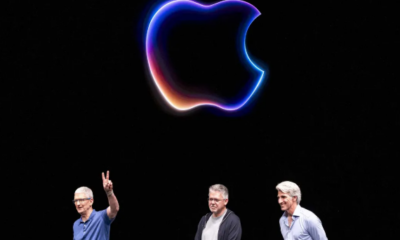
Adaptive Governance in Turbulent Times

The defining characteristic of successful executive leadership in July 2026 is adaptive governance—the capacity to maintain steady strategic direction while dynamically recalibrating tactical execution in response to relentless market shifts. In an environment shaped by shifting trade policies, technological evolution, and macroeconomic volatility, rigid multi-year strategic plans are rapidly obsolete. Today’s most effective chief executives and board chairs operate through dynamic, scenario-based governance frameworks built for rapid adaptation.

Adaptive governance begins with cultivating organizational humility and institutional awareness at the highest levels. Executive teams must move past confirmation bias, establishing transparent internal communication channels that encourage front-line operational staff to report emerging market frictions, supply constraints, or technological bottlenecks immediately. By shortening the feedback loop between operational reality and C-suite decision-making, leaders can execute decisive strategic pivots long before minor operational challenges evolve into public corporate crises.

Furthermore, modern leadership requires balancing aggressive technological adoption with robust ethical stewardship. As artificial intelligence systems and automated decision frameworks assume larger roles in corporate operations, board leadership must establish strict governance guardrails to oversee algorithmic fairness, data privacy compliance, and systemic operational risk. Leaders who neglect model governance risk severe brand erosion and regulatory backlash if automated systems execute flawed strategic decisions.

Ultimately, effective executive leadership in late 2026 is defined by resilience, transparency, and clarity of purpose. By building agile organizational structures, fostering a continuous learning culture, and establishing unwavering ethical standards, executive leaders can navigate macroeconomic uncertainty with confidence, transforming systemic industry disruptions into lasting competitive advantages.

Continue Reading
Click to comment

Leave a Reply

Your email address will not be published. Required fields are marked *

Leaders

Cultivating Institutional Resilience: How Modern Leaders Build Anti-Fragile Organizations

Published

on

How Modern Leaders Build Anti-Fragile Organizations

In the mid-2026 corporate arena, executive performance is increasingly measured not merely by peak quarterly profitability, but by institutional resilience—the ability of an organization to withstand external shocks, adapt under pressure, and emerge stronger from systemic disruptions. As supply chain volatility, regulatory shifts, and technological shifts continue to test corporate stability, forward-thinking leaders are actively rearchitecting their enterprises around principles of anti-fragility.

Building an anti-fragile enterprise requires a fundamental departure from hyper-optimized, single-point-of-failure management practices. For decades, corporate efficiency was defined by ultra-lean inventories, single-source supplier contracts, and minimal capital reserves. While these practices maximized short-term return on capital during stable economic periods, they left organizations deeply vulnerable to sudden external disruptions. Resilient leaders in 2026 deliberately introduce strategic redundancy into critical operational channels—maintaining diversified supplier bases, multi-region operational capacity, and robust liquidity buffers.

Equally important is the cultivation of a psychologically safe, decentralized leadership culture. In times of crisis, centralized command-and-control hierarchies frequently bottleneck critical operational responses due to information delays. Anti-fragile leaders empower regional managers and operational teams to exercise decisive localized initiative within clear strategic guardrails. This decentralized authority fosters operational agility, allowing regional teams to address disruptions directly while maintaining alignment with broader corporate objectives.

For board directors and chief executives, instilling anti-fragility is a continuous, long-term strategic commitment. It requires prioritizing capital preservation during expansionary cycles, investing heavily in employee adaptability, and evaluating every strategic decision through the lens of long-term survival. Leaders who cultivate deep institutional resilience ensure that their organizations not only navigate the uncertainties of 2026, but thrive amidst continuous change.

Continue Reading

Leaders

Berkshire Hathaway Chairman Reshapes His Long-Term Philanthropic Strategy

Published

on

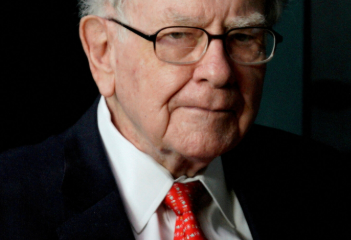
Warren Buffett

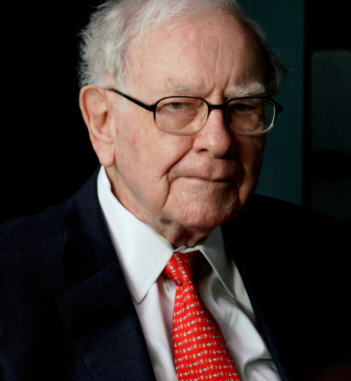
Legendary investor Warren Buffett has made a major change to his charitable giving by excluding the Gates Foundation from his annual Berkshire Hathaway stock donations for the first time in nearly two decades. Instead, Buffett directed approximately $6 billion worth of Berkshire Hathaway shares to four foundations managed by members of his family, marking a significant shift in one of the world’s largest philanthropic partnerships.

Since 2006, Buffett has donated more than $47 billion in Berkshire Hathaway stock to the Gates Foundation while supporting Bill Gates’ global philanthropic efforts. However, Buffett announced that future donations will now focus on the Susan Thompson Buffett Foundation and foundations led by his children, Susie, Howard, and Peter Buffett.

Why Buffett Changed His Giving Strategy

Buffett explained that his decision reflects his confidence in his children’s ability to oversee his philanthropic legacy. At age 95, he said he intends to distribute virtually all of his remaining Berkshire Hathaway holdings by December 31, 2034, allowing his family foundations to manage the process during their lifetimes.

The announcement also came amid increased public attention surrounding Bill Gates’ past association with Jeffrey Epstein. While Buffett described those associations as “distasteful,” he emphasized that his primary motivation was reorganizing his long-term charitable plans rather than ending a personal friendship. Gates has repeatedly expressed regret over meeting Epstein and has not been accused of any criminal wrongdoing.

A Historic Shift in Modern Philanthropy

Buffett’s decision represents one of the most significant changes in large-scale charitable giving in recent years. His partnership with Bill Gates helped launch The Giving Pledge and inspired many billionaires to donate substantial portions of their wealth to charitable causes.

Although the Gates Foundation will no longer receive Buffett’s annual Berkshire stock gifts, the organization acknowledged his decades of support and thanked him for his contributions. Meanwhile, Buffett reaffirmed that nearly all of his remaining fortune will ultimately benefit charitable organizations through his family’s foundations.

What It Means Going Forward

The change signals a new chapter in Buffett’s philanthropic legacy. Investors and nonprofit organizations will continue watching how his family foundations distribute billions of dollars over the coming years. While the Gates Foundation remains one of the world’s largest charitable organizations, Buffett’s latest decision demonstrates his desire to place future charitable leadership in the hands of the next generation of his family.

Continue Reading

Leaders

Mark Cuban is The Maverick Entrepreneur Changing Business and Beyond

Published

on

Mark Cuban's journey embodies the American entrepreneurial spirit

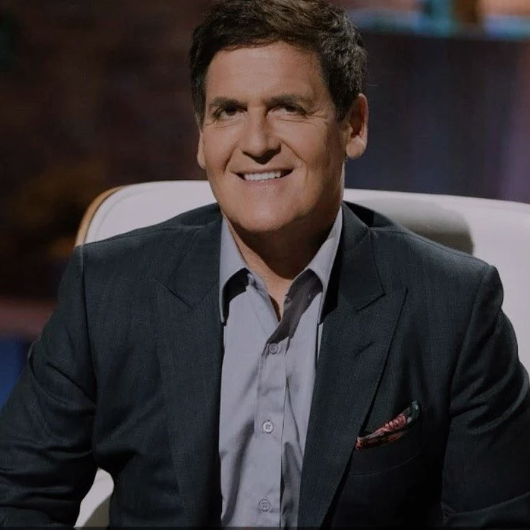
From selling garbage bags door-to-door as a child to becoming a billionaire tech pioneer and beloved “Shark,” Mark Cuban’s journey embodies the American entrepreneurial spirit. His straight-talking approach and business acumen have made him one of the most recognizable business figures of our time.

Early Life and Education

Born in Pittsburgh on July 31, 1958, to working-class parents, Cuban learned the value of hustle early. His grandfather, a Russian immigrant, sold merchandise from the back of his car—perhaps planting the entrepreneurial seed that would define Cuban’s future.

After graduating from Indiana University in 1981 with a degree in business, Cuban didn’t follow a traditional career path. Instead, he moved to Dallas with just $60 in his pocket, sleeping on the floor of a friend’s apartment while working as a bartender.

Building His Fortune

Cuban’s first major success came in 1990 when he sold his computer consulting firm, MicroSolutions, for $6 million. However, his true financial breakthrough arrived during the internet boom of the 1990s. Cuban and his business partner Todd Wagner founded Broadcast.com, an internet radio company that streamed audio of sports events and other content.

In 1999, Yahoo acquired Broadcast.com for $5.7 billion in stock—a deal that instantly made Cuban a billionaire and cemented his place in tech history.

The Dallas Mavericks Era

In 2000, Cuban purchased a majority stake in the NBA’s Dallas Mavericks for $285 million. Under his passionate and sometimes controversial leadership, the team transformed from a struggling franchise into NBA champions in 2011.

Unlike traditional team owners, Cuban sits courtside at games, openly criticizes referees, and maintains close relationships with players. His hands-on approach revolutionized NBA ownership culture and turned the Mavericks into a billion-dollar franchise.

Beyond Business: Media and Philanthropy

Cuban’s charismatic personality made him a natural fit for television. Since 2011, he has been a main investor on ABC’s “Shark Tank,” where his no-nonsense approach and investment savvy have helped launch numerous successful startups.

Behind the public persona lies a dedicated philanthropist. The Mark Cuban Foundation supports various causes, including entrepreneurship programs for at-risk youth and research into treating rare diseases. Following the COVID-19 pandemic, Cuban launched Cost Plus Drugs, aiming to dramatically reduce prescription medication prices for millions of Americans.

Looking Forward

Today, Cuban continues to disrupt industries through his forward-thinking investments in AI, cryptocurrency, and healthcare. Despite his billions, colleagues describe him as remarkably approachable and genuinely passionate about helping entrepreneurs succeed.

Cuban remains focused on making healthcare more affordable through Cost Plus Drugs and exploring new frontiers in digital technology. His commitment to transparency in business practices and creating opportunities for others forms the cornerstone of his ongoing legacy.

For aspiring entrepreneurs, Cuban’s advice remains consistent: follow your passion, outwork the competition, and always be learning. As he often says, “Work like there is someone working 24 hours a day to take it all away from you.”

Mark Cuban’s journey from selling garbage bags to building a multi-billion-dollar empire proves that with determination, innovation, and a willingness to challenge the status quo, extraordinary success is possible.

Continue Reading

Trending