On July 20, Andy Burnham has been chosen to be the next Prime Minister in UK. The appointment of a new Prime Minister in the United Kingdom often raises questions from people outside the country, especially when no nationwide election has taken place. Many wonder how a new national leader can assume office without voters casting ballots. The answer lies in the UK’s parliamentary system, where the Prime Minister is not directly elected by the public but is instead chosen based on who commands the confidence of the House of Commons.
How the UK Selects Its Prime Minister
Unlike presidential systems where citizens vote directly for the head of government, the United Kingdom elects Members of Parliament (MPs) during a general election. The political party that secures a majority of seats in the House of Commons usually forms the government, and that party selects its own leader to serve as Prime Minister.
If the leader resigns, becomes unable to continue, or is replaced by their party, the governing party can choose a new leader without triggering a general election. As long as the new leader is able to maintain the confidence of Parliament, they can immediately become Prime Minister after being formally appointed by the monarch.
Why No Election Was Required
A general election is not automatically required every time the office of Prime Minister changes hands. The governing party retains its parliamentary majority because voters elected MPs rather than an individual Prime Minister. If the ruling party chooses a new leader through its internal leadership process, the government continues to operate without interruption.
This constitutional arrangement provides stability and allows the government to continue functioning during periods of political transition. It also avoids the expense and disruption of holding a nationwide election every time party leadership changes.
The King’s Constitutional Role
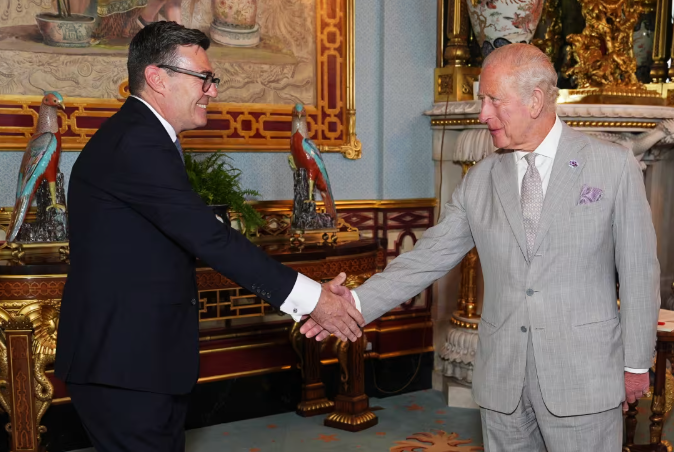
After a governing party elects a new leader, the monarch invites that individual to form a government. This constitutional step is largely ceremonial and follows long-established conventions. The King appoints the person most likely to command a majority in the House of Commons, ensuring continuity of government.
Although the monarch formally appoints the Prime Minister, political power rests with Parliament and the elected representatives of the British people.
Could an Election Still Happen?
Yes. A newly appointed Prime Minister has the authority to request a general election if they believe it is politically advantageous or if they seek a stronger public mandate. Parliament can also reach a point where a government loses the confidence of the House of Commons, potentially leading to an election or the formation of a new government.
In many cases, however, a new Prime Minister continues governing until the next scheduled general election.
What This Means for the UK
The UK’s parliamentary democracy is designed to ensure government continuity while respecting the results of the most recent general election. Leadership changes within the governing party do not automatically alter the composition of Parliament, which is why a new Prime Minister can take office without another nationwide vote.
Understanding this process helps explain why political transitions in the United Kingdom can appear different from those in countries with presidential systems. While the Prime Minister may change, the democratic mandate of Parliament remains in place until voters elect a new House of Commons at the next general election.