Connect with us

Stock News

Tech Sell-off, Soaring Crude Oil, and Tariffs Shake Wall Street

Published

on

Tech Sell-off, Soaring Crude Oil, and Tariffs Shake Wall Street

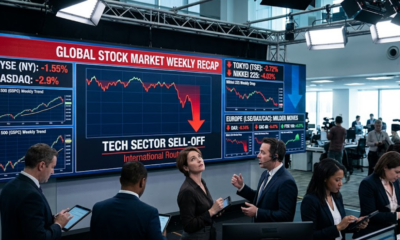
Wall Street experienced a turbulent week ending July 25, 2026, as investors confronted a confluence of elevated geopolitical friction, soaring energy prices, new trade tariff announcements, and mixed Big Tech earnings. Major equity benchmarks ended the week on a defensive note, driven down by heavy selling in mega-cap technology stocks and mounting inflation anxieties ahead of the upcoming Federal Reserve policy meeting.

Big Tech Earnings Trigger Valuation Realignment

The second-quarter earnings season shifted into high gear with initial reports from “Magnificent Seven” heavyweights. However, market reactions were decidedly cold, particularly within the technology and semiconductor sectors.

Alphabet and Tesla kicked off results for tech mega-caps, but both stocks faced immediate selling pressure. While top-line revenue metrics showed ongoing growth, investors focused heavily on management’s expanded capital expenditure forecasts. Wall Street showed growing skepticism regarding the massive capital allocated toward AI data center infrastructure relative to near-term monetization timelines.

The technology-heavy Nasdaq Composite bore the brunt of the pullback, slumping over 2% during Thursday and Friday trading sessions to close at 25,137.69. Broad-based selling in semiconductor foundries and hardware manufacturers further weighed on overall market sentiment.

Geopolitical Conflicts Drive Oil Above $100

Compounding market headwinds, escalating military actions in the Middle East caused energy prices to surge. U.S. military strikes against Iranian targets and retaliatory conflict in vital shipping channels like the Red Sea sparked fears of sustained global energy supply disruptions.

Brent Crude oil futures breached the $100 per barrel threshold for the first time since May, while West Texas Intermediate (WTI) crude climbed above $92 per barrel. The rapid rise in energy prices sparked fresh concerns over headline inflation, pushing the 10-year U.S. Treasury yield up toward 4.70%. Higher borrowing costs and bond yields added further pressure to growth-oriented equity valuations.

Trade Policy and Labor Market Resilience

Trade policy was another focal point for global markets after the U.S. administration announced executive actions establishing new global tariffs ranging from 10% to 12.5%, along with targeted 50% duties on select Canadian goods taking effect in 30 days. The measures replace earlier temporary levies, prompting cross-border trade negotiations and currency adjustments.

Despite macro volatility, underlying domestic economic indicators reflected continued labor market strength. Initial jobless claims dropped unexpectedly to 187,000—the lowest level in decades—demonstrating that U.S. employment remains exceptionally resilient.

However, robust labor data paired with energy-driven inflation creates a challenging backdrop for the Federal Reserve. Interest rate futures tracked by CME Group reflect a 64% probability that the central bank will keep benchmark interest rates unchanged at its upcoming meeting, pausing further rate reductions to assess inflationary developments.

Index Summary for the Week Ending July 25, 2026

  • Dow Jones Industrial Average: Closed at 51,711.65 (Down 0.97% on late-week selling, though defense and industrial sectors provided relative downside protection).
  • S&P 500: Closed at 7,408.30 (Down 1.21% as tech losses offset gains in energy and industrial equities).
  • Nasdaq Composite: Closed at 25,137.69 (Down 2.15%, led by pullbacks in software, hardware, and semiconductor stocks).
  • CBOE Volatility Index (VIX): Surged above 18.7, hitting its highest fear gauge reading in nearly a month.

Market Outlook

Looking ahead to next week, market attention will focus on earnings releases from remaining tech leaders, including Apple, Microsoft, and Amazon. Investors will scrutinize corporate guidance on profit margins, infrastructure spending, and supply chain management to gauge whether equity markets can stabilize amidst elevated interest yields and international geopolitical uncertainty.

Trending