
Stock News
Alphabet Inc. Faces Investor Scrutiny After Reporting Negative Free Cash Flow for the first time


Alphabet Inc., the parent company of Google, delivered one of the strongest operating quarters in its history for the period ending June 30, 2026. Revenue climbed 24% year over year to $119.8 billion, while Google Cloud revenue surged 82%, reflecting exceptional demand for artificial intelligence infrastructure and cloud computing services. Despite these impressive results, Wall Street focused on one surprising metric: Alphabet reported its first-ever negative quarterly free cash flow since becoming a public company in 2004.
The company generated approximately $39.1 billion in operating cash flow during the quarter but spent $44.9 billion on capital expenditures, resulting in approximately negative $5.9 billion in free cash flow. This was not caused by weak operations or slowing revenue growth. Instead, it reflected Alphabet’s aggressive investments in AI data centers, custom chips, cloud infrastructure, and next-generation computing capacity.
Why Free Cash Flow Matters More Than Earnings
Free cash flow represents the cash remaining after a company pays its operating expenses and capital investments. Investors often consider it one of the best indicators of financial health because it measures the cash available for dividends, share repurchases, acquisitions, and debt reduction.
Although Alphabet reported record revenue and substantial profits, much of its reported net income was boosted by non-cash gains on equity investments. Free cash flow, by contrast, reflects actual cash generated by the business after investment spending. That is why many institutional investors paid closer attention to the cash flow statement than to headline earnings.
Massive AI Spending Is Changing Big Tech
Alphabet’s negative free cash flow is largely the consequence of its determination to remain competitive in the global AI race. Management increased its projected 2026 capital expenditures to approximately $195 billion to $205 billion, one of the largest investment programs ever announced by a technology company. Those investments include new AI data centers, Tensor Processing Units (TPUs), cloud infrastructure, and advanced computing capacity designed to support Gemini AI and enterprise cloud services.
Rather than signaling financial distress, the cash burn demonstrates how expensive AI infrastructure has become. Alphabet is effectively sacrificing near-term cash generation to secure long-term leadership in artificial intelligence.
Short-Term Implications for Alphabet Stock
Investors typically react cautiously when free cash flow turns negative, particularly after many years of strong cash generation. Following the earnings release, Alphabet shares declined as markets questioned whether future AI investments would produce sufficient returns. Analysts also expressed concern that continued spending could pressure future share buybacks and increase reliance on external financing.
In the coming months, Alphabet’s stock could remain volatile as investors closely monitor three critical metrics:
- Growth in Google Cloud revenue.
- Profitability of AI products and services.
- Improvement in free cash flow generation.
If capital expenditures continue rising faster than operating cash flow, valuation multiples may remain under pressure despite strong revenue growth.
Long-Term Outlook Remains Constructive

Despite short-term concerns, Alphabet still possesses several competitive advantages. The company maintains one of the world’s strongest balance sheets, with approximately $242.5 billion in cash, cash equivalents, and marketable securities as of June 30, 2026. Its Search business continues to generate enormous operating cash flow, while Google Cloud has become one of the fastest-growing enterprise AI platforms globally.
If Alphabet successfully converts today’s infrastructure investments into higher cloud revenue, AI subscriptions, enterprise software, and advertising growth, today’s negative free cash flow could eventually be viewed as a strategic investment rather than a financial weakness. Similar investment cycles occurred during the expansion of Amazon Web Services, which initially required significant capital before becoming a major profit engine.
Risks Investors Should Watch
The primary risk is execution. AI infrastructure requires enormous capital, and returns may take years to materialize. If competitors such as OpenAI, Microsoft, Anthropic, or Meta introduce superior AI products, Alphabet may struggle to earn an adequate return on its record capital expenditures. Additionally, prolonged negative free cash flow could reduce financial flexibility if investment spending remains elevated for several years.
Investment Perspective
For long-term investors, Alphabet’s first negative free cash flow quarter should be viewed in context rather than isolation. The company’s core businesses continue to produce exceptional revenue growth, expanding operating margins, and strong customer demand. The negative free cash flow reflects unprecedented investment rather than deteriorating operations.
In the short term, Alphabet’s stock may experience continued volatility as markets assess the payoff from its AI spending. Over the longer term, however, these investments could strengthen Google’s competitive position and create new high-margin revenue streams if management executes successfully. Investors should closely monitor future quarters for signs that AI-related capital expenditures are translating into sustained cash flow growth and improved returns on invested capital.





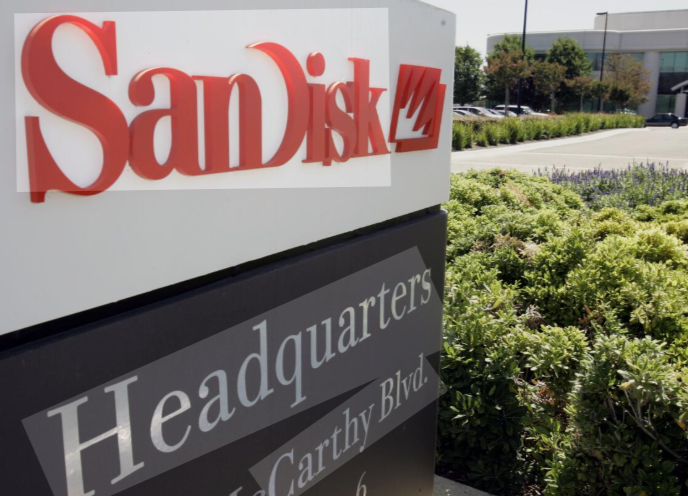
The artificial intelligence boom has transformed the semiconductor landscape, turning memory chip makers into the focal point of Wall Street’s tech rally. While GPU pioneers initially dominated headline attention, memory specialists Micron Technology (NASDAQ: MU) and SanDisk (NASDAQ: SNDK) have emerged as critical infrastructure bottlenecks for generative AI clusters.
Both companies delivered exponential year-to-date gains through mid-2026 before hitting sharp profit-taking pressure in late July. Understanding the structural drivers behind their performance—and the operational differences between them—is vital for investors looking to navigate the volatile memory sector.
The AI Engine Driving Memory Demand
Training and deploying massive AI models requires two core types of hardware memory: DRAM (Dynamic Random-Access Memory) for rapid computational processing and NAND flash memory for persistent high-capacity storage.
- Micron Technology operates across both domains and holds a leading position in High-Bandwidth Memory (HBM), which stacks DRAM vertically to feed real-time processing data directly to GPUs. Micron’s latest financial releases reflected extraordinary growth, with fiscal Q3 2026 revenue surging over 340% year-over-year to $41.46 billion.
- SanDisk focuses specifically on high-density NAND flash storage, supplying advanced Solid-State Drives (SSDs) designed to manage massive AI training datasets. Driven by persistent enterprise shortages, SanDisk experienced dramatic top-line expansion, with revenue reaching $5.95 billion in recent quarterly results.
High Valuations Meet Market Correction Dynamics
The unprecedented appetite for enterprise memory initially triggered staggering stock price surges. Micron jumped more than 200% year-to-date, briefly pushing its valuation past the $1.1 trillion milestone, while SanDisk posted gains exceeding 500%.
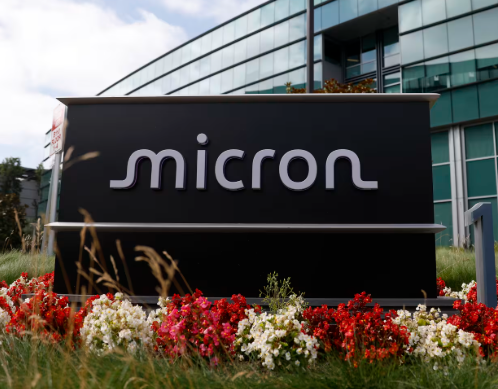
However, late July introduced sudden volatility across global chipmakers. A broader technology rotation, triggered by Asian chip stock selloffs in South Korea and Japan, rippled into U.S. markets. Profit-taking brought SanDisk down by nearly 9% in a single session, while Micron slid 6%.
This retreat highlights a distinct variance in market multiples:
- SanDisk’s Trailing Valuations: SanDisk entered the correction carrying a trailing price-to-earnings (P/E) ratio near 55x, making its shares particularly susceptible to sudden shifts in risk appetite.
- Micron’s Forward Multiples: Conversely, Micron trades at a forward P/E ratio near 6x, supported by consensus price targets above $1,500 due to long-term enterprise agreements.
Long-Term Outlook: Supercycle or Cyclical Trap?
Historically, the memory industry has suffered from extreme boom-and-bust supply cycles. However, corporate leadership argues that AI data center requirements have structurally altered this dynamic. Micron has secured extended multi-year strategic agreements with fixed pricing floors through 2030, while SanDisk management continues to signal tight NAND supply conditions well into the future.
The Verdict for Investors: While short-term macroeconomic volatility and elevated multiples present pullbacks, long-term fundamentals remain supported by structural AI infrastructure demand. Micron provides diversified exposure across DRAM, HBM, and NAND at more defensive forward valuations, whereas SanDisk offers high-beta exposure directly tied to global enterprise storage expansion.


Alphabet Inc. Faces Investor Scrutiny After Reporting Negative Free Cash Flow for the first time

The Domino Effect of Japan’s Rate Hikes On US Stocks and Treasuries Market Marks A New Era

Solid State Batteries Enter Electric Fleet Production

Armanino adds Strategic Accounting Outsourced Solutions

New 2023 K-1 instructions stir the CAMT pot for partnerships and corporations

Tax Strategy: Employee Retention Credit update
-

 Economics1 week ago
The Warsh Shift: How the New Fed Chair Is Balancing War Drags and Tech Winds
-

 Economics1 week ago
Global Trade Realignment and Supply Chains in 2026
-

 Economics1 week ago
Labor Market Calibration: Analyzing the Shift Toward Skill-Based Allocation in 2026
-

 Finance1 week ago
South Korea Raises Interest Rates to 2.75% for the First Time in More Than Three Years
-

 Finance1 week ago
Tokenized Real-World Assets: Institutional Ledger Adoption Achieves Scale in July 2026
-
 Leaders1 week ago
Berkshire Hathaway Chairman Reshapes His Long-Term Philanthropic Strategy
-

 Economics6 days ago
UK Has a New Prime Minister Without a General Election
-
 Economics1 week ago
Global Stock Market Weekly Recap: Tech Sell-Off Sparks International Rout