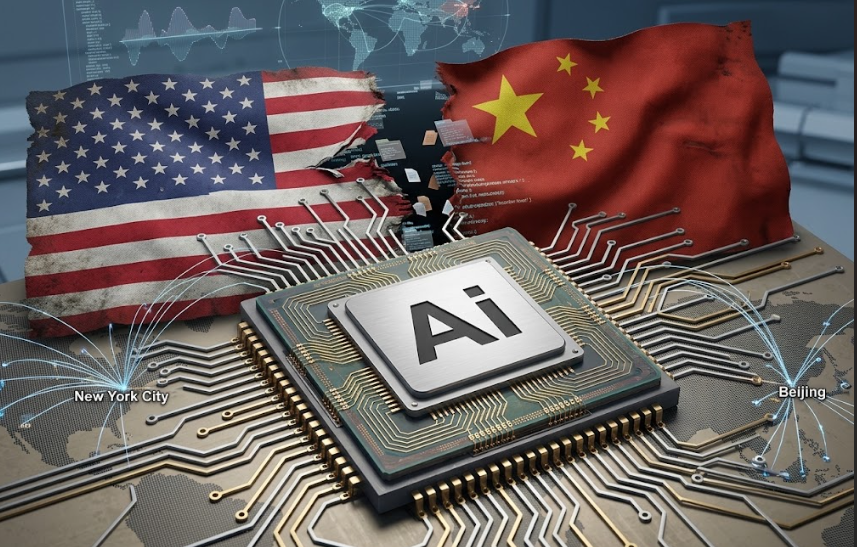
Technology
AI Use Cases: Retail, Finance & Healthcare Solutions
Published
2 years agoon
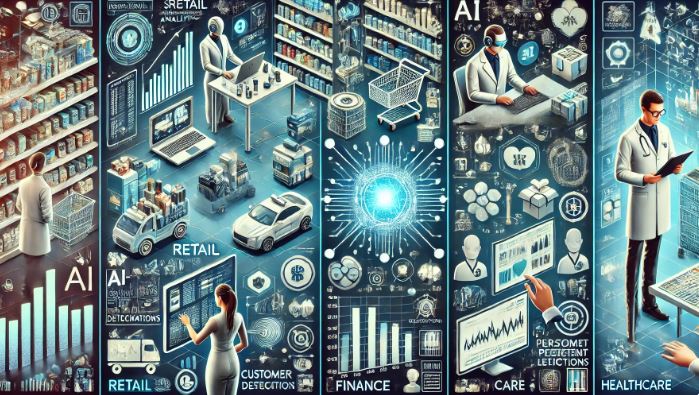
Artificial intelligence (AI) is changing the world fast. It’s making big changes in retail, finance, and healthcare. AI brings new ideas, makes things more efficient, and helps focus on what customers want.
This article looks at how AI is changing three big areas: retail, finance, and healthcare. We’ll see how AI is making these fields better. It’s helping businesses work smarter, make customers happier, and stay on top of new trends.
AI is used in many ways, like predicting sales in retail and catching fraud in finance. It also helps doctors by analyzing images and improving care for patients. Let’s explore how AI is making a big difference in these important fields.
Understanding AI Implementation Across Industries
Artificial intelligence (AI) is changing many industries. Companies are looking to use AI to make better decisions and work more efficiently. They see AI as a way to use data to improve their operations.
AI is useful in many areas, like retail, finance, and healthcare. Each field uses AI in different ways. Knowing how AI works in these areas can help other companies use it better.
AI helps businesses make smarter choices. It uses data to find patterns and predict what will happen next. This way, companies can make better plans and stay ahead of the competition.
| Industry | Key AI Applications | Potential Benefits |
|---|---|---|
| Retail | Personalized product recommendations Predictive inventory management Automated customer service | Improved customer experience Optimized supply chain and inventory Enhanced operational efficiency |
| Finance | Risk assessment and fraud detection Automated trading and portfolio management Personalized financial planning | Reduced financial risk Improved investment performance Enhanced customer service |
| Healthcare | Predictive disease diagnosis Automated medical imaging analysis Personalized treatment recommendations | Improved patient outcomes Increased operational efficiency Enhanced clinical decision-making |
As AI use grows, companies must keep up with its challenges and best practices. By staying informed and flexible, they can use AI to innovate and stay competitive.
Top AI Use Cases for Retail, Finance, and Healthcare
Artificial Intelligence (AI) has changed how businesses work in many fields. Retail, finance, and healthcare are big winners. AI helps solve big problems and makes things better.
Machine Learning Applications
Machine learning is a key part of AI. It helps predict what will happen next. In retail, it looks at what customers buy and when. This helps keep the right amount of stock.
In finance, it spots risky loans and catches fraud. It also gives advice on investments. In healthcare, it finds diseases early and helps patients get better.
Natural Language Processing Solutions
Natural Language Processing (NLP) is another big help. In retail, chatbots talk to customers and help them buy things. In finance, it reads reports and news to find important info.
In healthcare, it makes medical notes easier to read. It helps doctors make better choices.
Computer Vision Technologies
Computer vision lets machines understand pictures and videos. It’s used a lot in these fields. In retail, it helps count stock and show products.
In finance, it checks who you are and spots fraud. In healthcare, it looks at scans to find diseases early.
AI is changing these industries in big ways. It’s all about making things better and more efficient. AI can help in many ways, from predicting what will happen to understanding language and images.
| Industry | AI Use Cases |
|---|---|
| Retail | Predictive analytics for inventory management Chatbots for customer service Computer vision for automated checkout and product visualization |
| Finance | Credit risk modeling and fraud detection Personalized investment recommendations Identity verification and remote asset monitoring |
| Healthcare | Early disease detection and patient outcome improvement Streamlining medical documentation and clinical decision-making Medical imaging analysis for accurate diagnosis |
AI-Powered Retail Revolution: Transforming Shopping Experience
The retail world is changing fast, thanks to AI. This new era is making shopping better and more fun for everyone.
Personalized recommendations are a big deal now. AI helps stores know what you like and suggest things just for you. This makes shopping more fun and helps stores sell more.
Virtual shopping assistants are also changing things. These smart helpers give you info and help you buy things. They make shopping easier and let people help with harder tasks.
Smart fitting rooms are another cool thing. They use special tech to help you find the right size and style. You can even get more items without leaving the room.
AI is also improving how stores manage things. It helps predict what people will buy. This means stores can have the right stuff and avoid waste.
“The integration of AI in retail is not just a passing trend, but a fundamental shift in the way businesses interact with their customers and manage their operations.”
AI is making the future of shopping exciting. It’s all about making things better for you and helping stores work smarter. Get ready for a shopping world like never before.
Smart Inventory Management and Supply Chain Optimization
The digital world is changing fast. This includes big changes in how we manage inventory and improve supply chains. Artificial intelligence (AI) is leading this change. It helps businesses forecast better, automate warehouses, and watch supply chains in real-time. This makes things more efficient, cheaper, and makes customers happier.
Predictive Inventory Analytics
AI helps predict when we’ll need more stuff. It uses special algorithms to look at lots of data. This includes sales, market trends, and what customers like. It helps keep the right amount of stock, avoid running out, and make better plans for the future.
Automated Warehousing Solutions
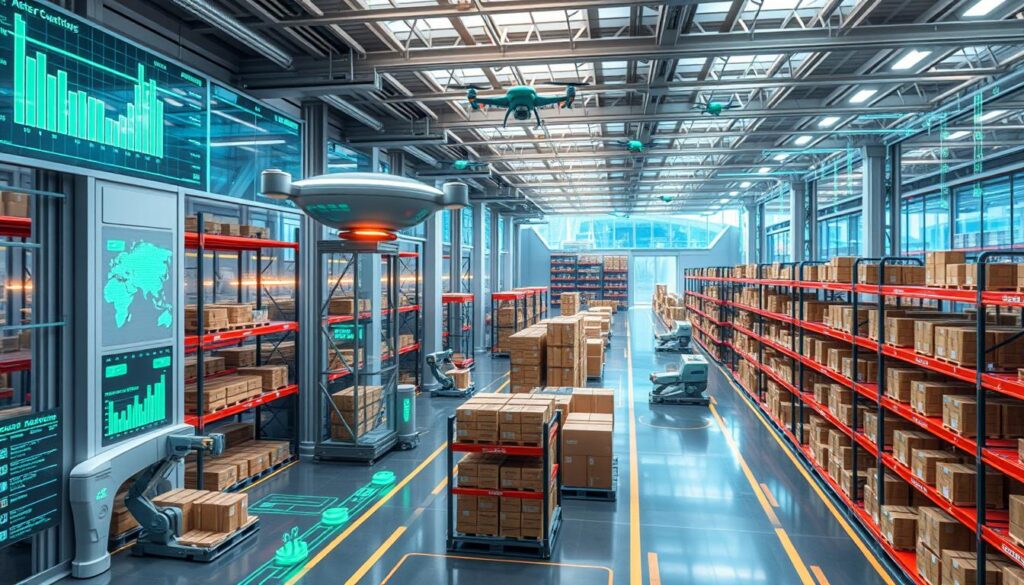
AI and robots are making warehouses work better. Robots can find and pick items on their own. They use computers to see and learn. This makes things faster and more accurate, saving time and money.
Real-time Supply Chain Monitoring
AI keeps an eye on supply chains all the time. It uses data from sensors and more to spot problems early. This lets companies fix issues fast, send things on time, and make customers happy.
| AI Capability | Benefit |
|---|---|
| Predictive Inventory Analytics | Improved inventory forecasting, reduced stockouts, and enhanced supply chain visibility |
| Automated Warehousing Solutions | Increased efficiency, reduced errors, and optimized productivity in warehouse operations |
| Real-time Supply Chain Monitoring | Proactive issue identification, optimized transportation, and enhanced customer satisfaction |
“AI-powered solutions are transforming the landscape of inventory management and supply chain optimization, empowering businesses to achieve new levels of efficiency and responsiveness.”
Financial Services: AI-Driven Innovation
The financial services world is changing fast with AI. New tech is making banks, investment firms, and insurance better. They are now more efficient, personal, and safe.
Algorithmic trading is a big deal in finance. AI can look at lots of data, find patterns, and make trades fast. This has brought robo-advisors to life. They give advice based on your risk and goals.
AI is also changing how loans are given. It helps lenders know who to trust better. This makes getting loans easier for more people.
AI is making many things better in finance. It helps with customer service and finding fraud. This makes things run smoother and customers happier.
“AI is not the future of finance – it is the present. Financial institutions that embrace these transformative technologies will gain a competitive edge and better serve their clients.”
AI will keep making finance better. It will open up new ways to grow and help customers more.
AI in Risk Assessment and Fraud Detection
The financial world is changing fast with AI. It’s making risk assessment and fraud detection better. AI uses predictive risk analytics and anomaly detection to protect banks and their customers.
Credit Risk Modeling
AI helps banks make better loan choices. It looks at lots of data to guess if a loan might fail. This makes lending safer and fairer for everyone.
Transaction Monitoring Systems
AI watches transactions in real time to stop fraud. It spots things like money laundering quickly. This helps banks act fast to stop fraud.
Identity Verification Solutions
AI makes it easier to know who you are. It uses face and voice checks to confirm identities. This keeps transactions safe from fake identities.
AI is making the financial world safer. It helps banks work better, lose less money, and gain more trust from customers.

Healthcare Diagnostics and Patient Care Enhancement
AI is changing healthcare a lot. It gives doctors new tools for better patient care. This includes AI-assisted diagnosis and predictive healthcare analytics.
AI helps make personalized treatment plans. It looks at lots of patient data to find what each person needs. This makes treatments work better, helping patients more and saving money.
Remote patient monitoring is another big thing. It lets doctors keep an eye on patients from afar. This means patients get help sooner and doctors can focus on the most urgent cases.
| AI Application | Benefits |
|---|---|
| AI-assisted Diagnosis | Improved accuracy, faster decision-making, and earlier detection of diseases |
| Predictive Healthcare Analytics | Identification of high-risk patients, optimization of treatment plans, and proactive intervention |
| Personalized Treatment Plans | Tailored therapies based on individual patient data, leading to enhanced outcomes and reduced healthcare costs |
| Remote Patient Monitoring | Continuous health data tracking, early intervention, and improved patient convenience |
AI is making healthcare even better. We’ll see more AI-assisted diagnosis, predictive healthcare, personalized treatment plans, and remote patient monitoring. These changes will make healthcare more effective and efficient.
“AI is not just a technology, but a tool that can empower healthcare professionals to provide more personalized and effective care for their patients.”
Medical Imaging and Disease Detection
Artificial intelligence (AI) is changing healthcare. It helps in medical imaging and disease detection. These new technologies are changing how doctors diagnose and treat patients.
Radiology AI Applications
AI in radiology is improving how doctors read images. It uses machine learning to look at X-rays, CT scans, and MRIs. This helps doctors find problems faster and more accurately.
Pathology Analysis Systems
AI is also changing digital pathology. It helps analyze tissue samples quickly and accurately. It can find cancer in breast, prostate, and lung tissue. This could lead to finding diseases earlier and helping patients more.
Early Disease Detection
- AI looks at lots of medical data to find early signs of health problems.
- It uses special technologies to spot small changes that might mean a disease is coming.
- AI in radiology and pathology is changing healthcare. It helps doctors give better care to patients.
| AI Application | Key Benefits |
|---|---|
| Radiology AI | Improved diagnostic accuracy, faster turnaround times, and enhanced clinical decision-making |
| Pathology Analysis | Automated detection of various types of cancer, leading to earlier intervention and better patient outcomes |
| Early Disease Detection | Proactive identification of health issues, enabling preventive care and personalized treatment plans |
AI in medical imaging and disease detection is changing healthcare. As it gets better, it will help doctors more. It will make healthcare better for everyone.
Future Trends in AI Implementation
AI is changing fast, and retail, finance, and healthcare will see big changes soon. New AI tech like natural language processing and computer vision will change how these areas work. This will start the era of Industry 4.0.
But, there’s more to AI’s future than just tech. Ethics will play a big role too. It’s important to use AI in a way that’s fair and open. This includes keeping data safe, avoiding bias, and thinking about jobs.
Working together with AI will be key. Businesses want to use AI to make things better but also keep human touch. This balance will help make things more efficient and personal.
AI’s success in retail, finance, and healthcare depends on facing these new trends. By using AI wisely and solving its challenges, these areas can get better. This will make things more efficient, personal, and innovative for everyone.

You may like
-
U.S.- Canada Trade Talks Collapse; Carney Says Retaliatory Tariffs Begin September 8
-
U.S. National Debt Surpasses $40 Trillion for the First Time: What It Means for the Economy
-
U.S.-China AI Competition Intensifies as Washington Pushes Allies to Choose Sides
-
Nvidia’s Potential $3 Billion SB Energy Investment Could Reshape AI Infrastructure
-
U.S. Retail Sales Fall for the First Time in Nine Months as Consumer Spending Slows
-
Top 65 Largest Economies in the World for 2027
Technology
Flock Cameras and the Future of Public Security
Published
2 days agoon
September 1, 2026
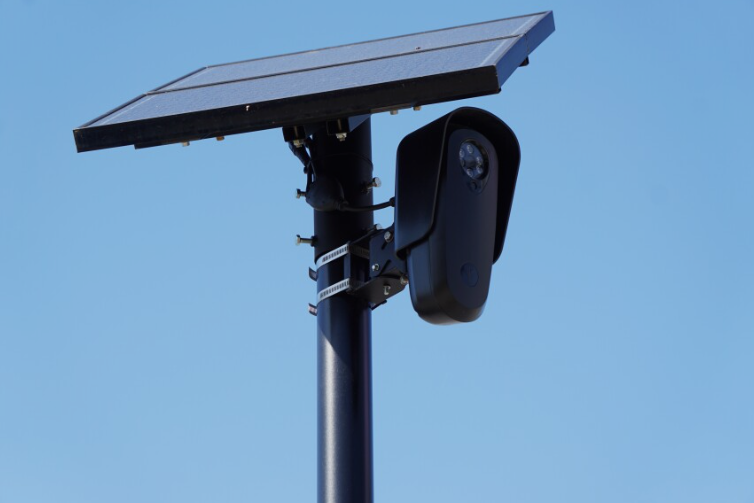
Automatic License Plate Reader (ALPR) technology, spearheaded by companies like Flock Safety, has fundamentally altered the landscape of municipal and neighborhood security. Operating tens of thousands of cameras across urban and rural corridors, these systems do much more than simply photograph passing vehicles. According to the American Civil Liberties Union (ACLU), by utilizing advanced machine learning algorithms, Flock cameras capture and catalog distinct vehicle characteristics—including make, model, color, roof racks, bumper stickers, and even minor physical damage—converting routine transit data into an indexed, searchable digital footprint.
The Force Multiplier: How Flock Cameras Aid Modern Law Enforcement
For law enforcement agencies and community associations, this infrastructure is touted as a revolutionary force multiplier. Proponents emphasize that modern crime is increasingly mobile, with perpetrators frequently utilizing stolen vehicles or traveling across jurisdictions to commit property thefts, violent crimes, and amber alerts. Flock’s network provides real-time alerts when a flagged vehicle enters a coverage zone, enabling police to intercept suspects efficiently. From locating missing vulnerable persons to recovering stolen assets, the tactical utility for crime reduction has driven widespread adoption by thousands of local police departments and private homeowners’ associations nationwide.
The Dark Side of Convenience: Mass Surveillance and Civil Liberties Concerns
However, according to civil rights organizations like the ACLU and the Electronic Frontier Foundation (EFF), the rapid scaling of this technology has ignited an intense national debate regarding its broader implications for public safety, civil liberties, and systemic privacy. Critics argue that passive, continuous tracking transforms public streets into a digital panopticon.
According to data highlighted by privacy groups, the vast majority of scanned vehicles—typically over 99 percent—have no connection to illegal activity, meaning the architecture amounts to mass, warrantless surveillance of everyday citizens.
Vulnerabilities in Data Governance and Internal System Misuse
The security implications extend deeply into the realm of data governance and internal abuse. According to investigative reports and watchdog findings, vulnerabilities have frequently allowed the system’s vast data pool to be improperly accessed.
Documented cases of misuse involve law enforcement officers exploiting the network to track estranged romantic partners, surveil political protesters, or query sensitive personal journeys. Furthermore, technical limitations—such as misread plates or algorithmic false positives—have occasionally resulted in armed stops of innocent drivers, highlighting the real-world dangers of relying heavily on automated matching systems.
Regulatory Pushback and Industry Overhauls
In response to mounting public backlash, legislative scrutiny, and contract cancellations by municipalities, technology providers and local governments have been forced to re-evaluate operational guardrails. According to industry announcements, adjustments include reducing default data retention windows down to seven days, enforcing mandatory case codes and audit trails to track abnormal search patterns, and implementing security upgrades. These measures represent critical attempts to balance security efficacy with personal privacy.
The Paradox of Modern Security Infrastructure
Ultimately, the proliferation of Flock cameras exposes a central paradox of modern security: the tools most effective at tracking criminal mobility are inherently the same tools that erode the traditional right to anonymous movement. As communities grapple with these tradeoffs, the future of public safety infrastructure will rely heavily on whether strict legislative frameworks, stringent transparency, and robust oversight can successfully mitigate the risks of mass digital tracking without sacrificing operational utility.
Technology
AI Infrastructure Boom Hits Physical Limits: Power, Financing, and Supply Chain Strain
Published
4 days agoon
August 30, 2026
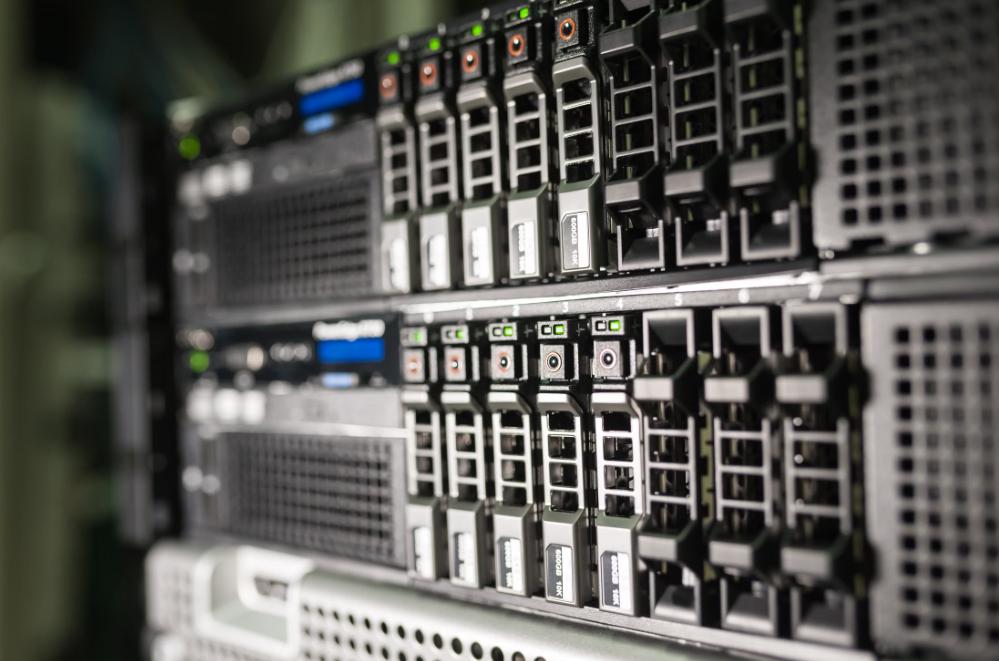
The rapid buildout of artificial intelligence infrastructure is running into physical and financial limits that were less visible earlier in the AI investment cycle. This week’s technology news cycle highlighted how electricity availability, financing structures, and hardware supply chains are becoming as important to the AI story as the underlying chips themselves.
Microsoft Confronts Data Center Power Limits
According to reporting compiled by Tech Startups, Microsoft is actively wrestling with the physical limits of data center capacity and electricity availability as it scales its AI infrastructure. This is a notable shift in framing: for much of the current AI investment cycle, chip supply was the primary bottleneck discussed publicly. Increasingly, the constraint is shifting toward the availability of reliable, sufficient electrical power to run the facilities that house AI chips.
Goldman Sachs raised its U.S. data center construction spending outlook this month, according to Investrade’s market review, now forecasting $67 billion in spending for 2026 and $87 billion for 2027, representing 35% and 30% year-over-year growth, respectively. The firm cited accelerating construction activity, record project starts, rising hyperscaler capital expenditure forecasts, and growing evidence of returns on AI investment as drivers of the upgraded outlook.
Nvidia’s Expanding Financing Role
Nvidia’s involvement in AI infrastructure has moved well beyond chip sales. The company is reportedly nearing an agreement to guarantee roughly $100 billion in credit supporting OpenAI’s data center expansion plans, according to Tech Startups’ review of recent reporting. Separately, Reuters has reported that Nvidia is in discussions to invest up to $3 billion in SB Energy, a SoftBank Group subsidiary developing a major data center project in Ohio for OpenAI — though those talks remain ongoing and unconfirmed as of this writing.
Notably, Nvidia has also reportedly scaled back its financial exposure in some cases: Reuters reported the company reduced its planned financial support for the Ohio OpenAI project from an earlier figure of up to $250 billion to less than $120 billion, suggesting the company is actively balancing its ambition to accelerate AI infrastructure against concerns about concentrated financial risk.
Hardware Shifts: From GPUs to Full-Stack Systems
The competitive landscape for AI hardware is also evolving. According to Data Center Knowledge’s August 2026 hardware roundup, AMD introduced “Helios,” an integrated rack-scale AI system combining its sixth-generation Epyc 9006 CPUs with new Instinct MI455X GPUs and Pensando networking positioned as a direct competitor to Nvidia’s Vera Rubin/NVL72 platform. AMD claims the system delivers higher AI compute density and improved cost efficiency per token processed.
Meanwhile, TSMC continues expanding advanced chip manufacturing capacity in Arizona, adding fab and packaging capacity and ramping production of its 2-nanometer process alongside existing 3nm and 5nm lines, targeting GPUs, CPUs, networking silicon, and custom AI accelerators, according to the same Data Center Knowledge report.
Why Networking and Power Now Matter as Much as Chips
Silicon photonics optical technologies that move data using light rather than electrical signals is expected to capture a growing share of data center networking as clusters scale into tens or hundreds of thousands of AI accelerators, according to Tech Startups’ infrastructure coverage. As AI training clusters grow, electrical connections face increasing physical constraints from power consumption, heat generation, signal loss, and distance making optical networking an increasingly critical, if less publicly discussed, component of AI infrastructure scaling.
What This Means for Investors and Enterprises
The maturing AI infrastructure buildout suggests that future AI-driven equity performance and enterprise deployment timelines may depend as much on power availability, financing structures, and networking capacity as on GPU supply alone. Companies and investors evaluating exposure to the AI infrastructure theme should track not only chip vendors but also utilities, financing partners, and networking equipment providers as increasingly material parts of the value chain.
Technology
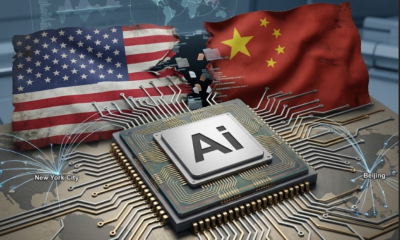
U.S.-China AI Competition Intensifies as Washington Pushes Allies to Choose Sides
Published
2 weeks agoon
August 19, 2026
U.S.-China AI Competition Enters a New Phase
The competition between the United States and China over artificial intelligence is becoming increasingly geopolitical. Washington is preparing to tell dozens of countries that they may have to choose between competing U.S.- and China-backed AI ecosystems, according to a U.S. official and an internal draft reviewed by Reuters. Countries that participate in China’s competing framework could potentially be excluded from a U.S.-led AI coalition.
The development represents a major escalation in the global AI competition because the rivalry is no longer limited to which country can develop the most powerful models. It increasingly involves semiconductor supply chains, computing infrastructure, critical minerals, data centers, cloud services, investment and international alliances.
Why the U.S.-China AI Race Matters
Artificial intelligence has become strategically important because it can influence economic productivity, national security, military capabilities and technological leadership.
The United States currently has major advantages in advanced computing infrastructure and frontier AI development. However, China has demonstrated rapid progress in AI research, model development and industrial deployment.
Brookings describes the competition as spanning several dimensions, including computing power, models, adoption, integration and deployment. It argues that the United States retains an important lead at the technological frontier while China is advancing through efficiency improvements, open-source development and integration into the real economy.
Washington Wants to Strengthen a U.S.-Led AI Ecosystem
The latest U.S. initiative reflects concerns that countries could simultaneously participate in American and Chinese technology ecosystems.
Washington has already pursued policies designed to strengthen supply chains involving AI models, semiconductors and critical minerals. Reuters reported that the United States launched the Pax Silica initiative last year with the goal of strengthening these strategic supply chains.
The new pressure on partner countries could therefore be viewed as an attempt to turn technological partnerships into a broader geopolitical alliance.
For countries caught between Washington and Beijing, however, choosing sides could be economically difficult.
China Is Building Its Own AI Ecosystem
China is not simply responding to American policy. Beijing is actively attempting to establish itself as a global leader in artificial intelligence.
Recent Chinese initiatives have emphasized domestic AI development, semiconductor capabilities, industrial applications and broader international cooperation.
Barron’s reported that China’s AI strategy combines rapid technological development with substantial regulatory oversight. Beijing’s “AI Plus” strategy seeks to expand AI integration across industries such as manufacturing, healthcare, education and government.
Chinese companies including DeepSeek, Moonshot AI and Alibaba have contributed to the country’s rapidly developing AI ecosystem.
Semiconductors Are at the Center of the Rivalry
The U.S.-China AI competition cannot be separated from the semiconductor industry.
Advanced AI systems require powerful processors, and access to leading-edge chips is therefore a strategic advantage. Washington has used export controls and other policies to restrict China’s access to some advanced semiconductor technologies.
China, meanwhile, is investing heavily in domestic semiconductor production in an effort to reduce dependence on foreign suppliers.
The outcome of this competition could reshape the global semiconductor industry for years.
Critical Minerals Add Another Layer
AI infrastructure requires more than semiconductors. Data centers need electricity, networking equipment, construction materials and various critical minerals.
China occupies an important position in global processing and supply chains for several critical minerals. This gives Beijing an additional strategic lever in technology competition.
The United States and its allies are therefore attempting to diversify critical-mineral supply chains and develop alternative sources.
The result is an increasingly complex relationship between artificial intelligence, energy security, mining, manufacturing and international trade.
Countries Face Difficult Economic Choices
The biggest challenge for third countries is that many want access to both American and Chinese technology.
American AI companies have enormous influence in cloud computing, software and advanced chips. China offers competitive technology, manufacturing capabilities and infrastructure investment.
For emerging economies, maintaining relationships with both sides may provide economic advantages. Being forced to choose could increase costs and reduce technological options.
Countries may consequently attempt to pursue a middle path, although Washington’s reported proposal could make that strategy increasingly difficult.
AI Competition Could Reshape Global Trade
The consequences extend beyond technology companies.
If the world divides into separate AI ecosystems, businesses may face incompatible technology standards, duplicated supply chains and higher compliance costs.
Manufacturers could need to maintain separate technology systems for different markets. Cloud providers could face restrictions on cross-border services. Semiconductor companies could have to navigate increasingly complicated export-control regimes.
Such fragmentation could reduce some of the efficiency created by globalization.
The Economic Stakes Are Enormous
The AI industry is attracting extraordinary amounts of investment. Nvidia alone has become deeply involved in financing the infrastructure required for AI expansion, including a reported initiative designed to mobilize up to $500 billion for AI infrastructure.
This demonstrates why governments view AI leadership as an economic priority.
The country that builds the strongest AI ecosystem could gain advantages in productivity, manufacturing, scientific research and high-value technology exports.
U.S.-China AI Talks Could Provide a Pressure Valve
Despite intensifying competition, Washington and Beijing are not completely disengaged.
Reuters previously reported that U.S. and Chinese officials were expected to hold AI discussions in September, reflecting growing concern on both sides about the accelerating AI race.
Dialogue could help establish rules around AI safety, technology transfers and international cooperation.
However, negotiations will be complicated because AI is increasingly viewed through the lens of national security.
What the U.S.-China AI Competition Means for the Future
The U.S.-China AI rivalry is evolving from a competition between technology companies into a contest between broader economic and geopolitical systems.
The United States is attempting to strengthen an allied technology ecosystem built around advanced computing, semiconductors and critical-mineral security. China is developing its own AI capabilities while expanding industrial adoption and international partnerships.
For investors, businesses and governments, this means AI policy will increasingly matter as much as AI innovation.
The next phase of the competition will likely be determined not simply by who develops the most powerful AI model, but by who can build the largest, most resilient and internationally connected AI ecosystem. That makes the U.S.-China AI competition one of the most consequential economic and technological developments of the decade.
U.S.- Canada Trade Talks Collapse; Carney Says Retaliatory Tariffs Begin September 8
Flock Cameras and the Future of Public Security
AI Infrastructure Boom Hits Physical Limits: Power, Financing, and Supply Chain Strain
Armanino adds Strategic Accounting Outsourced Solutions
New 2023 K-1 instructions stir the CAMT pot for partnerships and corporations
Tax Strategy: Employee Retention Credit update
Trending
-
Stock News1 week agoNvidia Earnings Preview: What Wall Street Expects From the AI Bellwether’s Q2 Report
-

Accounting1 week agoSEC’s Semiannual Reporting Proposal Faces Investor Pushback: What CFOs Need to Know
-

Stock News1 week agoNvidia Q2 FY2027 Earnings beats Wall Street Expectation with Record $96.2 Billion Revenue
-

Finance1 week agoTreasury Bond Volatility Forces Bessent to Double Debt Buyback Size as Yields Swing
-

Technology4 days agoAI Infrastructure Boom Hits Physical Limits: Power, Financing, and Supply Chain Strain
-

Economics2 days agoU.S.- Canada Trade Talks Collapse; Carney Says Retaliatory Tariffs Begin September 8
-

Technology2 days agoFlock Cameras and the Future of Public Security