
Personal Finance
AI puts the squeeze on new grads looking for work

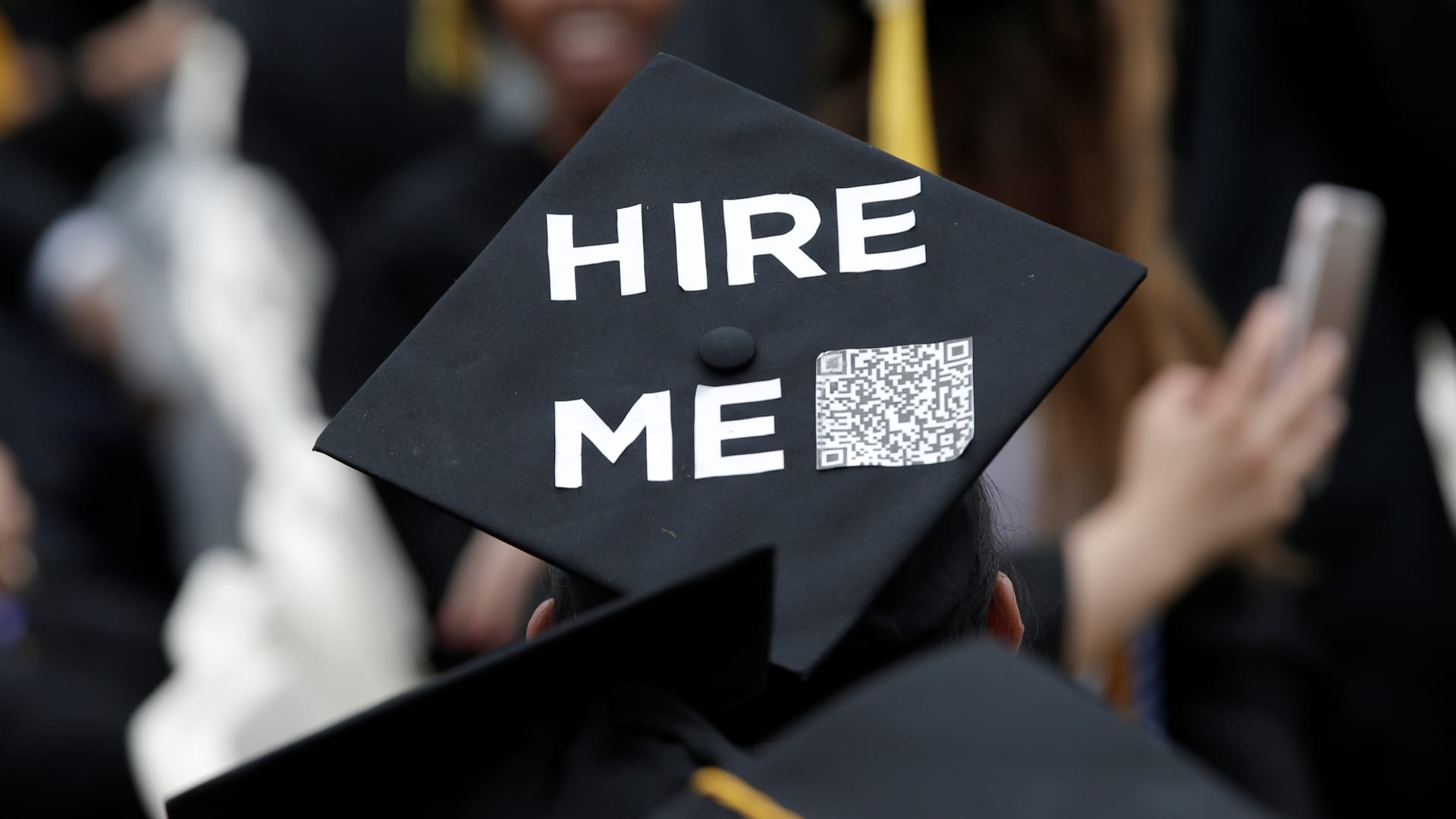

A college degree is often considered the ticket to a well-paying career, and more than three million new graduates enter the workforce every year banking on that promise.
However, this year, those armed with a newly minted diploma have faced one of the toughest job markets in a decade. And next year could be as bad or worse.
As the artificial intelligence boom reshapes the workforce at an unprecedented pace, some large employers have said they’re replacing workers with AI in order to streamline operations and cut costs. Concerns about the economy, persistent inflation and a slowdown in consumer spending are also likely contributors to a reduced hiring outlook, other research shows.
Employers are even less optimistic about the overall job market for upcoming graduates than they were in the last several years, according to a new report by the National Association of Colleges and Employers. About half, or 51%, of employers rated the job market for this year’s college seniors as poor or fair, the highest share since 2020-21.
The integration of AI has “rendered moot certain types of skills that were once good currency in the labor market, and a number of entry-level jobs are going to continue to be, at the very least, crimped,” said Joseph Fuller, a professor of management practice at the Harvard Business School.
That puts direct pressure on colleges and their career services departments, he said. “The pathways to get into certain careers are going to be narrower and the burden of credentials will be steeper.”
Already, postings for entry-level jobs in the U.S. sank 35% since January 2023, according to labor research firm Revelio Labs, with AI playing a big role.
As a result, there are suddenly fewer white-collar positions for bachelor’s degree holders just starting out.
A worsening job market for new grads
In total, employers announced 1.1 million cuts so far this year, a 65% jump from a year ago and the highest level since the Covid pandemic year of 2020, according to outplacement firm Challenger, Gray & Christmas. The highest level of layoffs came from the technology sector amid a time of restructuring due to AI integration, the report said.
Some industries are more prone to disruptions than others. Jobs in technology and finance, for example, are at greater risk largely due to generative artificial intelligence, which can supplant a human’s analytical skills, according to a separate report by Indeed. Alternatively, nursing and blue-collar jobs in manufacturing or construction are more insulated, the report found. They simply can’t be done by AI — at least not yet.
Recent data from the Federal Reserve Bank of Philadelphia also shows that higher-paying jobs that require a bachelor’s degree are more likely to be affected by AI.

Although the Class of 2025 submitted more job applications than their 2024 counterparts, they received fewer job offers, on average, than the previous class, the National Association of Colleges and Employers found.
Just 30% of 2025 college graduates secured a full-time job in their fields. That is down from 41% who secured full-time work in the Class of 2024, according to a separate graduate employability report by Cengage Group, an education technology company.
College career offices under pressure
At Gettysburg College in Pennsylvania, some employers who had typically attended the job and internship expo in the past did not participate this year — though they didn’t specify why, according to James Duffy, Gettysburg’s assistant vice president for co-curricular education.
But as companies restructure due to AI, many are cutting back on entry-level jobs that accounted for a significant share of employment opportunities for new grads, Duffy said.
“If we look at the jobs that AI has absorbed … there are a number of jobs that students used to move right into. Some of those jobs are no longer available,” he said.
The proliferation of new technology puts immense pressure on colleges to recalibrate at a time when higher education, as a whole, is already facing a crisis of confidence.
Amid rising college costs and ballooning student loan balances, more students are questioning the return on investment.
Among those with student loan debt, 77% call it a “huge burden,” and 63% say the education they received hasn’t been worth the impact student loan debt has had on their overall well-being, according to a newly released study from EdAssist by Bright Horizons.
The worst-case scenario is taking on debt and graduating without a job, colleges say.
Duffy, who oversees Gettysburg’s center for career engagement, said families of both current and prospective students are more concerned about potential job prospects after graduating than before. “Parents want to know more data and details about where students are going,” he said. “Parents want to know, ‘If I’m going to spend this money, where are they headed after four years?’ We know that is top of mind.”
To that end, Duffy said giving students as much career-readiness experience as possible is increasingly important, primarily through internships, externships and hands-on work: “It makes them more marketable, which gives them the agency of choice.”
Indeed, said Harvard’s Fuller, “more schools will need to develop coop-type opportunities.”
However, in time, such smaller private colleges like Gettysburg may be at a disadvantage compared to urban institutions that are more closely tied to big employers, Fuller added: “It’s going to be helpful to be in a school with a fair amount of employment opportunities locally.”
‘It’s not enough for students to graduate with a degree’
In July, the City University of New York kicked off a sweeping effort to improve career outcomes for its 180,000 undergraduates by integrating career-connected advising, paid internships, apprenticeships and collaborations with industry specialists across every academic concentration.
“Success depends on our ability to change and adapt,” said CUNY’s chancellor Félix Matos Rodríguez in a statement about the announcement. “It’s not enough for students to graduate with a degree … they must leave with direction, preparation, experience and connections.”
Graduates of Baruch College participate in a commencement ceremony at Barclays Center in Brooklyn, New York, June 5, 2017.
Bebeto Matthews | AP
CUNY’s goal is that all future graduates would either be enrolled in a post-graduate program or “have a job offer in hand in the field that they study,” Matos Rodríguez told CNBC. “If we develop a reputation for being a place where students have opportunities, that goes a long, long way to address some of the concerns about ROI.”
Still, the challenge remains how to measure post-graduation career success in such a quickly changing labor market, he said.
At the same time, colleges and universities are notoriously slow to adapt, according to Fuller. “Higher ed is singularly ill-equipped to deal with rapid change,” he said.
Despite those hurdles, colleges need to “create structures that allow us to pivot,” said CUNY’s Matos Rodríguez.
That means directing students toward in-demand career paths, particularly as AI creates opportunities in one industry or another, he said: “It shouldn’t be like higher ed failed because they weren’t able to read that crystal ball.”


Personal Finance
Next-Generation Retirement Planning: Managing Longevity Risk and Variable Income Streams


U.S.- Canada Trade Talks Collapse; Carney Says Retaliatory Tariffs Begin September 8

Flock Cameras and the Future of Public Security

AI Infrastructure Boom Hits Physical Limits: Power, Financing, and Supply Chain Strain

Armanino adds Strategic Accounting Outsourced Solutions

New 2023 K-1 instructions stir the CAMT pot for partnerships and corporations

Tax Strategy: Employee Retention Credit update
-

 Stock News1 week ago
Nvidia Earnings Preview: What Wall Street Expects From the AI Bellwether’s Q2 Report
-

 Accounting1 week ago
SEC’s Semiannual Reporting Proposal Faces Investor Pushback: What CFOs Need to Know
-

 Finance1 week ago
Treasury Bond Volatility Forces Bessent to Double Debt Buyback Size as Yields Swing
-

 Stock News1 week ago
Nvidia Q2 FY2027 Earnings beats Wall Street Expectation with Record $96.2 Billion Revenue
-
 Technology4 days ago
AI Infrastructure Boom Hits Physical Limits: Power, Financing, and Supply Chain Strain
-
 Economics2 days ago
U.S.- Canada Trade Talks Collapse; Carney Says Retaliatory Tariffs Begin September 8
-
 Technology2 days ago
Flock Cameras and the Future of Public Security