
Technology
AI Use Cases: Retail, Finance & Healthcare Solutions

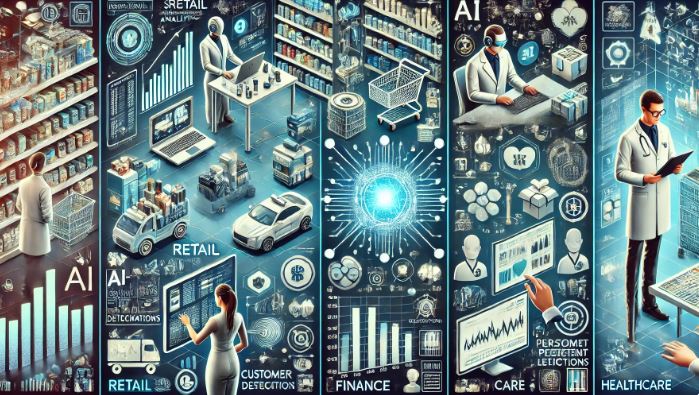
Artificial intelligence (AI) is changing the world fast. It’s making big changes in retail, finance, and healthcare. AI brings new ideas, makes things more efficient, and helps focus on what customers want.
This article looks at how AI is changing three big areas: retail, finance, and healthcare. We’ll see how AI is making these fields better. It’s helping businesses work smarter, make customers happier, and stay on top of new trends.
AI is used in many ways, like predicting sales in retail and catching fraud in finance. It also helps doctors by analyzing images and improving care for patients. Let’s explore how AI is making a big difference in these important fields.
Understanding AI Implementation Across Industries
Artificial intelligence (AI) is changing many industries. Companies are looking to use AI to make better decisions and work more efficiently. They see AI as a way to use data to improve their operations.
AI is useful in many areas, like retail, finance, and healthcare. Each field uses AI in different ways. Knowing how AI works in these areas can help other companies use it better.
AI helps businesses make smarter choices. It uses data to find patterns and predict what will happen next. This way, companies can make better plans and stay ahead of the competition.
| Industry | Key AI Applications | Potential Benefits |
|---|---|---|
| Retail | Personalized product recommendations Predictive inventory management Automated customer service | Improved customer experience Optimized supply chain and inventory Enhanced operational efficiency |
| Finance | Risk assessment and fraud detection Automated trading and portfolio management Personalized financial planning | Reduced financial risk Improved investment performance Enhanced customer service |
| Healthcare | Predictive disease diagnosis Automated medical imaging analysis Personalized treatment recommendations | Improved patient outcomes Increased operational efficiency Enhanced clinical decision-making |
As AI use grows, companies must keep up with its challenges and best practices. By staying informed and flexible, they can use AI to innovate and stay competitive.
Top AI Use Cases for Retail, Finance, and Healthcare
Artificial Intelligence (AI) has changed how businesses work in many fields. Retail, finance, and healthcare are big winners. AI helps solve big problems and makes things better.
Machine Learning Applications
Machine learning is a key part of AI. It helps predict what will happen next. In retail, it looks at what customers buy and when. This helps keep the right amount of stock.
In finance, it spots risky loans and catches fraud. It also gives advice on investments. In healthcare, it finds diseases early and helps patients get better.
Natural Language Processing Solutions
Natural Language Processing (NLP) is another big help. In retail, chatbots talk to customers and help them buy things. In finance, it reads reports and news to find important info.
In healthcare, it makes medical notes easier to read. It helps doctors make better choices.
Computer Vision Technologies
Computer vision lets machines understand pictures and videos. It’s used a lot in these fields. In retail, it helps count stock and show products.
In finance, it checks who you are and spots fraud. In healthcare, it looks at scans to find diseases early.
AI is changing these industries in big ways. It’s all about making things better and more efficient. AI can help in many ways, from predicting what will happen to understanding language and images.
| Industry | AI Use Cases |
|---|---|
| Retail | Predictive analytics for inventory management Chatbots for customer service Computer vision for automated checkout and product visualization |
| Finance | Credit risk modeling and fraud detection Personalized investment recommendations Identity verification and remote asset monitoring |
| Healthcare | Early disease detection and patient outcome improvement Streamlining medical documentation and clinical decision-making Medical imaging analysis for accurate diagnosis |
AI-Powered Retail Revolution: Transforming Shopping Experience
The retail world is changing fast, thanks to AI. This new era is making shopping better and more fun for everyone.
Personalized recommendations are a big deal now. AI helps stores know what you like and suggest things just for you. This makes shopping more fun and helps stores sell more.
Virtual shopping assistants are also changing things. These smart helpers give you info and help you buy things. They make shopping easier and let people help with harder tasks.
Smart fitting rooms are another cool thing. They use special tech to help you find the right size and style. You can even get more items without leaving the room.
AI is also improving how stores manage things. It helps predict what people will buy. This means stores can have the right stuff and avoid waste.
“The integration of AI in retail is not just a passing trend, but a fundamental shift in the way businesses interact with their customers and manage their operations.”
AI is making the future of shopping exciting. It’s all about making things better for you and helping stores work smarter. Get ready for a shopping world like never before.
Smart Inventory Management and Supply Chain Optimization
The digital world is changing fast. This includes big changes in how we manage inventory and improve supply chains. Artificial intelligence (AI) is leading this change. It helps businesses forecast better, automate warehouses, and watch supply chains in real-time. This makes things more efficient, cheaper, and makes customers happier.
Predictive Inventory Analytics
AI helps predict when we’ll need more stuff. It uses special algorithms to look at lots of data. This includes sales, market trends, and what customers like. It helps keep the right amount of stock, avoid running out, and make better plans for the future.
Automated Warehousing Solutions
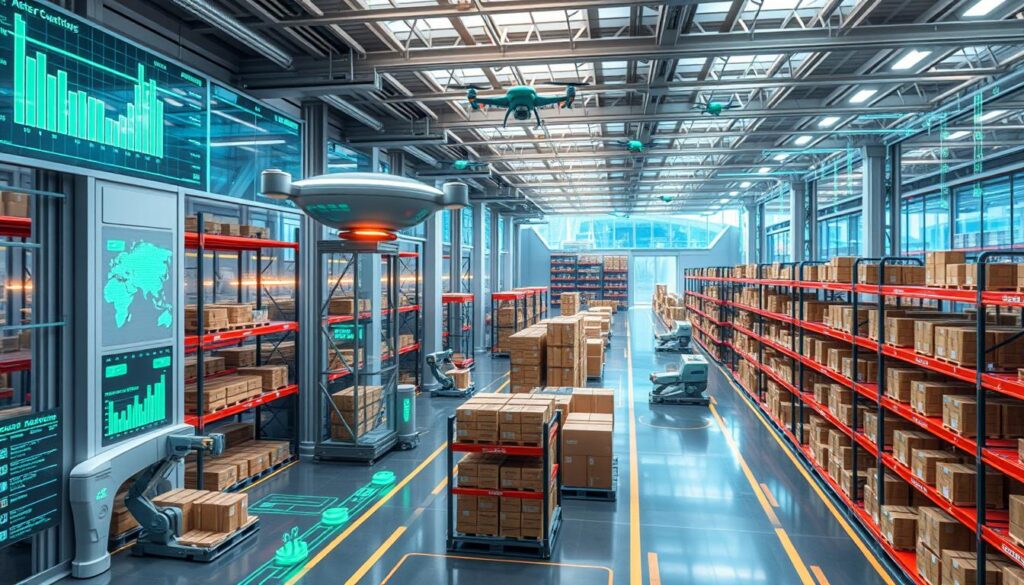
AI and robots are making warehouses work better. Robots can find and pick items on their own. They use computers to see and learn. This makes things faster and more accurate, saving time and money.
Real-time Supply Chain Monitoring
AI keeps an eye on supply chains all the time. It uses data from sensors and more to spot problems early. This lets companies fix issues fast, send things on time, and make customers happy.
| AI Capability | Benefit |
|---|---|
| Predictive Inventory Analytics | Improved inventory forecasting, reduced stockouts, and enhanced supply chain visibility |
| Automated Warehousing Solutions | Increased efficiency, reduced errors, and optimized productivity in warehouse operations |
| Real-time Supply Chain Monitoring | Proactive issue identification, optimized transportation, and enhanced customer satisfaction |
“AI-powered solutions are transforming the landscape of inventory management and supply chain optimization, empowering businesses to achieve new levels of efficiency and responsiveness.”
Financial Services: AI-Driven Innovation
The financial services world is changing fast with AI. New tech is making banks, investment firms, and insurance better. They are now more efficient, personal, and safe.
Algorithmic trading is a big deal in finance. AI can look at lots of data, find patterns, and make trades fast. This has brought robo-advisors to life. They give advice based on your risk and goals.
AI is also changing how loans are given. It helps lenders know who to trust better. This makes getting loans easier for more people.
AI is making many things better in finance. It helps with customer service and finding fraud. This makes things run smoother and customers happier.
“AI is not the future of finance – it is the present. Financial institutions that embrace these transformative technologies will gain a competitive edge and better serve their clients.”
AI will keep making finance better. It will open up new ways to grow and help customers more.
AI in Risk Assessment and Fraud Detection
The financial world is changing fast with AI. It’s making risk assessment and fraud detection better. AI uses predictive risk analytics and anomaly detection to protect banks and their customers.
Credit Risk Modeling
AI helps banks make better loan choices. It looks at lots of data to guess if a loan might fail. This makes lending safer and fairer for everyone.
Transaction Monitoring Systems
AI watches transactions in real time to stop fraud. It spots things like money laundering quickly. This helps banks act fast to stop fraud.
Identity Verification Solutions
AI makes it easier to know who you are. It uses face and voice checks to confirm identities. This keeps transactions safe from fake identities.
AI is making the financial world safer. It helps banks work better, lose less money, and gain more trust from customers.

Healthcare Diagnostics and Patient Care Enhancement
AI is changing healthcare a lot. It gives doctors new tools for better patient care. This includes AI-assisted diagnosis and predictive healthcare analytics.
AI helps make personalized treatment plans. It looks at lots of patient data to find what each person needs. This makes treatments work better, helping patients more and saving money.
Remote patient monitoring is another big thing. It lets doctors keep an eye on patients from afar. This means patients get help sooner and doctors can focus on the most urgent cases.
| AI Application | Benefits |
|---|---|
| AI-assisted Diagnosis | Improved accuracy, faster decision-making, and earlier detection of diseases |
| Predictive Healthcare Analytics | Identification of high-risk patients, optimization of treatment plans, and proactive intervention |
| Personalized Treatment Plans | Tailored therapies based on individual patient data, leading to enhanced outcomes and reduced healthcare costs |
| Remote Patient Monitoring | Continuous health data tracking, early intervention, and improved patient convenience |
AI is making healthcare even better. We’ll see more AI-assisted diagnosis, predictive healthcare, personalized treatment plans, and remote patient monitoring. These changes will make healthcare more effective and efficient.
“AI is not just a technology, but a tool that can empower healthcare professionals to provide more personalized and effective care for their patients.”
Medical Imaging and Disease Detection
Artificial intelligence (AI) is changing healthcare. It helps in medical imaging and disease detection. These new technologies are changing how doctors diagnose and treat patients.
Radiology AI Applications
AI in radiology is improving how doctors read images. It uses machine learning to look at X-rays, CT scans, and MRIs. This helps doctors find problems faster and more accurately.
Pathology Analysis Systems
AI is also changing digital pathology. It helps analyze tissue samples quickly and accurately. It can find cancer in breast, prostate, and lung tissue. This could lead to finding diseases earlier and helping patients more.
Early Disease Detection
- AI looks at lots of medical data to find early signs of health problems.
- It uses special technologies to spot small changes that might mean a disease is coming.
- AI in radiology and pathology is changing healthcare. It helps doctors give better care to patients.
| AI Application | Key Benefits |
|---|---|
| Radiology AI | Improved diagnostic accuracy, faster turnaround times, and enhanced clinical decision-making |
| Pathology Analysis | Automated detection of various types of cancer, leading to earlier intervention and better patient outcomes |
| Early Disease Detection | Proactive identification of health issues, enabling preventive care and personalized treatment plans |
AI in medical imaging and disease detection is changing healthcare. As it gets better, it will help doctors more. It will make healthcare better for everyone.
Future Trends in AI Implementation
AI is changing fast, and retail, finance, and healthcare will see big changes soon. New AI tech like natural language processing and computer vision will change how these areas work. This will start the era of Industry 4.0.
But, there’s more to AI’s future than just tech. Ethics will play a big role too. It’s important to use AI in a way that’s fair and open. This includes keeping data safe, avoiding bias, and thinking about jobs.
Working together with AI will be key. Businesses want to use AI to make things better but also keep human touch. This balance will help make things more efficient and personal.
AI’s success in retail, finance, and healthcare depends on facing these new trends. By using AI wisely and solving its challenges, these areas can get better. This will make things more efficient, personal, and innovative for everyone.









U.S.- Canada Trade Talks Collapse; Carney Says Retaliatory Tariffs Begin September 8

Flock Cameras and the Future of Public Security

AI Infrastructure Boom Hits Physical Limits: Power, Financing, and Supply Chain Strain

Armanino adds Strategic Accounting Outsourced Solutions

New 2023 K-1 instructions stir the CAMT pot for partnerships and corporations

Tax Strategy: Employee Retention Credit update
-

 Stock News1 week ago
Nvidia Earnings Preview: What Wall Street Expects From the AI Bellwether’s Q2 Report
-

 Accounting1 week ago
SEC’s Semiannual Reporting Proposal Faces Investor Pushback: What CFOs Need to Know
-

 Stock News1 week ago
Nvidia Q2 FY2027 Earnings beats Wall Street Expectation with Record $96.2 Billion Revenue
-

 Finance1 week ago
Treasury Bond Volatility Forces Bessent to Double Debt Buyback Size as Yields Swing
-
 Technology4 days ago
AI Infrastructure Boom Hits Physical Limits: Power, Financing, and Supply Chain Strain
-
 Economics2 days ago
U.S.- Canada Trade Talks Collapse; Carney Says Retaliatory Tariffs Begin September 8
-
 Technology2 days ago
Flock Cameras and the Future of Public Security