
Finance
Bitcoin (BTC) price predictions for 2025

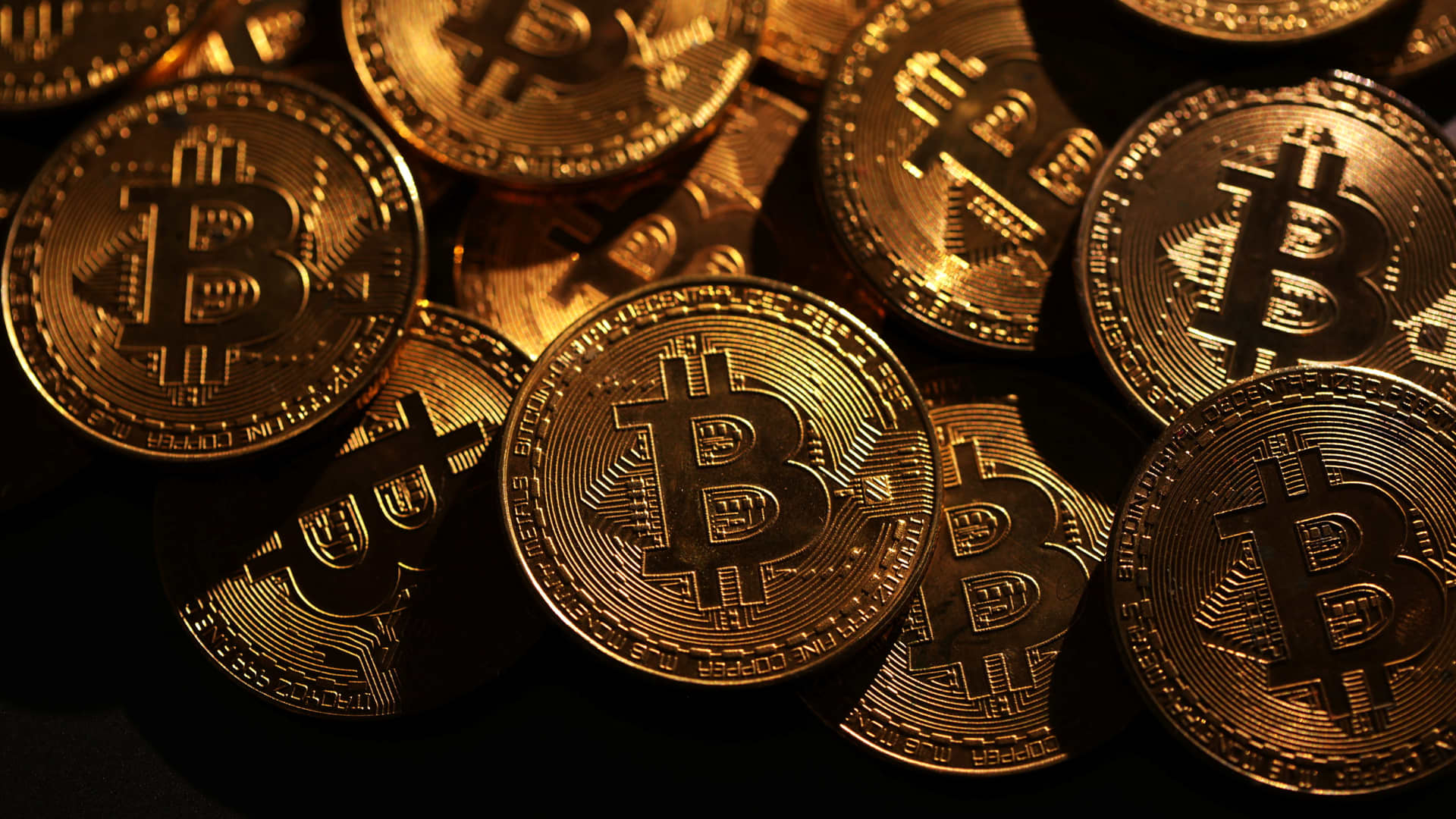
Representations of cryptocurrency Bitcoin are seen in this illustration taken Nov. 25, 2024.
Dado Ruvic | Reuters
After a blistering rally in bitcoin this year, crypto investors and industry executives told CNBC, they’re expecting the flagship cryptocurrency to hit new all-time highs in 2025.
In December, the world’s largest cryptocurrency broke the highly-anticipated $100,000, setting a record high price above that. That came after Donald Trump — who ran on a prominently pro-crypto policy platform — secured a historic election win in November.
Trump’s imminent return to the White House has boosted sentiment surrounding crypto with many industry executives and analysts expecting him to promote a more favorable regulatory environment for digital assets.
During his election campaign, Trump vowed to replace incumbent Securities and Exchange Commission Chair Gary Gensler, who has taken aggressive legal actions against various crypto firms. Gensler agreed to step down from the SEC in 2025.
Trump has also indicated the U.S. could establish a strategic bitcoin reserve, by pooling funds obtained through seizures from criminal activity.
Also in 2024, bitcoin topped 2021’s price milestone of close to $70,000 after the SEC gave the green light to the first U.S. spot bitcoin exchange-traded funds, or ETFs.
The ETF approval was widely viewed as a key moment for the cryptocurrency as it broadens its appeal to more mainstream investors.
The other key moment in 2024 was the halving, an event that takes places every four years and reduces the supply of bitcoin onto the market. This is typically very supportive for bitcoin’s price.
These developments helped move crypto past the narrative of an industry marred by scandal. That was the dominant theme of 2023 as two of crypto’s most prominent figures — FTX’s Sam Bankman-Fried and Binance’s Changpeng Zhao — both received prison sentences over criminal charges.
This year, bitcoin has more than doubled in price. The token is widely expected to see even more positive price momentum in 2025 — with several industry watchers predicting a doubling in value to $200,000.
CoinShares: $80,000-$150,000
James Butterfill, head of research for crypto-focused asset manager CoinShares, told CNBC that he sees prices of both $150,000 and $80,000 being on the cards for bitcoin in 2025.
Butterfill said in the long term it wouldn’t be “unreasonable” to expect bitcoin to become worth about 25% of gold’s market share — up from about 10% currently. That would equate to a price of $250,000.
But he doesn’t see that happening next year. “Timing of this is very difficult though and I don’t expect this to occur in 2025, but it will head in that direction,” Butterfill told CNBC via email.
He said that it is “likely” bitcoin could hit both $80,000 and $150,000 during the course of the year.
Butterfill’s $80,000 call, if hit, would be a result of Trump’s promised pro-crypto policies not materializing.
“Disappointment surrounding Trump’s proposed crypto policies and doubts about their enactment could prompt a significant market correction,” Butterfill said.
Next year, Butterfill expects a favorable U.S. regulatory environment to be the primary driver supporting bitcoin prices.
In 2023, CoinShares forecast bitcoin at $80,000 in 2024.
Matrixport: $160,000
Matrixport, a crypto financial services firm, said bitcoin could hit $160,000 in 2025.
“This outlook is supported by sustained demand for Bitcoin ETFs, favorable macroeconomic trends, and an expanding global liquidity pool,” Markus Thielen, head of research at Matrixport told CNBC by email.
Bitcoin is known to be very volatile with the potential for corrections of between 70% and 80% from all-time highs. Thielen said the drawdowns in 2025 will be “less pronounced.”
“Bitcoin’s growing base of dip buyers and robust institutional support is expected to mitigate severe corrections,” Thielen said.
Matrixport predicted in 2023 that bitcoin would hit $125,000 in 2024.
Galaxy Digital: $185,000
Alex Thorn, head of research at crypto-focused asset manager Galaxy Digital, sees bitcoin crossing $150,000 in the first half of the year before reaching $185,000 in the fourth quarter.
“A combination of institutional, corporate, and nation state adoption will propel Bitcoin to new heights in 2025,” Thorn wrote in a research note shared with CNBC.
“Throughout its existence, Bitcoin has appreciated faster than all other asset classes, particularly the S&P 500 and gold, and that trend will continue in 2025. Bitcoin will also reach 20% of Gold’s market cap.”
Galaxy predicts U.S. spot bitcoin exchange-traded products will collectively cross $250 billion in assets under management in 2025.
The firm expects next year will also see five Nasdaq 100 companies and five nation states add bitcoin to their balance sheets or sovereign wealth funds.
Standard Chartered: $200,000
Geoffrey Kendrick of Standard Chartered is calling for a doubling in price for bitcoin. The bank’s head of digital assets research said in a note earlier this month that he expects bitcoin to hit $200,000 by the end of 2025.
Standard Chartered expects institutional flows into bitcoin to “continue at or above the 2024 pace” next year.
Bitcoin inflows from institutions have already reached 683,000 BTC since the start of the year, the bank noted, via U.S. spot ETFs that were largely purchased by MicroStrategy, a software firm and effective bitcoin proxy.
Kendrick said bitcoin purchases by MicroStrategy should “match or exceed its 2024 purchases” next year.
Pension funds should also start including more bitcoin in their portfolio via U.S. spot ETFs next year thanks to anticipated reforms from the incoming Trump administration to rules on so-called “TradFi” (traditional finance) firms making investments in digital currencies, he added.
“Even a small allocation of the USD 40tn in US retirement funds would significantly boost BTC prices,” Kendrick noted. “We would turn even more bullish if BTC saw more rapid uptake by US retirement funds, global sovereign wealth funds (SWFs), or a potential US strategic reserve fund.”
Carol Alexander: $200,000
Carol Alexander, professor of finance at the University of Sussex, sees $200,000 bitcoin as a possibility next year.
“I’m more bullish than ever for 2025,” Alexander told CNBC, adding bitcoin’s price “could easily reach $200,000 but there are no signs of volatility reducing.”
“By the summer I expect that it will be trading around $150,000 plus or minus $50,000.” Alexander clarified she doesn’t actually own any bitcoin herself.
Explaining her rationale, Alexander said that supportive U.S. regulation will boost bitcoin, however, a lack of regulation on crypto exchanges will continue to drive volatility due to highly-leveraged trades shooting prices up and down.
Alexander has a history of correctly calling bitcoin’s price. Last year, she told CNBC that bitcoin would hit $100,000 in 2024, which it did.
Bit Mining: $180,000 – $190,000
Youwei Yang, chief economist at Bit Mining, is predicting bitcoin will hit a price of between $180,000 to $190,000 in 2025 — but he’s also cautious of potential pullbacks in price.
“Bitcoin’s price in 2025 is likely to see both significant upward momentum and occasional sharp corrections,” Yang told CNBC. “In moments of market shocks, such as a major stock market downturn, bitcoin could temporarily drop to around $80,000. However, the overall trend is expected to remain bullish.”
Factors underlying an anticipated bitcoin rally in 2025 include lower interest rates, support from Trump, and increased institutional adoption.
“Based on these dynamics, I predict Bitcoin could peak at $180,000 to $190,000 in 2025, aligning with historical cycle patterns and the growing mainstream adoption of crypto,” Yang said.
Nevertheless, Yang also expects next year to bring a number of “corrections” for bitcoins price, too.
Risks to the downside include U.S.-China tensions, global capital market disruptions, potential unexpected restrictive measures, and possible delays to the Fed rate-cutting cycle.
Last year, Yang forecast bitcoin would hit $75,000 in 2024.
Maple Finance: $180,000 – $200,000
Sid Powell, CEO and co-founder of centralized finance platform Maple Finance, is targeting a price of between $180,000 and $200,000 for bitcoin by the end of 2025.
“If you look historically when we saw gold ETFs come in, the inflows in the first year increased dramatically in subsequent years — and I think we can expect to see that with the bitcoin ETFs,” Powell told CNBC’s “Squawk Box Europe.”
“I think we will see higher inflows in subsequent years as bitcoin and indeed crypto becomes a core asset allocation for institutional asset managers,” Powell added.
Another factor Powell sees boosting bitcoin’s price is the anticipation of a bitcoin strategic reserve in the U.S.
Still, Maple Finance’s boss is mindful about market pullbacks. “I think you’ll of course see corrections — crypto remains a cyclical industry,” Powell told CNBC.

In previous market cycles, bitcoin has risen wildly over the course of a few months before plummeting sharply in value.
Take the previous cycle, for example: in 2021, bitcoin rallied to nearly $70,000 as more and more investors piled in but the subsequent year, the token plunged to less than $17,000 on the back of a series of major crypto company bankruptcies.
However, Powell stressed that the 70% to 80% drawdowns bitcoin has seen in cycles past are unlikely in 2025 “because there is more of a buffer from those institutional inflows into the sector.”
Nexo: $250,000
Elitsa Taskova, chief product officer of crypto lending platform Nexo, is more bullish on bitcoin’s 2025 prospects than the general consensus.
“We see bitcoin more than doubling to $250,000 within a year,” Taskova told CNBC, adding that in the longer term — as in, over the next decade — she sees the entire crypto market capitalization surpassing that of gold.
“These projections align with ongoing trends and social markers: increasing recognition of Bitcoin as a reserve asset, more Bitcoin and crypto-related exchange-traded products (ETPs), and stronger adoption,” Nexo’s product chief said.
Supportive macroeconomic conditions, such as easing of monetary policy from the world’s major central banks, is likely to boost bitcoin, she added.
“The Federal Reserve’s balancing act – managing interest rates and inflation while avoiding stagnation – will be pivotal,” she said, cautioning that on the flipside, persistent inflation could also prompt a hawkish pivot.
“As the U.S. leads in crypto-related capital deployment, rate decisions and inflation dynamics will likely remain key influences on bitcoin’s price in 2025.”





Nvidia Q2 FY2027 Earnings beats Wall Street Expectation with Record $96.2 Billion Revenue

Treasury Bond Volatility Forces Bessent to Double Debt Buyback Size as Yields Swing

Nvidia Earnings Preview: What Wall Street Expects From the AI Bellwether’s Q2 Report

Armanino adds Strategic Accounting Outsourced Solutions

New 2023 K-1 instructions stir the CAMT pot for partnerships and corporations

Tax Strategy: Employee Retention Credit update
-

 Economics1 week ago
Nvidia’s Potential $3 Billion SB Energy Investment Could Reshape AI Infrastructure
-

 Economics4 days ago
Top 10 Largest Economies by 2030: IMF & World Bank GDP Projections for Global Powerhouses
-

 Stock News4 days ago
How to understand Intel $15B Stock Offering
-

 Technology1 week ago
U.S.-China AI Competition Intensifies as Washington Pushes Allies to Choose Sides
-
 Stock News1 day ago
Nvidia Earnings Preview: What Wall Street Expects From the AI Bellwether’s Q2 Report
-

 Economics4 days ago
Economic Profile of the United States of America (2026–2030 Horizon)
-

 Leaders3 days ago
Jackson Hole 2026: What the First Symposium Under Fed Chair Kevin Warsh Means for Markets
-

 Economics3 days ago
U.S. National Debt Surpasses $40 Trillion for the First Time: What It Means for the Economy