
Personal Finance
Cash may feel safe when stocks slide, but it has risks

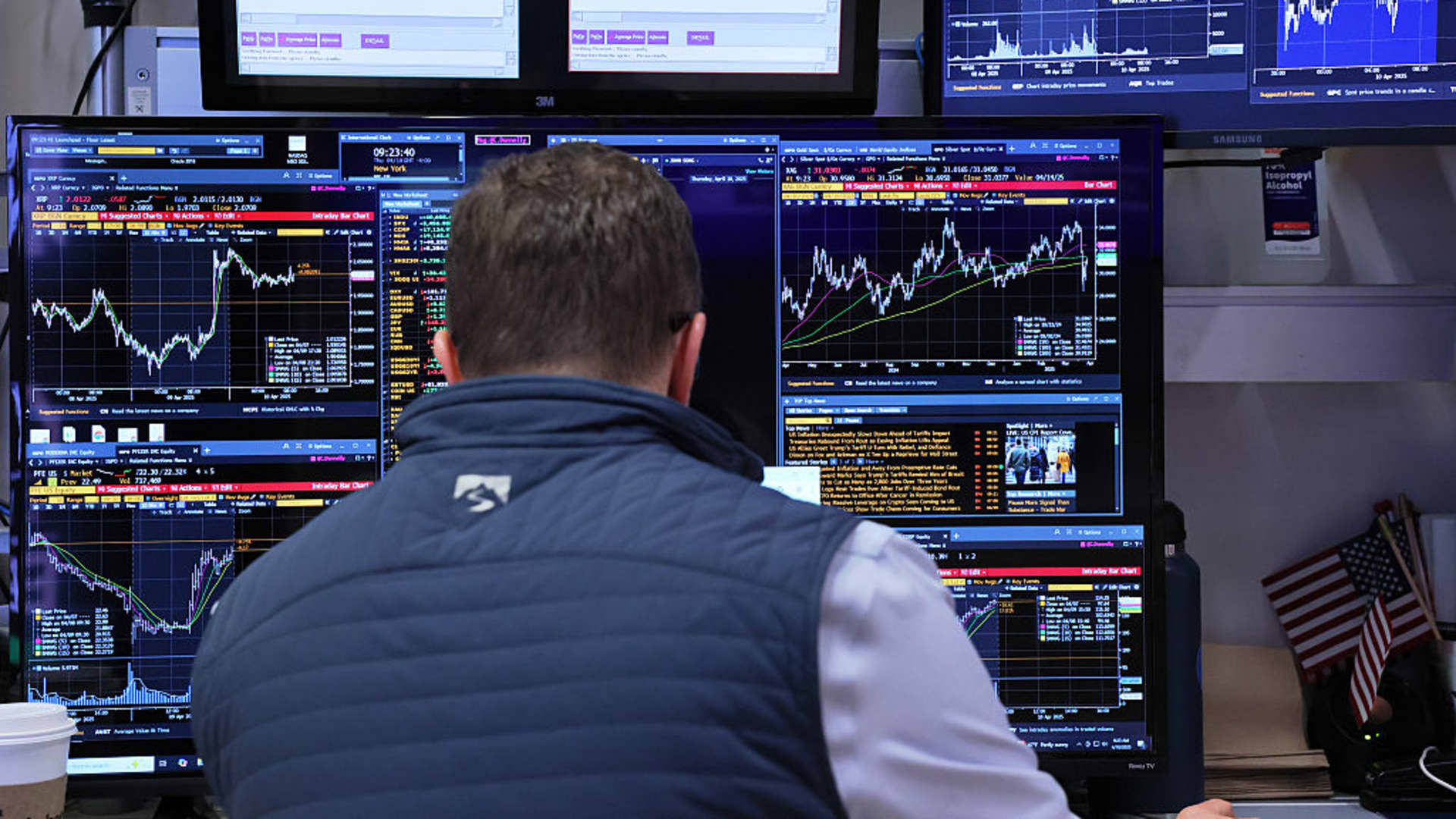
Traders work on the floor of the New York Stock Exchange on April 10, 2025.
Michael M. Santiago | Getty Images News | Getty Images
Investors may feel an impulse to move to cash amid the recent tumult in the stock market. While cash might feel safer than stocks, it can also pose risks for long-term savers, financial advisors say.
Cash — like money held in a high-yield bank savings account or a money market fund — is substantially less volatile than stocks over the short term, experts said.
But cash has historically delivered lower returns than stocks over the long term. Holding on to more cash than you need — rather than investing it — raises the risk that you may not achieve your investing goals.
The upshot: Cash-heavy investors may find it challenging to achieve their long-term investment goals, and may have to save more of their discretionary income as a result, Vanguard wrote in a paper that analyzed stock and cash returns.
Investors fled stocks for perceived safe havens as U.S. stock benchmarks were whipsawed by tariff and trade proclamations from the Trump administration and retaliatory measures announced by major trade partners like China.
Following a White House announcement of country-specific tariffs earlier this month, the S&P 500 had its worst two-day stretch since the early days of the Covid-19 pandemic, losing about 11%.
Meanwhile, April 7 saw the highest volume of 401(k) plan trading since March 12, 2020, according to Alight Solutions, a retirement plan administrator. About 94% of proceeds moved to conservative assets like money market, bond and stable-value funds, according to Alight.
The pros and cons of cash
Cash does have some benefits.
For instance, it’s there when investors need money for emergencies and major purchases, even if there’s an upheaval in the stock market, said Carolyn McClanahan, a certified financial planner and founder of Life Planning Partners in Jacksonville, Florida.
“Everyone should have some cash and some equities,” McClanahan, a member of CNBC’s Financial Advisor Council, wrote in an e-mail.
But cash “has a long history” of offering negative “real” returns, meaning returns after accounting for inflation, according to Morningstar.
In other words, consumers who hold a portfolio that’s 100% in cash actually lose wealth over time after accounting for inflation, experts said. If interest rates on cash don’t keep pace with rising prices, consumers lose purchasing power.
Meanwhile, stocks have the potential for high growth, especially over the long term, but also come with risks, McClanahan said.
More from Personal Finance:
3 ways to keep money safe amid market volatility
What advisors are telling clients after bond sell-off
Is now a good time to buy gold?
“The ups and downs of the markets can be nauseating, and you might have to bank losses if you need your money and can’t ride out market downturns,” McClanahan said.
“Every portfolio should be diversified across safe and risky assets based on the client’s financial and psychological ability to take risk,” she wrote.
How to think of cash and stock mix
Investors who are still in the “accumulation” savings phase — i.e., people in their working years still saving a portion of their income — should hold enough cash for emergencies in a fund that’s easily accessible, McClanahan said.
They should also hold any cash they might need for purchases in the next five years, like a home down payment, car purchase or tuition expenses, she said.

The rest should be allocated to stocks and bonds based on their time horizon, as well as their “financial and psychological ability to take risk,” McClanahan said. For example, someone with 10 years to retirement should have a lower share of their portfolio in stocks relative to someone 30 years from retirement, she said.
People in or near retirement, when they will need to start withdrawing money from their portfolio, should hold enough money in cash, short-term bonds and certificates of deposit to fund five years of income needs, plus any upcoming major purchases, McClanahan said.
The rest should be in a diversified portfolio of fixed income and stocks, she said.
Even retirees generally need to allocate some of their portfolio to stocks: They may lean on their portfolios to fund their lifestyle over three or more decades, meaning some investment growth is necessary to avoid running out of money, according to experts.
All investors should have an investment strategy that spells out “how much they will have allocated to equities, fixed income [bonds], and cash and they should stick with this investment policy through all markets, good and bad,” McClanahan wrote in an e-mail.


Personal Finance
Next-Generation Retirement Planning: Managing Longevity Risk and Variable Income Streams


U.S.- Canada Trade Talks Collapse; Carney Says Retaliatory Tariffs Begin September 8

Flock Cameras and the Future of Public Security

AI Infrastructure Boom Hits Physical Limits: Power, Financing, and Supply Chain Strain

Armanino adds Strategic Accounting Outsourced Solutions

New 2023 K-1 instructions stir the CAMT pot for partnerships and corporations

Tax Strategy: Employee Retention Credit update
-

 Stock News1 week ago
Nvidia Earnings Preview: What Wall Street Expects From the AI Bellwether’s Q2 Report
-

 Accounting1 week ago
SEC’s Semiannual Reporting Proposal Faces Investor Pushback: What CFOs Need to Know
-

 Stock News1 week ago
Nvidia Q2 FY2027 Earnings beats Wall Street Expectation with Record $96.2 Billion Revenue
-

 Finance1 week ago
Treasury Bond Volatility Forces Bessent to Double Debt Buyback Size as Yields Swing
-
 Technology5 days ago
AI Infrastructure Boom Hits Physical Limits: Power, Financing, and Supply Chain Strain
-
 Technology3 days ago
Flock Cameras and the Future of Public Security
-
 Economics3 days ago
U.S.- Canada Trade Talks Collapse; Carney Says Retaliatory Tariffs Begin September 8