
Personal Finance
Designer dupe demand soars, a sign of the economic times

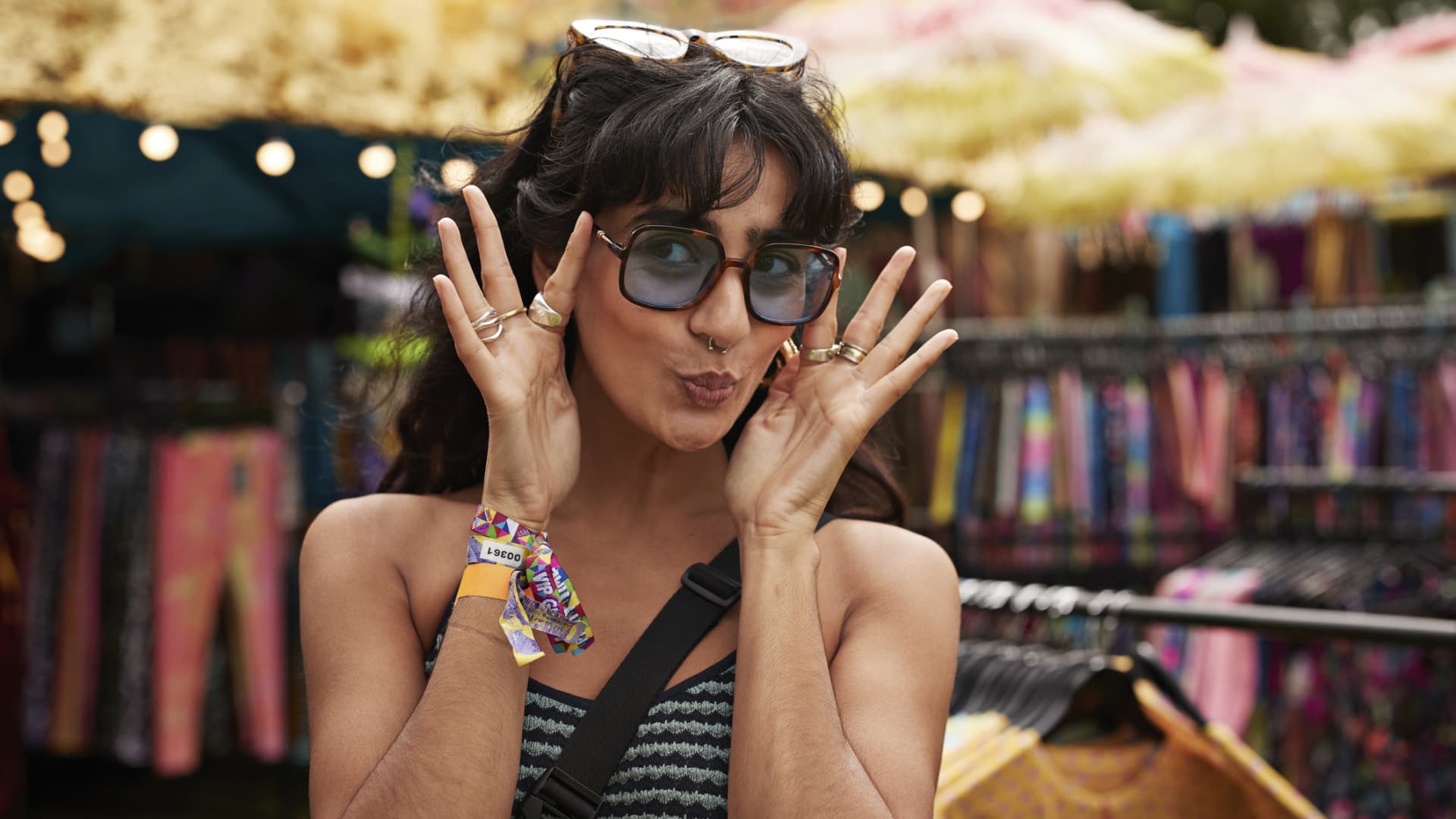
Klaus Vedfelt | Digitalvision | Getty Images
From leggings to lip gloss, there’s a dupe for almost any brand-name product.
Buying a knockoff used to be a consumer’s dirty little secret, largely because a “fake” was considered inferior to the real thing, not to mention the economic cost and intellectual property rights infringement.
But brand imitators, also known as dupes — short for duplicates — have elbowed their way into the mainstream and are now even cool.
More from Personal Finance:
‘Recession pop’ is in: How music hits on economic trends
‘I’m looking for a man in finance’
‘I cry a lot but I am so productive, it’s an art’
“It’s not necessarily because the consumer doesn’t love the brand, sometimes it just makes more financial sense to buy the dupes,” said Sara Walker, a Los Angeles-based influencer and fashion industry expert.
Unlike illegal counterfeit goods, which tend to carry an unauthorized trademark or logo of a patented brand, these dupes are cheaper, typically legal alternatives to premium or luxury consumer products, and in some cases preferred to their pricier counterpart.
“It’s not a direct knockoff, it’s kind of revising something that’s very chic from a designer world into a more accessible product,” Walker said.
Brand imitators have found “this narrow little aisle to operate in that satisfies consumer demand” and keeps them safe from actual legal action from the companies they are duping, according to Ellyn Briggs, brands analyst at Morning Consult.
Even when consumers can get the real thing, nearly 33% of adults intentionally purchased a dupe of a premium product at some point, according to a report by Morning Consult. The business intelligence company polled more than 2,000 adults in early October.
TikTok is ‘ground zero’ for dupes
“The online culture of dupe shopping, accelerated by TikTok … has flipped the script,” according to Briggs.
“TikTok is ground zero for where all this is happening,” she said.
TikTok Shop, especially, “has become the storefront for dupes,” Briggs said.
Younger generations use TikTok Shop, which launched as an e-commerce platform within the short-form video app in September of last year, more than older cohorts: About 40% of Gen Zers between the ages of 18 and 26 have made at least one purchase. Similarly, 37% of millennials have bought at least one item on TikTok Shop, according to a Morning Consult poll conducted in December.
But designer look-alikes can also be found at retail giants such as Amazon and Walmart, as well as Costco, home to the viral floor mirror dupe of an Anthropologie mirror.
“Dupes are everywhere now. That’s just how it is,” Walker said.
Dupes are a sign of the times
Often, shopping for dupes is a way to participate in a trend without breaking the bank — especially at a time when styles cycle through faster and faster, according to Walker, who said she has tried dupe leggings, dupe perfume and dupe sunglasses.
“It’s not always financially responsible to buy the original,” Walker said.
Briggs said that in some ways, dupe shopping is a form of bargain hunting, which has been “repackaged” into a new subset of online shopping — just as other viral trends on TikTok are repackaging longstanding or pre-existing behaviors.
The quality may vary, however. In other words, you get what you pay for.

“Trends come and go and if you are constantly updating your wardrobe based on the trends, that can get expensive,” Carolyn McClanahan, a certified financial planner and founder of Life Planning Partners in Jacksonville, Florida, told CNBC earlier this year, speaking about the “mob wife” fashion trend.
McClanahan is a member of CNBC’s Financial Advisor Council.
These days, more Americans are struggling in the face of sky-high prices for everyday items, and most have exhausted their savings and are now leaning on credit cards to make ends meet, recent reports show.
As consumers continue to stretch to cover rising rent, increased food prices and higher borrowing costs, there is less disposable income left for discretionary spending, according to Brett House, economics professor at Columbia Business School. That has helped open the door to dupes.
“Sustaining recent consumption patterns is making people potentially susceptible to the promise that a dupe offers,” House said.
The “sustained interest” for dupes also reflects how increasingly cautious consumers are about making big purchases in this economy, said Briggs.
In the end, price is “the No. 1 factor for purchase decisions,” she added, whether a shopper is cash-strapped or not.
Personal Finance
Next-Generation Retirement Planning: Managing Longevity Risk and Variable Income Streams


S&P 500 September Outlook: Tech Rally Holds Index at 7,600

India Unveils ‘Saptadhara’ Reform Agenda Targeting Technology, Youth Skilling, and Growth

S&P 500 Outperforms Amid Strong Corporate Earnings as Treasury Yields Cap Equity Multiples

Armanino adds Strategic Accounting Outsourced Solutions

New 2023 K-1 instructions stir the CAMT pot for partnerships and corporations

Tax Strategy: Employee Retention Credit update
-

 Stock News1 week ago
Nvidia Q2 FY2027 Earnings beats Wall Street Expectation with Record $96.2 Billion Revenue
-

 Technology6 days ago
AI Infrastructure Boom Hits Physical Limits: Power, Financing, and Supply Chain Strain
-

 Economics4 days ago
U.S.- Canada Trade Talks Collapse; Carney Says Retaliatory Tariffs Begin September 8
-

 Technology4 days ago
Flock Cameras and the Future of Public Security
-

 Insights1 hour ago
Climate Resilience and Offshore Wind and Land Restoration Milestones
-
 Stock News5 minutes ago
S&P 500 September Outlook: Tech Rally Holds Index at 7,600
-
 Accounting1 hour ago
Mandatory ESG Reporting Standards Demand Standardized Non-Financial Audit Trails
-
 Finance41 minutes ago
S&P 500 Outperforms Amid Strong Corporate Earnings as Treasury Yields Cap Equity Multiples