
Accounting
Erica Williams talks about PCAOB before stepping down

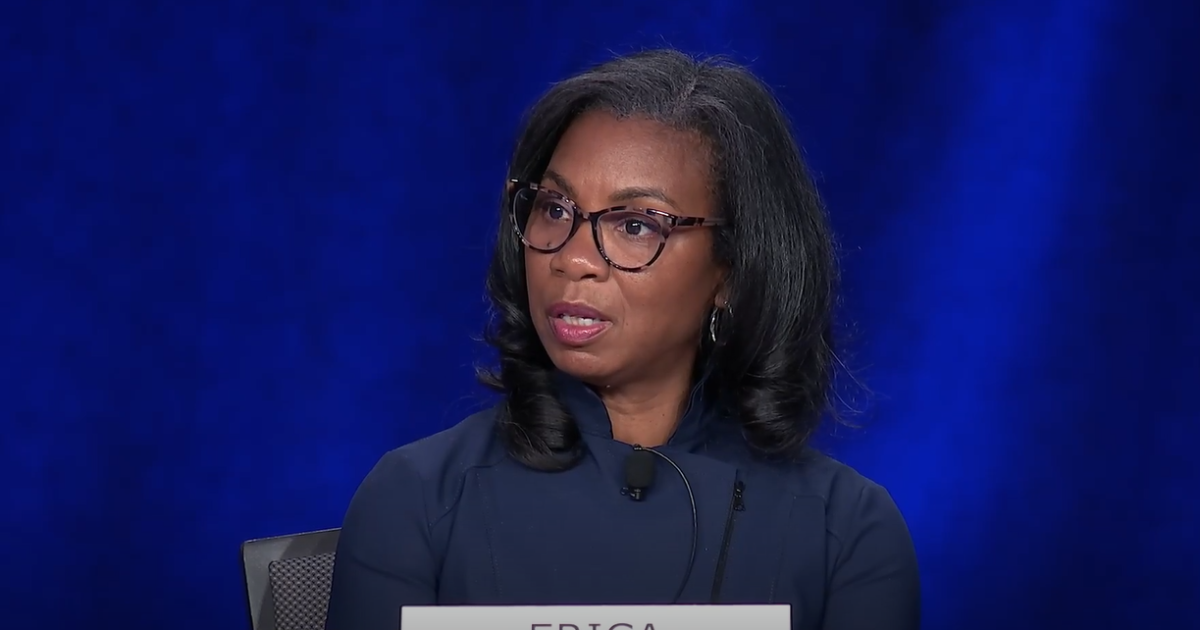

Erica Williams is stepping down Tuesday as chair of the Public Company Accounting Oversight Board after she was
“I know that I serve at the pleasure of the Commission, and I am really grateful for the time that I had to serve here, and I believe the work that we were able to do at the Board for audit quality and that investors are better protected today,” she said. “I’m not really concerned about myself. My focus really is on the talented and dedicated staff at the PCAOB and the investors that their daily work protects.”
She pointed to the important role played by the PCAOB. “History has shown that when the economy is tight and [companies] cook the books, then hard-working investors get hurt, and that’s why the PCAOB was created in the first place,” she said. “And so it’s just really critical that the incoming leadership at the SEC continues to empower the PCAOB staff to carry out its core mission of protecting investors.”
She would like to see the SEC preserve the functions of the PCAOB. “I just really urge them to continue to allow and to empower and to provide resources so that our talented staff can continue to carry out their mission,” said Williams. “The staff at the PCAOB comes to work every day trying to figure out the best way to protect investors, and I’m very proud of the work that we’ve done over the years, modernizing our standards, enhancing our inspections and really strengthening enforcement. We made strides in each of those areas. We made significant progress on modernizing our standards.”
During her tenure, the PCAOB has finalized seven standard-setting projects, and rulemaking projects covering 24 rules and standards. “I always say that outdated standards don’t help anyone and we need to make sure that they keep pace with today’s challenges, and so that’s what we went about doing,” she said.
She noted that the PCAOB was also able to strengthen enforcement through inspections in China and Hong Kong. The PCAOB saw a substantial drop in deficiency rates across all of different categories of firms.
“During the COVID-19 pandemic, we uncovered a troubling trend of increasing deficiency rates,” said Williams. “We challenged the firms to do better, and we worked with them, and we have now been seeing the fruits of that labor. I believe that the reasons why the deficiency rates have been declining includes things like the firms requiring more in-person work, having better training, providing more resources and also more supervision and reviews.”
She hopes to continue to see declining deficiency rates and improved audit quality going forward.
Williams declined to speculate on whether Congress might try again to eliminate the PCAOB by transferring its responsibilities to the SEC, as nearly happened with the passage of the tax reconciliation package until the
“I can’t predict what might happen in the future, but I am incredibly proud of the efforts of the PCAOB and the important work of our staff,” said Williams. “The facts were clear that transferring the duties of the PCAOB to the SEC could not be done without putting investors at serious risk, and we did everything we could to make sure that those facts were made clear. I’m very pleased with the outcome. It’s good news for the investors whose retirement savings and investments would have been put at risk.”
She pointed out, however, that legislation has been introduced in the past to end the PCAOB. “This is something that has been tried basically for the 20 years that the PCAOB has been in existence,” she said. “Generally, though, you have to get 60 votes.”
With the reconciliation procedure, the Senate could have passed it with just 51 votes, as it eventually did with much of the rest of the package.
She declined to speculate on who might be named the next chair of the PCAOB and whether it might be someone already on the board or an outsider, pointing out that the board members serve at the pleasure of the Commission. “I can’t speculate on what the SEC might do.”
In terms of future priorities, she pointed to the PCAOB’s strategic plan.
“When I came on a little over three years ago with our strategic plan, we were really focused on the core areas that the PCAOB was always focused on: standards, enforcement and inspections,” she said. “I do believe there are additional standards on our website that, if given more time, would move forward as well. There are a couple of standards that were not able to make their way through the SEC.”
She declined to say which specific standards she would like to see advance. Several proposed standards attracted the opposition of auditing firms, including
“I’m not going to tell the incoming people what they should be doing,” said Williams. “I will say the staff has made significant progress on the standards and the agenda that is on the website right now. No matter what, though, the staff [has to be] really empowered to focus on trying to make sure they are working everyday to provide protection to investors, and focus on driving audit quality. The most important thing is that people not pull back from the PCAOB’s mission and allow the staff to do their critical work.”
She noted that the PCAOB staff holds wrongdoers to account and that there are consequences from strong enforcement, improved audit quality and inspections. “I am pleased to see the substantial drop in deficiency rates across all firms,” said Williams.
“Now is not the time to pull back,” she added. “I urge the SEC and the PCAOB to continue to provide those resources to our staff.”
Asked about her advice for auditors and how they should react to the changes at the PCAOB, she replied, “All of us at the PCAOB have the same mission. We all are concerned about protecting investors. When we came in, we found troubling trends in deficiency rates and audit quality wasn’t where we or the auditing firms wanted it to be. After three years of shining a light and challenging the firms to do better and working with them through our discussions, we are now seeing a drop in deficiency rates, based on concentrated efforts on driving improvement. I think the work that the firms have done in order to drive improvement won’t just go away because I’m no longer chair, and I hope that those improvements will continue to build on themselves over time, and especially when you have some new standards coming into play, including quality control. I think as that standard is implemented, we are going to continue to see audit quality improve.”
In terms of the future role of the SEC with the PCAOB, she foresees the SEC continuing with its statutory responsibilities, such as providing recommendations to the PCAOB and overseeing the PCAOB budget. “I am urging the SEC and PCAOB to continue to empower the PCAOB staff with their work and continue to provide them the critical resources that they need.”
Asked about further changes in the composition of the PCAOB board, she said it would be up to the SEC and she couldn’t speculate.
As for her future plans, Williams plans to take some time off and spend more time with her husband and three-year-old son.
As for her biggest accomplishment at the PCAOB, she said, “I can’t pick one thing. I’m extremely proud of the work that our staff has done, and I will say that every single member of the PCAOB team has been critical to us carrying out our mission, from the standards that we’ve been able to modernize, especially the quality control standard, which I think is going to be a game changer for audit quality, for the benefit of investors.”
She is proud of the work on inspections and driving improvement in audit quality, as well as starting inspections in China and Hong Kong. On the enforcement side, she was able to show that there are consequences to deficient audit work. She is also proud of the progress on operational effectiveness, which was part of the strategic plan. In addition, the percentage of staff who said the PCAOB is a great place to work increased by 30 percentage points. “Making sure this is a wonderful place to work is really attracting and retaining talent,” she said. “That’s the other accomplishment I’m really proud of.”





Sovereign Bond Yield Volatility and Inflationary Shocks Challenge Global Central Banks

Big Tech Enterprise Borrowing Reaches $135 Billion as Hyperscalers Fund AI Infrastructure

Economic Profile of the superpower of western Europe

Armanino adds Strategic Accounting Outsourced Solutions

New 2023 K-1 instructions stir the CAMT pot for partnerships and corporations

Tax Strategy: Employee Retention Credit update
-

 Stock News7 days ago
S&P 500 September Outlook: Tech Rally Holds Index at 7,600
-

 Finance7 days ago
S&P 500 Outperforms Amid Strong Corporate Earnings as Treasury Yields Cap Equity Multiples
-

 Insights7 days ago
Climate Resilience and Offshore Wind and Land Restoration Milestones
-

 Accounting7 days ago
Mandatory ESG Reporting Standards Demand Standardized Non-Financial Audit Trails
-

 Leaders7 days ago
India Unveils ‘Saptadhara’ Reform Agenda Targeting Technology, Youth Skilling, and Growth
-
 Economics5 days ago
U.S. Inflation Outlook for 2027
-
 Economics2 days ago
Economic Profile of the superpower of western Europe
-
 Economics2 days ago
Sovereign Bond Yield Volatility and Inflationary Shocks Challenge Global Central Banks