
Personal Finance
Here’s how the election could affect your taxes

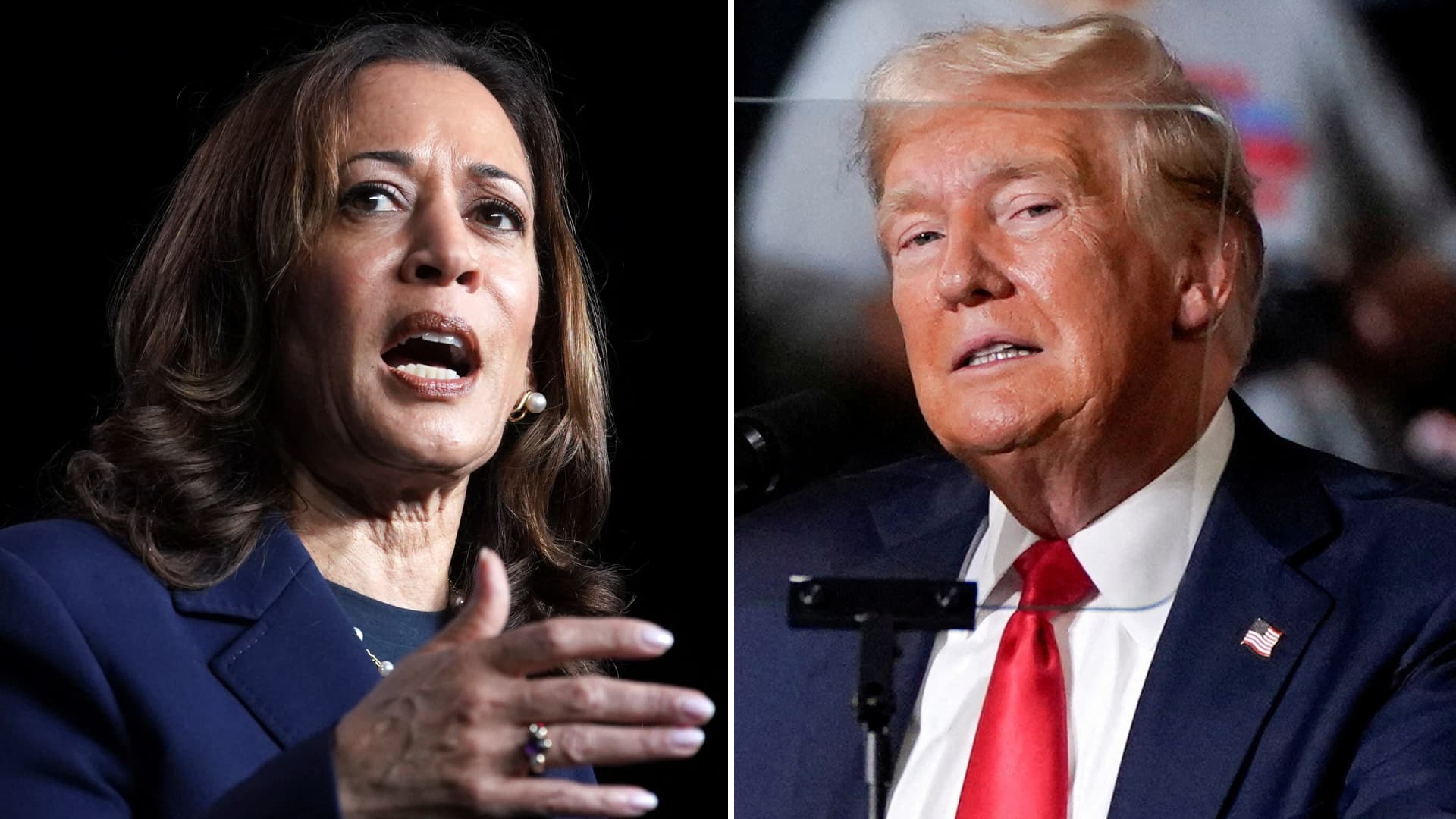
Vice President Kamala Harris, left, and former President Donald Trump
Reuters
As former U.S. president Donald Trump and Vice President Kamala Harris unveil their economic agendas, both presidential candidates have called for tax changes that could affect millions of Americans.
Taxes will be a key issue for the next president. Without action from Congress, trillions in tax breaks enacted by Trump via the Tax Cuts and Jobs Act, or TCJA, will expire after 2025. More than 60% of taxpayers could see higher taxes in 2026 without extensions, according to the Tax Foundation.
Expiring provisions include lower federal income tax brackets, a higher standard deduction, a bigger child tax credit and more generous estate and gift tax exemptions, among others.
More from Personal Finance:
Why free school lunches for all may become a campaign issue
Harris calls for expanded child tax credit with up to $6,000 for newborns
Trump and Harris both want no taxes on tips. Why experts don’t like the idea
However, “there’s a gulf between the political rhetoric around the 2017 tax law and the policy reality that both parties are going to face next year,” said Andrew Lautz, associate director for the Bipartisan Policy Center’s economic policy program.
While Democrats have criticized elements of the TCJA, both parties will likely agree to extend trillions in tax cuts, he said. But negotiations could be challenging amid concerns about the federal budget deficit.
Extending TCJA provisions and subsidized premiums for marketplace health insurance could increase federal deficits by nearly $5 trillion over 10 years, according to the Bipartisan Policy Center.
Here’s a breakdown of where each candidate stands on tax policy.
Plans to extend Trump’s tax cuts
Trump aims to preserve the individual and business tax cuts enacted via TCJA, the campaign said in a press release on Monday.
He addressed his tax agenda briefly during an event in York, Pennsylvania on Monday, which countered the Democratic National Convention. During that speech, he promised “big tax cuts for families and small businesses.”
Harris hasn’t directly addressed TCJA extensions during her 2024 campaign. But President Joe Biden‘s top economic advisor Lael Brainard in May voiced support for partial extensions.
“Achieving a fairer tax system also means we can’t extend expiring Trump tax cuts for those with incomes above $400,000,” she said.
The Trump and Harris campaigns did not respond to CNBC’s request for comment.
Proposed tax increases
Both candidates have vowed to address the budget deficit and have proposed measures to raise revenue. But tax law changes must be approved by Congress, which could be challenging, depending on future House and Senate control.
The Harris campaign on Monday said she would push to increase the corporate tax rate to 28%, up from the 21% permanently enacted via the TCJA. The plan could reduce the deficit by $1 trillion over a decade, according to estimates from the Committee for a Responsible Federal Budget.
Meanwhile, Trump has called for sweeping tariffs, which are taxes levied on imported goods from another country.
Trump’s proposed baseline 10% tariff and 60% levy on Chinese goods could reduce the average after-tax U.S. household income by roughly $1,800 in 2025, according to the Tax Policy Center.
During his event on Monday, Trump pushed back on the assertion that tariffs would cost American consumers. “It’s a tax on a foreign country,” he said.

Tax cuts on tips, Social Security
Both campaigns have also floated eliminating income tax on tip income, pitching the idea at separate events in Nevada, a battleground state and service industry hotbed. Harris shared her plan on Aug. 10, roughly two months after Trump proposed the idea.
Despite some bipartisan support in Congress, the idea has faced criticism from some policy experts who believe the measure could face administrative hurdles and possible abuse.
The big question for us as policy wonks is, what is the underlying policy rationale?
Garrett Watson
Senior policy analyst and modeling manager at the Tax Foundation
“The big question for us as policy wonks is, what is the underlying policy rationale?” said Garrett Watson, senior policy analyst and modeling manager at the Tax Foundation.
Trump has also called for no taxes on Social Security income. Social Security is a key issue for voters this election, according to a CNBC poll. CNBC surveyed 1,001 registered voters July 31-Aug. 4.
Child tax credit expansion
Harris on Friday shared an economic plan, including an expanded child tax credit worth up to $6,000 in total tax relief for families with newborn children, among other priorities.
Her plan came less than one week after Sen. JD Vance of Ohio, former President Donald Trump‘s GOP running mate, floated a $5,000 child tax credit.
A Trump campaign official told CNBC at the time: “Trump will consider a significant expansion of the child tax credit that applies to American families.”

Personal Finance
Next-Generation Retirement Planning: Managing Longevity Risk and Variable Income Streams


S&P 500 Outperforms Amid Strong Corporate Earnings as Treasury Yields Cap Equity Multiples

Climate Resilience and Offshore Wind and Land Restoration Milestones

Mandatory ESG Reporting Standards Demand Standardized Non-Financial Audit Trails

Armanino adds Strategic Accounting Outsourced Solutions

New 2023 K-1 instructions stir the CAMT pot for partnerships and corporations

Tax Strategy: Employee Retention Credit update
-

 Stock News1 week ago
Nvidia Q2 FY2027 Earnings beats Wall Street Expectation with Record $96.2 Billion Revenue
-

 Technology6 days ago
AI Infrastructure Boom Hits Physical Limits: Power, Financing, and Supply Chain Strain
-

 Economics4 days ago
U.S.- Canada Trade Talks Collapse; Carney Says Retaliatory Tariffs Begin September 8
-

 Technology4 days ago
Flock Cameras and the Future of Public Security
-
 Insights42 minutes ago
Climate Resilience and Offshore Wind and Land Restoration Milestones
-
 Accounting42 minutes ago
Mandatory ESG Reporting Standards Demand Standardized Non-Financial Audit Trails
-
 Finance15 minutes ago
S&P 500 Outperforms Amid Strong Corporate Earnings as Treasury Yields Cap Equity Multiples