
Personal Finance
Here’s the inflation breakdown for August 2024 — in one chart

Grace Cary | Moment | Getty Images
Inflation continued to throttle back in August, signaling that the fast-rising prices that plagued the U.S. economy for the better part of the three years during the pandemic era are increasingly shifting into the rearview mirror.
Overall inflationary pressures are “dissipating,” said Sarah House, senior economist at Wells Fargo Economics.
The consumer price index — which measures how fast prices are changing across the U.S. economy — rose 2.5% in August from a year ago, the U.S. Department of Labor reported Wednesday.
That figure is down from 2.9% in July and is the lowest reading since February 2021.
There are still some pockets of potential concern, however, with housing perhaps the most troubling among them, economists said. But prices for staples like groceries and gasoline have normalized and the inflationary trend appears firmly to the downside, they said.
“We’d expect inflation to continue to subside,” though with “some ups and downs” in the data from month to month, House said.
‘Tamed’ but not ‘vanquished’
The August inflation reading is down significantly from the 9.1% pandemic-era peak in mid-2022, which was the highest level since 1981.
It’s also nearing policymakers’ long-term target of around 2%.
“Overall, inflation appears to have been successfully tamed but, with housing inflation still refusing to moderate as quickly as hoped, it hasn’t been completely vanquished,” Paul Ashworth, chief North America economist at Capital Economics, wrote in a note Wednesday morning.
With that in mind, the U.S. Federal Reserve is expected to start cutting interest rates this month as its focus shifts from tackling inflation to averting recession in the face of a cooling job market.
The central bank raised rates to their highest level in 23 years during the pandemic era, pushing up borrowing costs for consumers and businesses in a bid to tame inflation.
Both House and Ashworth expect the Fed to cut rates by a quarter of a percentage point at its upcoming policy meeting next week.
Housing inflation is falling but still high
Inflation for physical goods spiked as the U.S. economy reopened in 2021.
The Covid-19 pandemic disrupted supply chains, while Americans spent more on their homes and less on services such as dining out and entertainment. Supply shortages coincided with higher consumer demand.
Services inflation — which is generally more sensitive to labor costs — also jumped, partly influenced by a historically hot labor market as employers clamored for workers when the economy reopened, economists said.
More from Personal Finance:
The ‘vibecession’ is ending as U.S. economy nails a soft landing
U.S. job market slows but not yet a ‘three-alarm fire’
Relocating retirees want lower costs of living and better lifestyles
Housing, which is counted in the “services” category, has been a big impediment to overall inflation falling to the Fed’s target, economists said.
Shelter is largest component of the CPI, and therefore has an outsized effect on inflation readings.
The shelter index has risen 5.2% since August 2023, accounting for more than 70% of the annual increase in the “core” CPI, the BLS said Wednesday. (The core CPI is economists’ preferred gauge of inflation trends. It strips out food and energy costs, which can be volatile.)
Housing inflation moves up and down at glacial speed due to how the government measures it, economists said.
Such data quirks mask positive news in the real-time rental market, which has seen minimal inflation for about two years, economists said. Average rents actually deflated (meaning prices actually fell) by 1% in the second quarter of 2024 versus a year earlier, according to the BLS New Tenant Rent Index.
However, shelter CPI inflation has appeared to defy gravity lately: It increased on a monthly basis for two consecutive months, from 0.2% in June to 0.4% in July, and then to 0.5% in August.
“It’s puzzling, in all honesty,” House said. “[But] I’m of the view that we should continue to see shelter decelerate” given broader trends in the rental market.
Other ‘notable’ categories
More broadly, other categories with “notable increases” over the past year include motor vehicle insurance (prices are up 16.5% from August 2023), medical care (up 3%), recreation (up 1.6%) and education (3.1%), the BLS said.
A surge in new and used car prices a few years ago is likely now fueling high inflation for car insurance premiums and vehicle repair, since it generally costs more to insure and repair pricier cars, economists said.

Insurance inflation should ultimately fade alongside falling car prices, they said. New vehicle prices are down about 1% over the past year, and those for used cars and trucks have declined more than 10%.
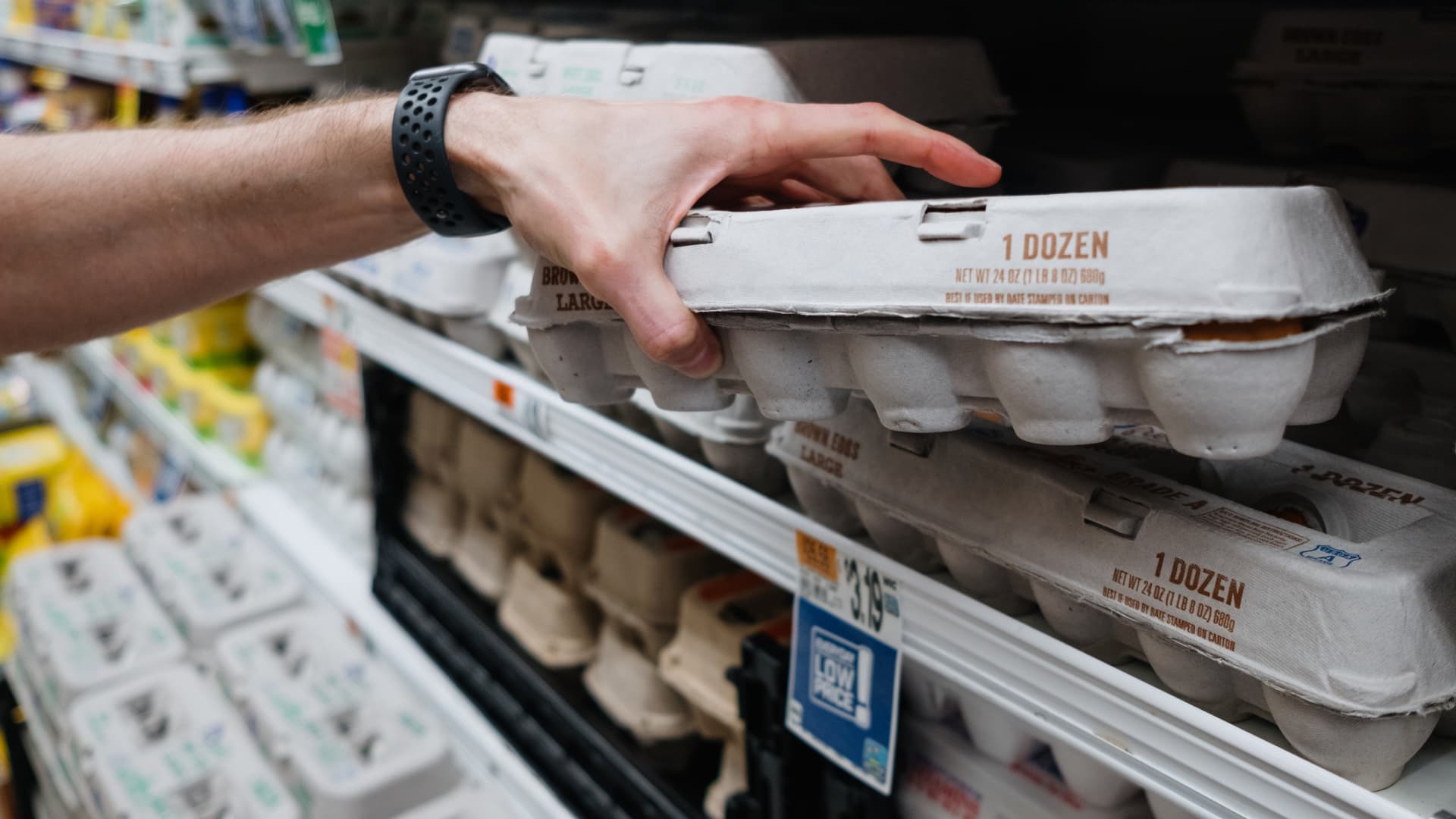
Egg prices — which had surged in 2022 due to a historic outbreak of bird flu — are rising again following a reemergence of the deadly disease. They’re up 28% from a year ago.
Overall annual grocery inflation was less than 1% in August, down from an average 11.4% in 2022, which was the highest since 1979.
Gasoline prices are also down about 10% over the past year.


Personal Finance
Next-Generation Retirement Planning: Managing Longevity Risk and Variable Income Streams


U.S.- Canada Trade Talks Collapse; Carney Says Retaliatory Tariffs Begin September 8

Flock Cameras and the Future of Public Security

AI Infrastructure Boom Hits Physical Limits: Power, Financing, and Supply Chain Strain

Armanino adds Strategic Accounting Outsourced Solutions

New 2023 K-1 instructions stir the CAMT pot for partnerships and corporations

Tax Strategy: Employee Retention Credit update
-

 Stock News1 week ago
Nvidia Q2 FY2027 Earnings beats Wall Street Expectation with Record $96.2 Billion Revenue
-
 Technology6 days ago
AI Infrastructure Boom Hits Physical Limits: Power, Financing, and Supply Chain Strain
-
 Economics4 days ago
U.S.- Canada Trade Talks Collapse; Carney Says Retaliatory Tariffs Begin September 8
-
 Technology4 days ago
Flock Cameras and the Future of Public Security