
Personal Finance
Here’s the inflation breakdown for July 2025 — in one chart

Spencer Platt | Getty Images
Inflation held steady in July as price declines for staples like groceries and gasoline helped offset price increases for consumers.
However, there were worrying signs under the surface, including evidence that Trump administration policies are stoking inflation for certain goods and services, economists said. Those effects will likely become more pronounced later this year, they said.
“Tariff and immigration policy fingerprints are all over the report,” Mark Zandi, chief economist of Moody’s, said.
“The tariff and immigration effects aren’t screaming at us, but they’re certainly speaking very loudly and over the next couple months they’ll start yelling,” Zandi said.
The consumer price index rose 2.7% in July relative to a year earlier, unchanged from the prior month and less than expected, the Bureau of Labor Statistics reported Tuesday.
CPI is a widely used measure of inflation that tracks how quickly prices rise or fall for a basket of goods and services, from haircuts to coffee, clothing and concert tickets.
In July, grocery and gasoline prices declined — or, deflated — by a respective 0.1% and 2.2% on a monthly basis from June, according to CPI data.
Economists like to look at inflation data that strips out energy and food prices, which can be volatile from month to month.
This so-called “core” CPI figure has been rising in recent months: It rose 3.1% in July 2025 from July 2024. That’s up from a 2.9% annual pace in June and is the fastest annual rate for core CPI since February.
“[W]e expect it will rise further to a peak of 3.8% by the end of the year as tariffs bleed through more fully to consumer prices,” Michael Pearce, deputy chief U.S. economist at Oxford Economics, wrote Tuesday.
Inflation most evident for consumer goods
Tariffs are a tax placed on imports, paid by U.S. companies that import the good or service.
Businesses generally pass on those higher costs to consumers, at least in part, economists said. The Budget Lab at Yale University estimates the average household will lose $2,400 in the short run as a result of all tariffs the Trump administration put in place as of Aug. 6.
Tariff effects are most apparent for goods prices, like those for household furnishings and apparel, Zandi said.
Inflation for all “core” goods — which strips out food and energy products — was up 0.2% in each of the last two months, according to CPI data. In more typical times, goods prices are generally flat or declining, Zandi said.
“That they’re on the rise is clear evidence of tariff impact,” Zandi said.
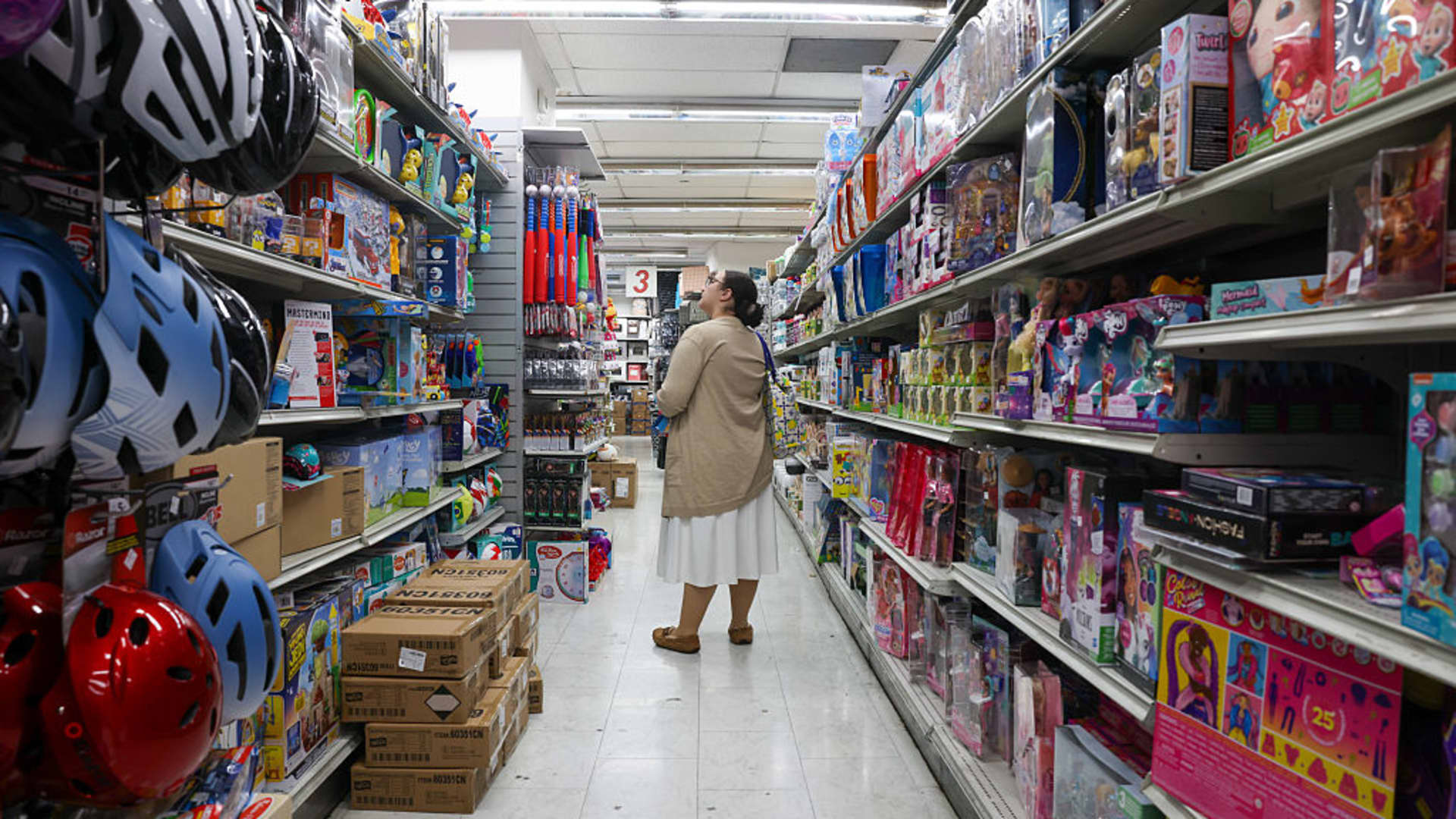
Household furnishings prices were up 0.7% on a monthly basis in July, according to CPI data. Apparel prices were up a more muted 0.1%, and toys 0.2%.
Not a ‘one-month event’
On an annual basis, “core” goods inflation was up 1.2% in July, the fastest pace in over two years.
“There are clear signs a range of goods prices are moving higher, pushing core goods inflation to a more than two-year high, but some major tariffed items, including autos and major appliances, have yet to show much impact,” Pearce wrote.
Stephen Miran, chair of the White House Council of Economic Advisers, said Tuesday on CNBC’s “Squawk on the Street” that the CPI data shows “no evidence whatsoever” that tariffs have fueled higher consumer prices.
“It just hasn’t panned out,” Miran said.

The full effect of tariffs is unlikely to be felt for several months, as businesses delay passing on higher costs, economists said.
“This isn’t a one-month event,” said Sarah House, a senior economist at Wells Fargo Economics. “The impact will be dragged out over many months, as businesses are waiting to see where those tariffs settle.”
They may test consumers’ price sensitivity slowly instead of all at once, she said. Companies may also still be selling old inventory that wasn’t subject to import duties, economists said.
“It’s been a very dynamic time for these trade negotiations … but we’re still, you know, a ways away from seeing where things settle down,” Jerome Powell, Federal Reserve chair, said last month.
Additionally, there’s evidence that Trump administration policy around immigration is limiting the supply of immigrant labor in certain sectors of the economy, putting upward pressure on inflation, Zandi said.
This is most apparent in personal care services — categories like haircuts, dry cleaning and pet services — that employ a lot of immigrants, he said. Fewer immigrants working in these sectors limits labor supply and puts upward pressure on the wages businesses pay to attract workers, he said.


Personal Finance
Next-Generation Retirement Planning: Managing Longevity Risk and Variable Income Streams


U.S.- Canada Trade Talks Collapse; Carney Says Retaliatory Tariffs Begin September 8

Flock Cameras and the Future of Public Security

AI Infrastructure Boom Hits Physical Limits: Power, Financing, and Supply Chain Strain

Armanino adds Strategic Accounting Outsourced Solutions

New 2023 K-1 instructions stir the CAMT pot for partnerships and corporations

Tax Strategy: Employee Retention Credit update
-

 Stock News1 week ago
Nvidia Earnings Preview: What Wall Street Expects From the AI Bellwether’s Q2 Report
-

 Accounting1 week ago
SEC’s Semiannual Reporting Proposal Faces Investor Pushback: What CFOs Need to Know
-

 Stock News1 week ago
Nvidia Q2 FY2027 Earnings beats Wall Street Expectation with Record $96.2 Billion Revenue
-

 Finance1 week ago
Treasury Bond Volatility Forces Bessent to Double Debt Buyback Size as Yields Swing
-
 Technology5 days ago
AI Infrastructure Boom Hits Physical Limits: Power, Financing, and Supply Chain Strain
-
 Technology3 days ago
Flock Cameras and the Future of Public Security
-
 Economics3 days ago
U.S.- Canada Trade Talks Collapse; Carney Says Retaliatory Tariffs Begin September 8