
Personal Finance
The Princeton Review’s 2026 list


For the first time, the total cost of college this year is nearing or crossing the $100,000 threshold at several institutions in the U.S.
Although the price tags are shocking, few families pay the full tab. As of the 2024-25 academic year, the amount families actually spent on education costs was closer to $31,000, on average, according to Sallie Mae’s annual How America Pays for College report.
In most cases, parent income and savings cover about half of college costs, Sallie Mae found. Free money from scholarships and grants accounts for more than a quarter of the costs and student loans make up most of the rest.
“You really do need to have a multipoint plan, and it’s not just savings and not just debt,” said Chris Ebeling, head of student lending at Citizens.
More from Personal Finance:
Education Department launches FAFSA sooner than expected
Families feel confident about paying for college, until tuition bills arrive
Student loan borrowers: How will the end of the SAVE plan affect you? Tell us
When it comes to applying for financial aid, “there are buckets of resource dollars available,” said Robert Franek, editor in chief at The Princeton Review.
Beyond federal assistance from the U.S. Department of Education and state aid, many schools offer their own grant or scholarship funds.
To that end, The Princeton Review ranked colleges by how generous these awards are and how satisfied students are with their packages. The 2026 edition of the company’s “Best Colleges” guide is based on data from surveys of 170,000 students during the 2024-25 academic year. Sticker prices are based on the upcoming school year.
The colleges and universities that ranked the highest on The Princeton Review’s list not only deliver on assistance, but also on addressing concerns about college affordability head on, Franek said.
“These schools understand the pain points that families have in general and it is around cost, cost, cost,” he said.
At Amherst College, for example, the sticker price for 2025-26 is $93,090 a year — including tuition, fees and room and board — but the average need-based scholarship is $71,342, which brings the total out-of-pocket cost down to $21,748. At other schools in the top 10, the out-of-pocket costs are even lower.
Top 10 colleges for financial aid
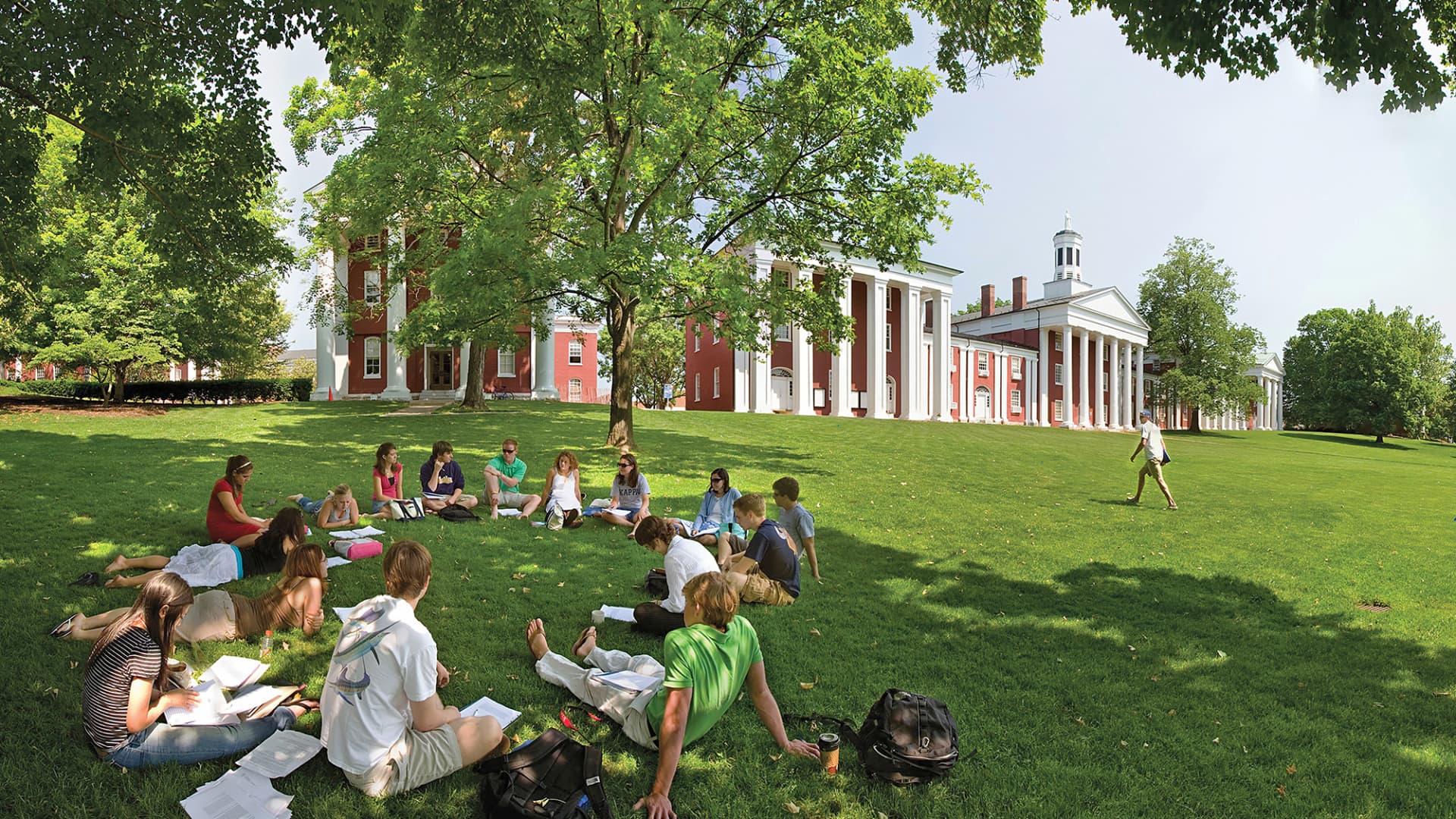
Washington and Lee
Doug Plummer | Washington and Lee University
1. Washington and Lee University
Location: Lexington, Virginia
Sticker price: $86,730
Average need-based scholarship: $67,220
Total out-of-pocket cost: $19,510
Average share of need met for first-year students with need-based aid: 100%
2. Franklin W. Olin College of Engineering
Location: Needham, Massachusetts
Sticker price: $84,278
Average need-based scholarship: $56,968
Total out-of-pocket cost: $27,310
Average share of need met for first-year students with need-based aid: 99%
3. Washington University in St. Louis
Location: St. Louis, Missouri
Sticker price: $92,932
Average need-based scholarship: $70,607
Total out-of-pocket cost: $22,325
Average share of need met for first-year students with need-based aid: 100%
4. Princeton University
Location: Princeton, New Jersey
Sticker price: $86,668
Average need-based scholarship: $73,711
Total out-of-pocket cost: $12,957
Average share of need met for first-year students with need-based aid: 100%
5. Reed College
Location: Portland, Oregon
Sticker price: $89,843
Average need-based scholarship: $52,382
Total out-of-pocket cost: $37,461
Average share of need met for first-year students with need-based aid: 100%
6. Amherst College
Location: Amherst, Massachusetts
Sticker price: $93,090
Average need-based scholarship: $71,342
Total out-of-pocket cost: $21,748
Average share of need met for first-year students with need-based aid: 100%
7. Lafayette College
Location: Easton, Pennsylvania
Sticker price: $87,318
Average need-based scholarship: $49,603
Total out-of-pocket cost: $37,715
Average share of need met for first-year students with need-based aid: 100%
8. Columbia University
Location: New York, New York
Sticker price: $89,425
Average need-based scholarship: $73,702
Total out-of-pocket cost: $15,723
Average share of need met for first-year students with need-based aid: 100%
9. Rice University
Location: Houston, Texas
Sticker price: $87,047
Average need-based scholarship: $66,070
Total out-of-pocket cost: $20,977
Average share of need met for first-year students with need-based aid: 100%
10. Gettysburg College
Location: Gettysburg, Pennsylvania
Sticker price: $85,640
Average need-based scholarship: $48,573
Total out-of-pocket cost: $37,067
Average share of need met for first-year students with need-based aid: 90%


Personal Finance
Next-Generation Retirement Planning: Managing Longevity Risk and Variable Income Streams


U.S.- Canada Trade Talks Collapse; Carney Says Retaliatory Tariffs Begin September 8

Flock Cameras and the Future of Public Security

AI Infrastructure Boom Hits Physical Limits: Power, Financing, and Supply Chain Strain

Armanino adds Strategic Accounting Outsourced Solutions

New 2023 K-1 instructions stir the CAMT pot for partnerships and corporations

Tax Strategy: Employee Retention Credit update
-

 Stock News1 week ago
Nvidia Earnings Preview: What Wall Street Expects From the AI Bellwether’s Q2 Report
-

 Accounting1 week ago
SEC’s Semiannual Reporting Proposal Faces Investor Pushback: What CFOs Need to Know
-

 Stock News1 week ago
Nvidia Q2 FY2027 Earnings beats Wall Street Expectation with Record $96.2 Billion Revenue
-

 Finance1 week ago
Treasury Bond Volatility Forces Bessent to Double Debt Buyback Size as Yields Swing
-
 Technology5 days ago
AI Infrastructure Boom Hits Physical Limits: Power, Financing, and Supply Chain Strain
-
 Technology3 days ago
Flock Cameras and the Future of Public Security
-
 Economics3 days ago
U.S.- Canada Trade Talks Collapse; Carney Says Retaliatory Tariffs Begin September 8