
Personal Finance
How President-elect Trump may impact investors in these 8 market sectors

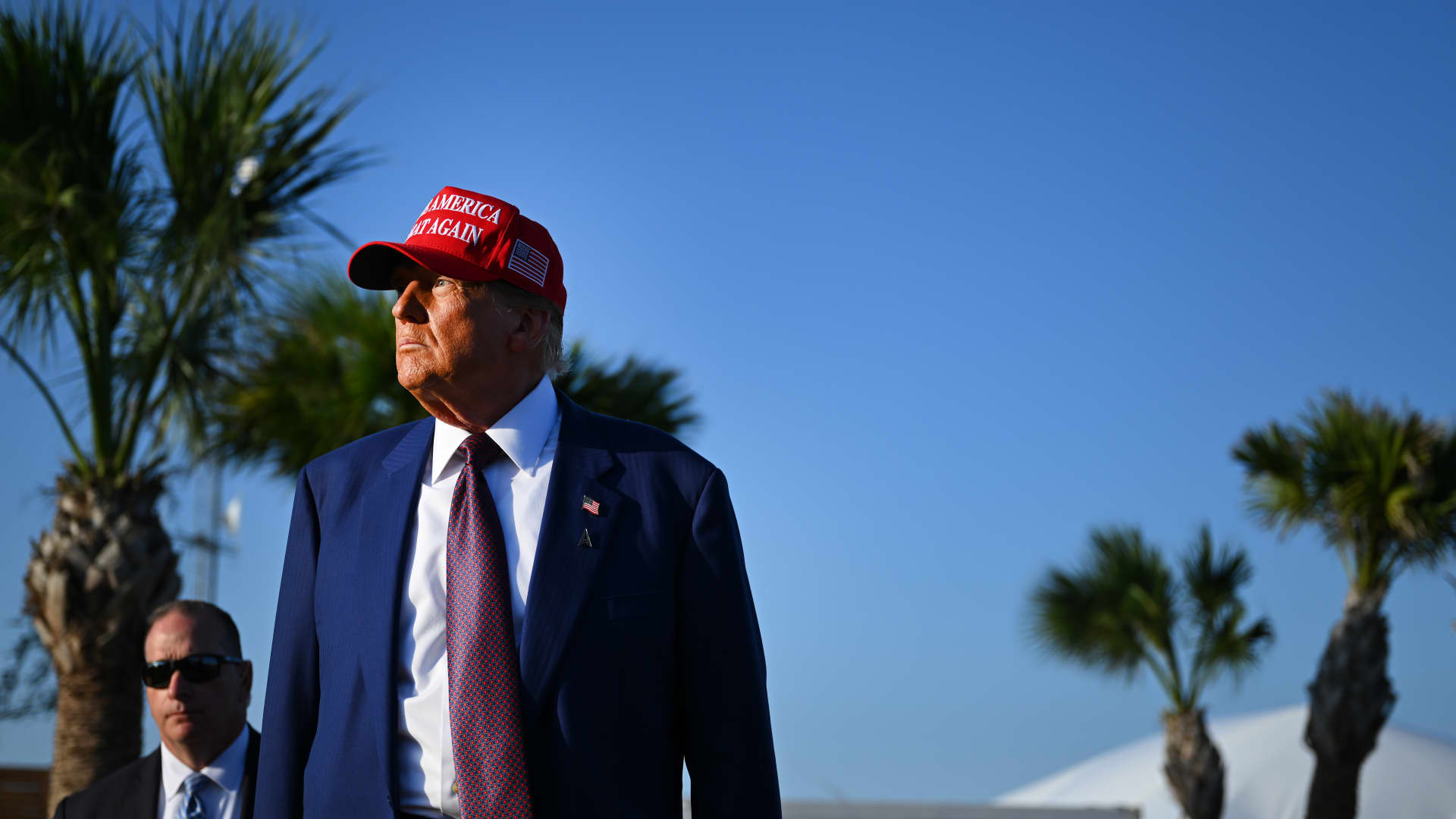
Brandon Bell | Getty Images News | Getty Images
As Inauguration Day nears, investors are trying to unravel what booms or busts lay ahead under President-elect Donald Trump.
Trump’s campaign promises — from tariffs to mass deportations, tax cuts and deregulation — and his picks to lead federal agencies suggest both risks and rewards for various investment sectors, according to market experts.
Republican control of both chambers of Congress may grant Trump greater leeway to enact his pledges, experts said. However, their scope and timing is far from clear.
“There’s so much uncertainty right now,” said Jeremy Goldberg, a certified financial planner, portfolio manager and research analyst at Professional Advisory Services, which ranked No. 37 on CNBC’s annual Financial Advisor 100 list.
“I wouldn’t be making large bets one way or another,” Goldberg said.
Sectors often fare differently than expected
Past market results show why it’s difficult to predict the sectors that may win or lose under a new president, according to Larry Adam, chief investment officer at Raymond James.
When Trump was elected in 2016, financials, industrials and energy outperformed the S&P 500 in the first week. However, for the remaining three years and 51 weeks, those same sectors significantly underperformed, Adam explained.
“The market is known to have these knee-jerk reactions trying to anticipate where things go very quickly, but they don’t necessarily last,” Adam said.
What’s more, sectors that are expected to do well or poorly based on a president’s policies have sometimes gone the opposite way, according to Adam.
For example, the energy sector was down by 8.4% during Trump’s first administration, despite deregulation, record oil production and a rise in oil prices. Yet the energy sector climbed 22.9% under Biden as of Nov. 19, despite the administration’s push for renewables and sustainability.
For that reason, Raymond James ranks politics eighth for its potential impact on sectors. The seven factors that have more influence, according to the firm, are economic growth, fundamentals, monetary policy, interest rates and inflation, valuations, sentiment and corporate activity.
Here’s how Trump’s policy stances could influence eight sectors: autos, banks, building materials and construction, crypto, energy, health care, retail and technology.
Automobiles
Monty Rakusen | Digitalvision | Getty Images
The auto sector — like many others — will likely be a mixed bag, experts said.
Trump’s antipathy for electric vehicles is likely to create headwinds for EV producers.
His administration may try to roll back regulations like a Biden-era tailpipe-emissions rule expected to push broader adoption of EVs and hybrids. He also intends to kill consumer EV tax credits worth up to $7,500 — although states like California may try to enact their own EV rebates, blunting the impact.
Losing the federal credit would make EVs more costly, driving down sales and perhaps making “per unit economics even less favorable” for automakers, John Murphy, a research analyst at Bank of America Securities, wrote in a Nov. 21 research note.
Some companies seem well-positioned, though: Ford Motor (F), for example, “has a healthy pipeline of hybrid vehicles as well as traditional [internal combustion engine] vehicles to supplement the EV offerings,” Murphy wrote.

Tariffs and trade conflict pose threats to the auto industry, since the U.S. relies heavily on other nations to manufacture cars and parts, said Callie Cox, chief market strategist at Ritholtz Wealth Management.
They “could affect the cost and availability of cars we see in the U.S. market,” Cox said.
Economists expect tariffs and other Trump policies to be inflationary.
In that case, the U.S. Federal Reserve may have to keep interest rates higher for longer than anticipated. Higher borrowing costs may weigh on consumers’ desire or ability to buy cars, Cox said.
However, lower EV production could be a boon for companies that manufacture traditional gasoline cars, experts said.
Trump has also called for a “drill, baby, drill” approach to oil production. Greater supply could reduce gas prices, supporting demand for gas vehicles, experts said. But trade wars and sanctions on Iran and Venezuela could have the opposite impact, too.
—Greg Iacurci
Banks
In this 2017 file photo, President Donald Trump stands next to Jamie Dimon, chief executive officer of JPMorgan Chase & Co., left, in the State Dining Room of the White House in Washington.
Andrew Harrer | Bloomberg | Getty Images
Trump’s first administration eased certain regulations for banking rules, fintech firms and financial startups.
Likewise, Trump’s second term is expected to usher in lighter financial regulations.
That may help bolster profitability in the sector, and therefore stock prices, said Brian Spinelli, co-chief investment officer at Halbert Hargrove in Long Beach, Calif., which is No. 54 on the 2024 CNBC FA 100 list.
“The larger banks probably benefit more from that,” Spinelli said.
Less regulation — combined with the prospect that interest rates could stay higher — will provide a net positive for the bank industry, since they may be able to lend out more risk-based capital, said David Rea, president of Salem Investment Counselors in Winston-Salem, North Carolina, which is No. 8 on the 2024 CNBC FA 100 list.
One issue that emerged this year that could resurface is concern about regional banks’ exposures to commercial real estate, Spinelli said.
“It wasn’t that long ago, and I don’t think those problems disappeared,” Spinelli said. “So you question, is that still looming out there?”
—Lorie Konish
Building materials and construction
Bill Varie | The Image Bank | Getty Images
The housing market has been “frozen” in recent years by high mortgage rates, said Cox of Ritholtz.
Lower rates would likely be a “catalyst” for housing and associated companies, she said.
However, that may not materialize — quickly, at least — under Trump, she said. If policies like tariffs, tax cuts and mass deportations stoke inflation, the U.S. Federal Reserve may have to keep interest rates higher for longer than anticipated, which would likely prop up mortgage rates and weigh on housing and related sectors, she said.
The whims of the housing market impact retailers, too: Home goods stores may not fare well if people aren’t buying, renovating and decorating new homes, Cox said.

That said, deregulation could be “absolutely huge” for the sector if it accelerates building timelines and reduces costs for developers, Goldberg said.
Trump has called for opening new land to builders and creating tax incentives for homebuyers, without providing much detail.
Housing policies will be “one of the most-watched initiatives coming out of the next administration,” Cox said. “We haven’t gotten a lot of clarity on that front,” she said.
“If we see realistic and well-thought-out policies, you could see real estate stocks and related stocks” like real estate investment trusts, home improvement retailers and home builders respond well, Cox said.
—Greg Iacurci
Crypto
Republican presidential nominee and former U.S. President Donald Trump gestures at the Bitcoin 2024 event in Nashville, Tennessee, U.S., July 27, 2024.
Kevin Wurm | Reuters
Trump’s election has brought a new bullishness to cryptocurrencies, with bitcoin nearing a new $100,000 benchmark before its recent runup ended.
As president, Trump is expected to embrace crypto more than any of his predecessors.
Notably, he has already launched a crypto platform, World Liberty Financial, that will encourage the use of digital coins.
Those developments come as new ways of investing in crypto have emerged this year, with the January launch of spot bitcoin ETFs, and more recently, the addition of bitcoin ETF options.
Yet financial advisors are hesitant, with only about 2.6% recommending crypto to their clients, an April survey from Cerulli Associates found. Roughly 12.1% said they would be willing to use it or discuss it based on the client’s preference. Still, 58.9% of advisors said they do not expect to ever use cryptocurrency with clients.
“The number one reason why advisors aren’t investing in cryptocurrency on behalf of their clients is they don’t believe it’s suitable for client portfolios,” said Matt Apkarian, associate director in Cerulli’s product development practice.

Even for advisors who do expect they may use crypto at some point, it’s “wait and see,” particularly regarding how the regulatory environment plays out, Apkarian said.
However, investors are showing interest in cryptocurrency, with 90% of advisors receiving questions on the subject, according to research from Christina Lynn, a certified financial planner and practice management consultant at Mariner Wealth Advisors.
For those investors, exchange-traded funds are a good starting place, since there’s less chance of falling victim to one of crypto’s pitfalls like scams or losing the keys, the unique alphanumeric codes attached to the investments, according to Lynn. Because crypto can be more volatile, it’s best not to invest any money you expect you’ll need to pay for near-term goals, she said.
Investors would also be wise to think of cryptocurrency like an alternative investment and limit the allocation to 1% to 5% of their overall portfolio, Lynn said.
“You don’t need to have a lot of this to have it go a long way,” Lynn said.
—Lorie Konish
Energy
U.S. President Donald Trump gestures after delivering a speech at a Double Eagle Energy Holdings LLC oil rig in Midland, Texas, on Wednesday, July 29, 2020.
Cooper Neill | Bloomberg | Getty Images
As of Nov. 19, energy has been the top-performing sector under President Joe Biden, with a 22.9% gain, even with the administration’s push for renewables and sustainability, according to Raymond James.
Yet it remains to be seen whether that performance can continue under Trump, who has advocated for more oil, gas and coal production. The outlook for the sector could change if Trump acts on a campaign threat to repeal the Inflation Reduction Act, a law enacted under Biden that includes clean energy incentives.
If Trump continues to make it easier to create more oil supply, that might not be a great thing for oil companies, according to Adam of Raymond James.
“Because there’s more supply, it may tamp down on the price of oil, and that’s one of the biggest drivers of that sector,” Adam said.
Eagle Global Advisors, a Houston-based investment management firm that specializes in energy infrastructure, is “cautiously optimistic” about Trump’s impact on the sector, according to portfolio manager Mike Cerasoli. Eagle Global Advisors is No. 35 on the 2024 CNBC FA 100 list.
“We would say we’re probably more on the optimistic side than the cautious side,” Cerasoli said. “But if we know anything about Trump it’s that he’s a wild card.”

A lot of the Inflation Reduction Act may stay intact, since the top states that benefitted financially from the law also handed Trump a victory in the election, according to Cerasoli.
When Biden won in 2020, there was a lot of panic about the outlook for energy, oil and gas. In a third quarter letter that year, Cerasoli recalls writing, “I don’t think it’s going to be as bad as you think.”
Four years later, he has the same message for investors on the outlook for renewables. In the days following Trump’s January inauguration, Cerasoli expects there may be a deluge of executive orders.
“Once you get past that, you’ll get a sense of exactly how he’s going to treat energy,” Cerasoli said. “I think people will realize that it’s not the end of the world for renewables.”
—Lorie Konish
Health care
Medicine vials on a production line.
Comezora | Moment | Getty Images
Trump nominated Robert F. Kennedy Jr. as head of the Department of Health and Human Services.
RFK would be a “huge wild card” for the health care sector if the U.S. Senate were to confirm him, said Goldberg of Professional Advisory Services.
RFK is a prominent vaccine skeptic, which may bode ill for big vaccine makers like Merck (MRK), Pfizer (PFE) and Moderna (MRNA), said David Weinstein, a portfolio manager and senior vice president at Dana Investment Advisors, No. 4 on CNBC’s annual FA 100 ranking.
Cuts to Medicaid and the Affordable Care Act, also known as Obamacare, are also likely on the table to reduce government spending and raise money for a tax-cut package, experts said.
Publicly traded health companies like Centene (CNC), HCA Healthcare (HCA) and UnitedHealth (UNH) might be impacted by lower volumes of Medicaid patients or consumers who face higher healthcare premiums after losing ACA subsidies, for example, Weinstein said.
Robert F. Kennedy Jr. during the UFC 309 event at Madison Square Garden on Nov. 16, 2024 in New York.
Chris Unger | Ufc | Getty Images
Medical tech providers — especially those that supply electronics with semiconductors sourced from China — could be burdened by tariffs, he added.
Conversely, deregulation might help certain pharmaceutical companies like Thermo Fisher Scientific (TMO) and Charles River Laboratories (CRL), which may benefit from faster approvals from the Food and Drug Administration, Goldberg said.
Vivek Ramaswamy, a former biotech executive who Trump appointed as co-head of a new Department of Government Efficiency, has called for streamlined drug approvals. But RFK has advocated for more oversight.
“There’s a real dichotomy here,” Weinstein said.
“Where do we end up? Maybe where we are right now,” he added.
—Greg Iacurci
Retail
Thomas Barwick | Digitalvision | Getty Images
Tax cuts may boost consumers’ discretionary income, which would be a boon for companies selling consumer electronics, clothes, luxury goods and other items, Goldberg said.
Then again, there’s a “high probability” of tariffs, Weinstein said.
Retailers would likely pass on at least some of that additional cost to consumers, experts said.
All physical goods from apparel to footwear, tools and appliances are at risk from tariffs, Weinstein said. Tariff impact would depend on how the policies are structured.
The Home Depot (HD), Lowe’s (LOW) and Walmart (WMT), for example, source a relatively big chunk of their goods from abroad, Weinstein said.

Home Depot sources more than half its goods from the U.S. and North America, but “there certainly will be an impact,” CEO and president Ted Decker said Nov. 12 during the firm’s Q3 earnings call.
“Whatever happens in tariffs will be an industry-wide impact,” Decker said. “It won’t discriminate against different retailers and distributors who are importing goods.”
It’s a good idea for investors to own “high quality” retailers without a lot of debt and with diversified inventory sources, Goldberg said. He cited TJX Companies (TJX), which owns stores like TJ Maxx, Marshalls and HomeGoods, as an example.
“Direct imports are a small portion of [its] business and TJX sources from a variety of countries outside of China,” Lorraine Hutchinson, a Bank of America Securities research analyst, wrote in a Nov. 21 note.
Deregulation may be positive for smaller retailers and franchises, which tend to be more sensitive to labor laws and environmental and compliance costs, Goldberg said.
—Greg Iacurci
Technology
Former President Donald J. Trump speaks about filing a class-action lawsuits targeting Facebook, Google and Twitter and their CEOs, escalating his long-running battle with the companies following their suspensions of his accounts, during a press conference at the Trump National Golf Club on Wednesday, July 07, 2021 in Bedminster, NJ.
Jabin Botsford | The Washington Post | Getty Images
The technology sector continued its strong run in 2024, thanks in large part to the Magnificent Seven — Amazon, Apple, Alphabet, Meta, Microsoft, Nvidia and Tesla.
Even broadly diversified investors may find it difficult to escape those names, as they are among the top weighted companies in the S&P 500 index.
Information technology — which includes all those stocks except for Amazon and Google parent Alphabet — comprises the largest sector in the S&P 500 index, with more than 31%.
Trump is poised to have an influence on looming antitrust issues, amid considerations as to whether Google’s influence on online search should be limited.
Any tariffs put in place may also prompt some sales to decline or the cost of raw materials to go up, said Rea of Salem Investment Counselors.
Nevertheless, Rea said his firm continues to have a “pretty heavy” tech allocation, with strong expectations for generative artificial intelligence. However, the firm does not own Tesla, due to its expensive valuation, and has recently been selling software company Palantir, a winning stock that may have gotten ahead of itself, he said.
Technology valuations are trading well into the high double digits on a price to earnings basis, which often signals forward returns will decline, according to Halbert Hargrove’s Spinelli.
Consequently, prospective investors who come in now would basically be buying high, he said.
“If you think you’re going to get the same double digit returns in the next five years, sure it could happen on a one-year basis,” Spinelli said. “But your chances historically have been that your returns come down.”
—Lorie Konish

Personal Finance
Next-Generation Retirement Planning: Managing Longevity Risk and Variable Income Streams


U.S.- Canada Trade Talks Collapse; Carney Says Retaliatory Tariffs Begin September 8

Flock Cameras and the Future of Public Security

AI Infrastructure Boom Hits Physical Limits: Power, Financing, and Supply Chain Strain

Armanino adds Strategic Accounting Outsourced Solutions

New 2023 K-1 instructions stir the CAMT pot for partnerships and corporations

Tax Strategy: Employee Retention Credit update
-

 Stock News1 week ago
Nvidia Q2 FY2027 Earnings beats Wall Street Expectation with Record $96.2 Billion Revenue
-
 Technology6 days ago
AI Infrastructure Boom Hits Physical Limits: Power, Financing, and Supply Chain Strain
-
 Technology3 days ago
Flock Cameras and the Future of Public Security
-
 Economics3 days ago
U.S.- Canada Trade Talks Collapse; Carney Says Retaliatory Tariffs Begin September 8