
Personal Finance
What not to buy this year

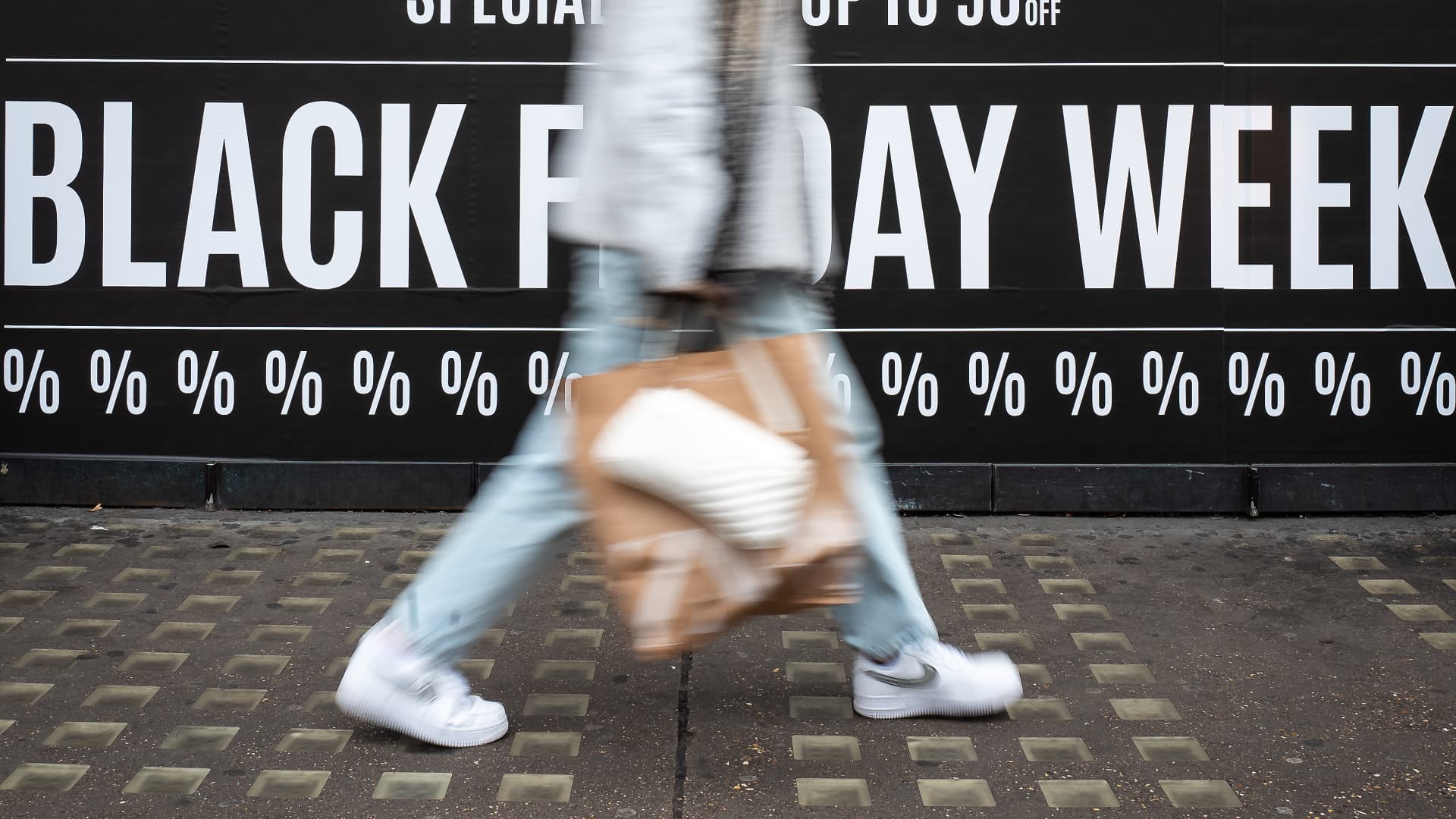
Shoppers walk along 5th Avenue on Black Friday in New York, US, on Friday, Nov. 25, 2022.
Bloomberg | Bloomberg | Getty Images
Retailers hype Black Friday sales, and it works.
This year, the number of people shopping between Thanksgiving Day and Cyber Monday could hit a record, according to the National Retail Federation’s annual survey.
But that doesn’t mean consumers are getting the lowest prices of the season.
According to WalletHub’s 2024 Best Things to Buy on Black Friday report, 41% of items at major retailers offer no savings compared with their pre-Black Friday prices.
The items that are on sale are marked down by 24%, on average. The site compared Black Friday advertisements against prices on Amazon earlier that fall.
Don’t fall for deceptive deals
“Some Black Friday deals are misleading, as retailers may inflate original prices to make a deal look like a better value,” said consumer savings expert Andrea Woroch.
Such tactics can create an urgency to buy, even when the discount isn’t that significant, according to R.J. Cross, a campaign director at PIRG, a nonprofit consumer advocacy research group.
Other common ploys include displaying the number of shoppers with the same item in their carts or an alert that a product is almost out of stock. PIRG also found that some sellers on Etsy use fake countdown timers on deals that don’t expire.
Etsy did not immediately respond to a request for comment.
“These stunts aren’t limited to the holidays. Retailers and advertisers are always trying to get you to buy more than you need and spend more than you want,” Cross said in a statement.
Expect up to 30% off on Black Friday
This year, in particular, some of the deals are already as good as they are going to get.
“Those holidays have gotten a little watered down because retailers want to maximize the selling days,” said Adam Davis, managing director at Wells Fargo Retail Finance.
“You are easily going to see 20% to 30% off,” Davis said — but “not necessarily storewide.”
More from Personal Finance:
Millennials say they plan to spend big this season
Thanksgiving meals are expected to be cheaper in 2024
|Here are the best ways to save money this holiday
Depending on the retailer, some markdowns could be up to 50%, according to Lauren Beitelspacher, a professor of marketing at Babson College.
However, premium brands — including high-end activewear companies such as Nike, Alo or Lululemon — likely will not discount more than 30%, she said. “It’s a fine balance with maintaining the premium brand integrity and offering promotions.”
To that end, retailers will also try to lure shoppers to spend with incentives, such as a free gift card with a minimum purchase, Woroch said. “Many stores will also offer bonus rewards when you spend a certain amount on Black Friday.”
What not to buy on Black Friday
Typically, Black Friday is a great time to find rock-bottom prices on fall clothing — including flannels, denim, coats and accessories — as well as televisions and consumer electronics.
But hold off on beauty and footwear, which are typically better buys on Cyber Monday, Woroch said.

For those planning a trip, “Travel Tuesday” can be a good time to snag discounts on airfares, cruises and tour packages, with many hotels offering 20% to 30% off best available rates. Travelers can check out Travel Tuesday deals from 2023 to get an idea of what to expect this year.
With toys, it could pay to hold out until the last two weeks of December, and holiday decorations are cheaper the last few days before Christmas or right after, according to Woroch.
Exercise equipment, linens and bedding tend to be marked down more during January’s “white sales,” she said, and furniture and mattress deals are often better over other holiday weekends throughout the year, such as Presidents’ Day, Memorial Day and Labor Day weekends.
How to get the lowest prices of the season
Shoppers walk through the retail district near Oxford Circus as the annual Black Friday sale event arrives. In-store Black Friday spending is expected to grow by 7.3 per cent in the UK this year.
Leon Neal | Getty Images News | Getty Images
Woroch recommends using a price-tracking browser extension such as Honey or Camelizer to keep an eye on price changes and alert you when a price drops. Honey will also scan for applicable coupon codes.
If you are shopping in person, try the ShopSavvy app for price comparisons. If an item costs less at another store or popular site, often the retailer will match the price, Woroch said.
Further, stack discounts: Combining credit card rewards with coupon codes and a cash-back site such as CouponCabin.com will earn money back on those purchases. Then, take pictures of your receipts using the Fetch app and get points that can be redeemed for gift cards at retailers such as Walmart, Target and Amazon.
Finally, experts urge consumers to pay attention to price adjustment policies.
“If an item you buy over Black Friday goes on sale for less shortly after, you may be able to request a price adjustment,” Woroch said. Some retailers such as Target have season-long policies that may apply to purchases made up until Dec. 25.


Personal Finance
Next-Generation Retirement Planning: Managing Longevity Risk and Variable Income Streams


U.S.- Canada Trade Talks Collapse; Carney Says Retaliatory Tariffs Begin September 8

Flock Cameras and the Future of Public Security

AI Infrastructure Boom Hits Physical Limits: Power, Financing, and Supply Chain Strain

Armanino adds Strategic Accounting Outsourced Solutions

New 2023 K-1 instructions stir the CAMT pot for partnerships and corporations

Tax Strategy: Employee Retention Credit update
-

 Stock News1 week ago
Nvidia Q2 FY2027 Earnings beats Wall Street Expectation with Record $96.2 Billion Revenue
-
 Technology6 days ago
AI Infrastructure Boom Hits Physical Limits: Power, Financing, and Supply Chain Strain
-
 Technology3 days ago
Flock Cameras and the Future of Public Security
-
 Economics3 days ago
U.S.- Canada Trade Talks Collapse; Carney Says Retaliatory Tariffs Begin September 8