
Personal Finance
How to ’emotionproof’ your portfolio ahead of the presidential election

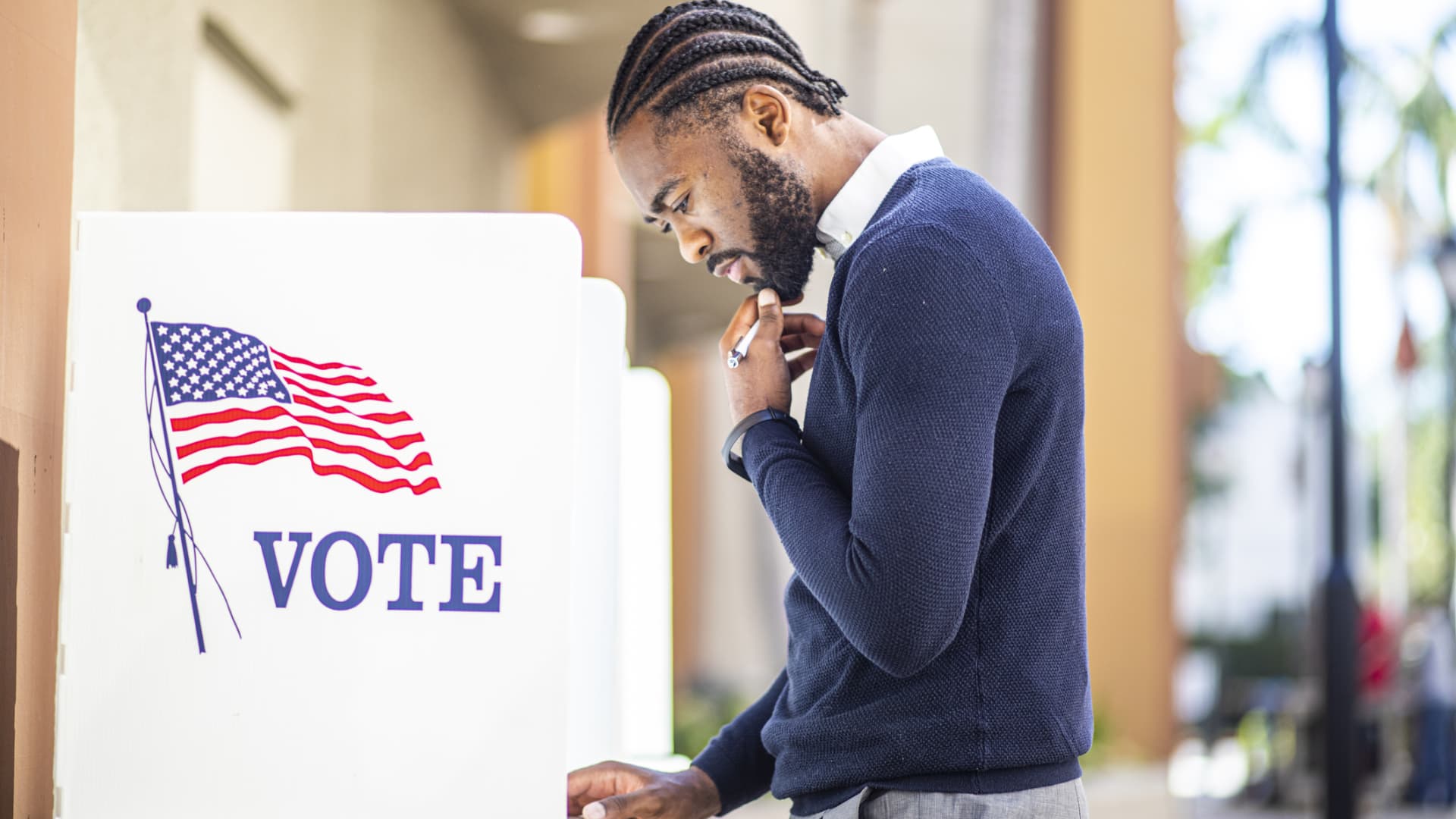

Stock market volatility could increase in the run-up to the U.S. presidential election, strategists predict. That’s making some investors more anxious about what the election outcome could mean for their money.
In a survey by the American Psychiatric Association this spring, 73% of people said they felt anxious about the election. Other polls show investors nervous about the election are more inclined to move their investments or pull money out of the market, which could derail long-term financial plans.
“When we become emotionally charged, we become rationally challenged,” said financial psychologist Brad Klontz, a member of the CNBC Global Financial Wellness Advisory Board. “In times of uncertainty, which is typical around election periods, we are really prone to just absolutely destroy ourselves financially.”
Here are four steps that Klontz and other experts recommend to keep election jitters in check and help emotionproof your portfolio:
Picture your goal
If you’re feeling anxious about how the election is going to impact your wallet, take a step back and evaluate your goals. If you’re invested for long-term goals, picture what those are and stay focused.
“If your goal is to pay off your mortgage, or buy a car, put a picture on your front door, put it in your office, that’s your vision, that’s your goal that you’re working for,” said Erika Wasserman, a financial therapist in Miami. “The election that’s going to happen is going to happen. Your input isn’t going to change that one way or the other, for the most part.”
Dig deep to understand what is really concerning you. Keep a journal to write down your worries and see if there a common theme that surfaces.
Ask yourself: Is your worry fact, or fiction?
Sdi Productions | E+ | Getty Images
Analyze your fears to determine their risk. It’s easy to come up with “what if” scenarios, but the chances of those worries becoming reality are often smaller than imagined.
The fact is the presidential election is months away and until then, the outcome is unclear. House and Senate races will also play a large role in actual policy changes.
Plus, political promises don’t often become reality. Playing on emotions is a tactic used by campaigns to drum up support.
“We’re very emotional, and so that’s actually the biggest risk we’re facing right now,” said Klontz, who is a Boulder, Colorado-based psychologist and certified financial planner. He notes that the stock market tends to be volatile before the election and goes up after the race is determined, regardless of political party.
“Because all of a sudden things aren’t quite so uncertain, and so everyone relaxes a little bit,” he said.
Once you have your worries written down, go back and put a true or false next to it, “Then you can deal with the stuff that’s the truth, and the stuff that’s fiction put aside for another day until that really comes about,” Wasserman said.
Revisit your goals and investments
Now is a good time to use your worries to drive action by revisiting your goals and evaluating your portfolio. With the market fairly stable and the economy healthy, consider your time horizon and the diversity of your investments.
“That’s a really good thing to do, no matter what, every couple years,” said Megan McCoy, a financial therapist and professor of financial planning at Kansas State University.
You may want to consult with a tax and financial professional to make sure you are putting your money in the right type of accounts, understanding that there is uncertainty.
“What is the wisest decision you can make with the information you have now, because we really can’t predict the future.” Klontz said.
‘Spread out the all the stressors’
Some people will let their worries spiral, thinking the outcome of the election could cause the stock market to crash, inflation to worsen and put their current job or new employment opportunities in jeopardy. McCoy recommends using that stress to take action over what you can control.
“Spread out all the stressors, all the worries, maybe write them all down to get to the actual root of your fears,” she said.
Then map out the steps that are in your control that you plan to take to address these issues, she added, “use that as an outlet for the stress and anxiety.”


Personal Finance
Next-Generation Retirement Planning: Managing Longevity Risk and Variable Income Streams


S&P 500 September Outlook: Tech Rally Holds Index at 7,600

India Unveils ‘Saptadhara’ Reform Agenda Targeting Technology, Youth Skilling, and Growth

S&P 500 Outperforms Amid Strong Corporate Earnings as Treasury Yields Cap Equity Multiples

Armanino adds Strategic Accounting Outsourced Solutions

New 2023 K-1 instructions stir the CAMT pot for partnerships and corporations

Tax Strategy: Employee Retention Credit update
-

 Stock News1 week ago
Nvidia Q2 FY2027 Earnings beats Wall Street Expectation with Record $96.2 Billion Revenue
-

 Technology6 days ago
AI Infrastructure Boom Hits Physical Limits: Power, Financing, and Supply Chain Strain
-

 Economics4 days ago
U.S.- Canada Trade Talks Collapse; Carney Says Retaliatory Tariffs Begin September 8
-

 Technology4 days ago
Flock Cameras and the Future of Public Security
-

 Insights2 hours ago
Climate Resilience and Offshore Wind and Land Restoration Milestones
-
 Stock News57 minutes ago
S&P 500 September Outlook: Tech Rally Holds Index at 7,600
-
 Accounting2 hours ago
Mandatory ESG Reporting Standards Demand Standardized Non-Financial Audit Trails
-
 Finance2 hours ago
S&P 500 Outperforms Amid Strong Corporate Earnings as Treasury Yields Cap Equity Multiples