
Personal Finance
International students rethinking U.S. college plans amid visa policy shift

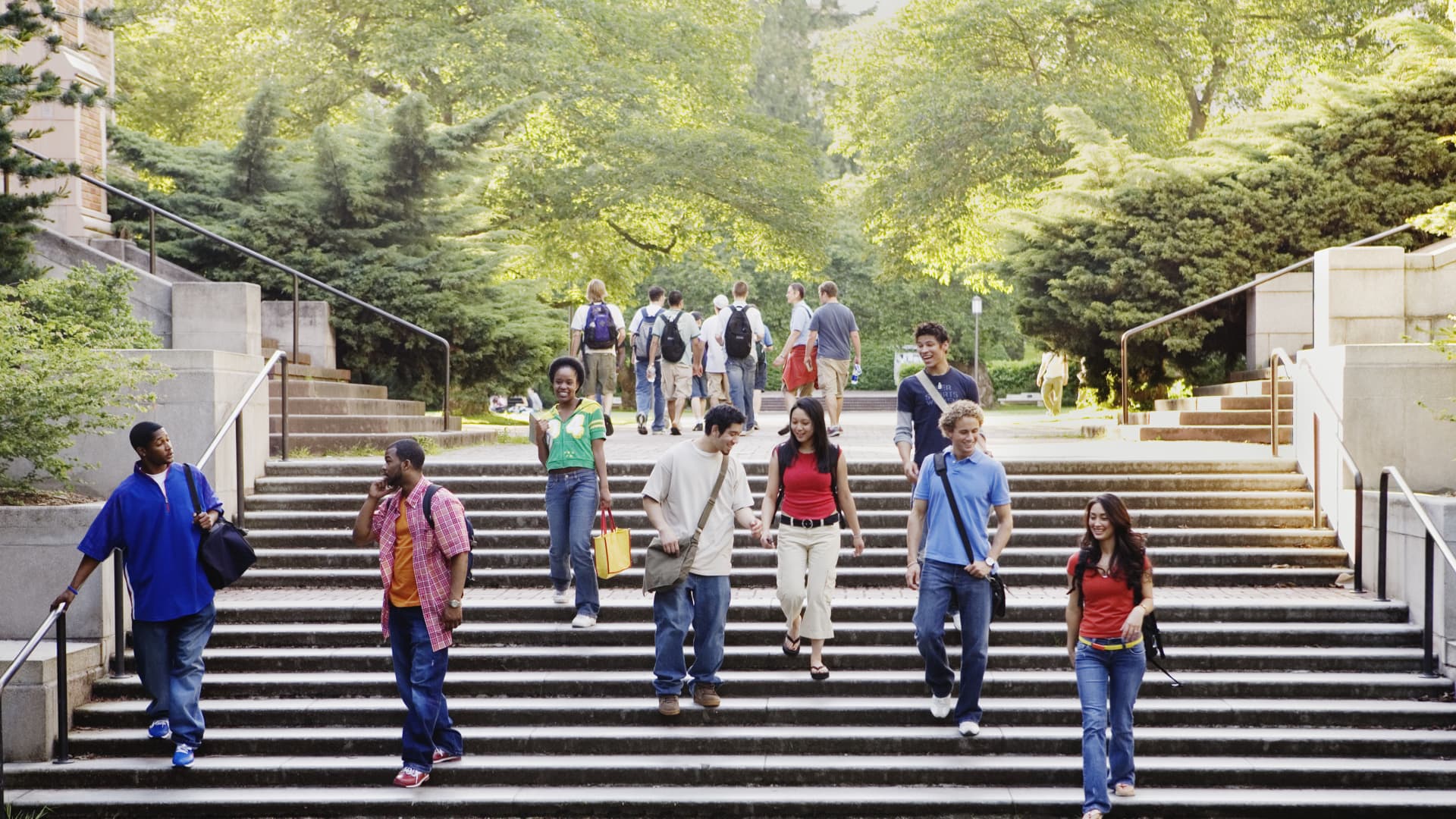

The Department of Homeland Security restored the legal status of thousands of international students who had their visas revoked, according to reports Friday.
College experts largely applauded the move, which was prompted by court challenges and lawsuits filed by affected students and their lawyers, as a win for students and higher education overall, but the gains could be short lived.
The Trump Administration’s sudden change in policy, however, is causing some international college applicants to rethink their plans for next year and whether they want to study in the U.S. at all, college experts now say.
More from Personal Finance:
Is college still worth it? It is for most, but not all
How to maximize your college financial aid offer
What student loan forgiveness opportunities remain under Trump
“Overall, this is a very positive development,” according to Robert Franek, editor-in-chief of The Princeton Review. It provides needed clarity for international students who have until Thursday, May 1, which is National College Decision Day — the deadline most schools set to choose which institution they will attend in the fall, he said.
For colleges and universities, “international enrollment is an incredible value in the classroom,” Franek said. To that end, college administrators remain highly focused on “having students with different experiences and a number of different voices represented,” he said.
But international student enrollment is also an important source of revenue for U.S. colleges and universities, which is why schools need a contingent of foreign students, who typically pay full tuition, Franek added. This financial reliance makes them a critical component of the higher education system, experts say.
However, because of the U.S. government’s recent changes to the student visa policy, which deactivated and then reactivated the immigration status of thousands of students, “there are a number of international students admitted to great colleges and really skeptical about whether they will come,” Franek said of plans for the fall of 2025.
‘Uncertainty is not good for long-term planning’
One private college consultant, who works with a large share of families from abroad, said he has already seen a shift in priorities among college-bound clients, fueled by nervousness about further policy changes.
“There’s so much uncertainty and uncertainty is not good for long-term planning,” said Hafeez Lakhani, founder and president of Lakhani Coaching in New York.
Lakhani explained that he is working with families to “evaluate the risk” ahead of the enrollment deadline. Other high schoolers a year or more away from applying to college are rethinking their plans altogether, he said.
“We are already seeing some international students showing more interest in Canada and the U.K. — and it’s to those other countries’ benefit in terms of recruiting talent and tuition dollars,” Lakhani said.
International students are ‘economically advantageous’
There are more than 1.1 million international undergraduate and graduate students in the U.S., mostly from India and China, making up slightly less than 6% of the total U.S. higher education population, according to the latest Open Doors data, released by the U.S. Department of State and the Institute of International Education.
In the 2023-24 academic year, the U.S. hosted a record number of students from abroad, marking a 7% increase from the previous year. India surpassed China as the top sending country, with India sending more than 330,000 students.
Altogether, international student enrollment contributed $43.8 billion to the U.S. economy in 2023-24, according to a separate report by NAFSA: Association of International Educators.
“Foreign students present a unique challenge for the Trump administration’s hardline immigration policy efforts,” said Christopher Rim, president and CEO of college consulting firm Command Education.
“On the one hand, international students account for a large portion of foreign residents in the U.S., and some of the most politically outspoken,” Rims said. “However, they are among the most economically advantageous, as well.”
But according to Rim, who also works with clients all over the world, the U.S. is still the main choice among college-bound students applying to top-ranked institutions, and that is unlikely to change overnight.
“I was in Hong Kong last week speaking to a packed audience of hundreds of students and parents about Ivy League and top-tier U.S. college admissions for expat and international families,” Rim said Monday.
“Despite global shifts, distinct and affluent families remain deeply eager to send their children to the United States for higher education,” he explained. “They continue to recognize the U.S. as home to the world’s leading universities.”

Personal Finance
Next-Generation Retirement Planning: Managing Longevity Risk and Variable Income Streams


U.S.- Canada Trade Talks Collapse; Carney Says Retaliatory Tariffs Begin September 8

Flock Cameras and the Future of Public Security

AI Infrastructure Boom Hits Physical Limits: Power, Financing, and Supply Chain Strain

Armanino adds Strategic Accounting Outsourced Solutions

New 2023 K-1 instructions stir the CAMT pot for partnerships and corporations

Tax Strategy: Employee Retention Credit update
-

 Stock News1 week ago
Nvidia Earnings Preview: What Wall Street Expects From the AI Bellwether’s Q2 Report
-

 Accounting1 week ago
SEC’s Semiannual Reporting Proposal Faces Investor Pushback: What CFOs Need to Know
-

 Stock News1 week ago
Nvidia Q2 FY2027 Earnings beats Wall Street Expectation with Record $96.2 Billion Revenue
-

 Finance1 week ago
Treasury Bond Volatility Forces Bessent to Double Debt Buyback Size as Yields Swing
-
 Technology5 days ago
AI Infrastructure Boom Hits Physical Limits: Power, Financing, and Supply Chain Strain
-
 Technology3 days ago
Flock Cameras and the Future of Public Security
-
 Economics3 days ago
U.S.- Canada Trade Talks Collapse; Carney Says Retaliatory Tariffs Begin September 8