
Personal Finance
What CFPB cuts could mean for consumers

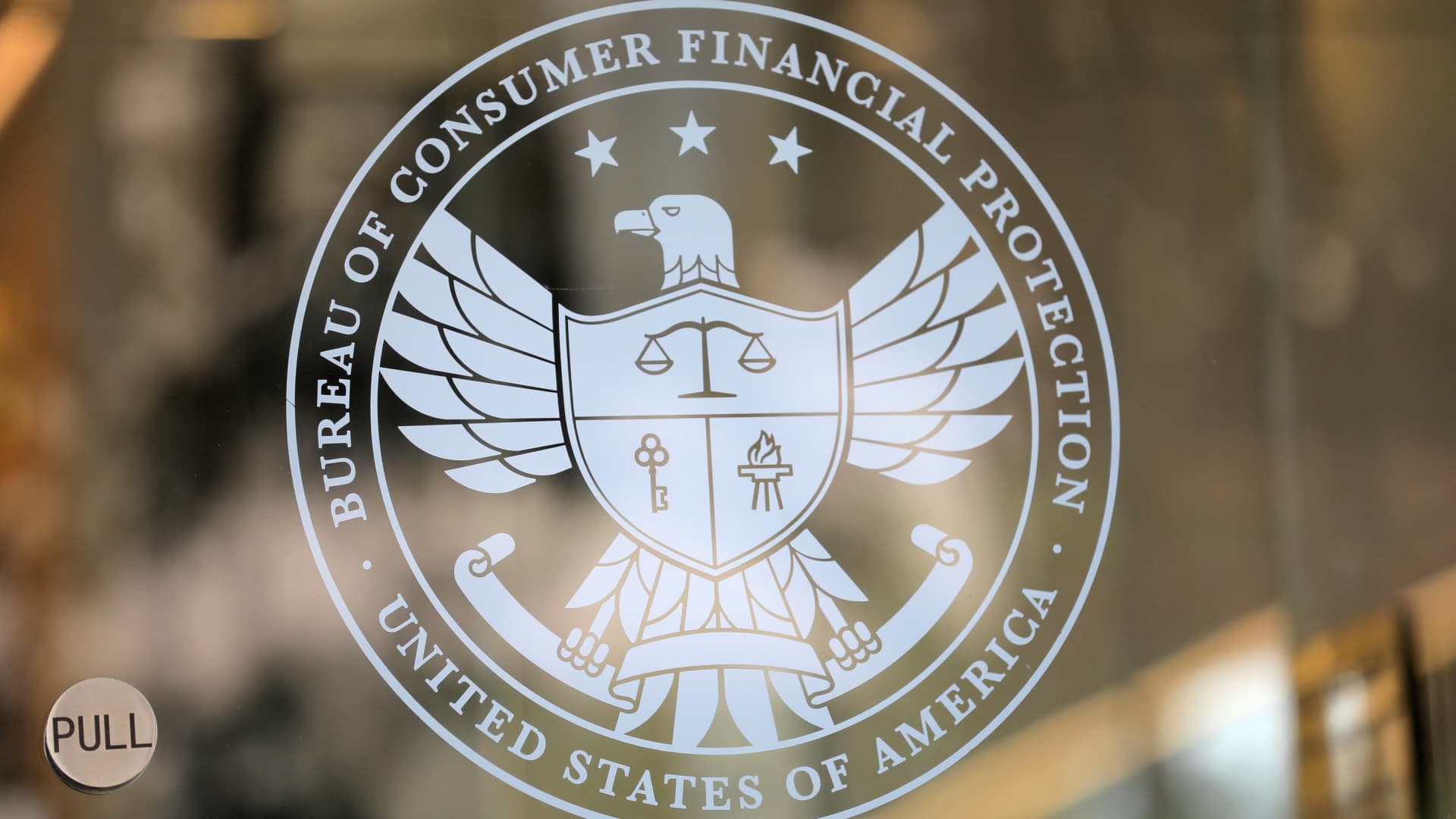
The entrance to the Consumer Financial Protection Bureau (CFPB) headquarters is seen during a protest on Feb. 10, 2025 in Washington, DC.
Anna Moneymaker | Getty Images
The Consumer Financial Protection Bureau was one of the early targets of the Trump administration’s attempts to dramatically reduce government spending. The bureau’s work was first suspended in early February, and legal wrangling has continued since — which experts say has created an uncertain future for many CFPB efforts to protect consumers.
A federal judge scheduled a two-day hearing, starting Tuesday, in a case about the Trump administration’s effort to dismantle the CFPB. In March, U.S. District Judge Amy Berman Jackson blocked the administration from firing 1,500 of the bureau’s 1,700 employees, and struck down a stop-work order targeting the bureau.
Recently released court records include declarations from CFPB staff stating that the firings will hobble the agency’s ability to carry out tasks including supervising banks, maintaining the consumer complaint database and providing oversight and enforcement of mortgage and credit fair lending laws.
The hearing aims to help determine how many employees the agency needs to fulfill what it is required to by law.
Mark Paoletta, acting chief legal officer of the CFPB, said in a court filing that the agency should be pared back to about a 200-person staff that can “fulfill its statutory duties and better aligns with the new leadership’s priorities and management philosophy.”
CFPB could be ‘a vastly different animal’ after cuts
The Trump administration’s attempts to hobble to CFPB have created uncertainty about the agency’s work for consumers and companies.
“The biggest challenge for innovators in financial services is the lack of clarity regarding the regulatory structures in which they have to abide and live,” said Phil Goldfeder, CEO of the American Fintech Council, a standards-based trade association.
The CFPB was created in the aftermath of the financial crisis to establish a single agency responsible for enforcing consumer protection laws. It took over the supervision of consumer products from other bank regulators.
Those won’t be picking up work the CFPB had been doing; it “just won’t be done, or will be done much less,” said Ian Katz, a managing director at Capital Alpha Partners, a policy research and political forecasting firm.
Supporters of the Consumer Financial Protection Bureau (CFPB) rally after Acting Consumer Financial Protection Bureau (CFPB) Director Russell Vought told all of the agency’s staff to stay away from the office and do no work, outside the CFPB in Washington, U.S., Feb. 10, 2025.
Craig Hudson | Reuters
In recent years, the CFPB has moved to cap bank overdraft fees, regulate payment apps and resolve consumer complaints. Now many of those efforts have been overturned or left in doubt.
Under the Trump administration, the bureau has also been dropping lawsuits it previously filed. These include a case against National Collegiate Student Loan Trusts related to improper debt collection practices against private student loan borrowers, and a suit against Early Warning Services, JPMorgan Chase, Bank of America and Wells Fargo over Zelle fraud.
“There is a risk that this could go badly,” said Katz. “It’s not like they’re taking a 20% cut of the personnel or a 15% and people say, ‘Well, we might lose a few things here and there, but basically, we’ll be okay.’ It will be a vastly different animal and I think there’s no avoiding that.”
The CFPB did not respond to requests for comment.
Here’s what experts expect could happen with some CFPB rules and programs.
Cap on bank overdraft fees
Bank overdraft fee caps were scheduled to go into effect in October 2025, but Congress is now in the process of overturning the rule. Analysts expect banks to compete on keeping fees low. “I don’t think they’re going to immediately rush to raise them because of that competitive aspect,” said Katz.
Payment app regulations

The CFPB had also moved to require that nonbank firms offering financial services like payments and wallet apps follow the same regulations as banks. That is no longer going to happen — lawmakers voted to overturn the rule and President Donald Trump has indicated he will sign it.
As a result, “some payment apps are going to be supervised, and other ones won’t,” said Adam Rust, director of financial services for the Consumer Federation of America.
Zelle, which is a bank product, will still fall under bank regulations, he said, but fintech firms such as Paypal, Venmo and Block’s Cash App, will be “be able to evade that” oversight.
Consumer complaint database
It’s also unclear how effective the CFPB will be at resolving consumer conflicts. The CFPB is required by law to maintain a database of the consumer complaints and receives an estimated 25,000 complaints each week.
In 2023, the CFPB received more than 1.6 million consumer complaints, according to its annual report.
The complaints are shared with the companies for a response, but consumer advocates worry without strong enforcement behind it, the database will lose its effectiveness.
“If there is a complaint and it’s received, that doesn’t mean that there will be a response, it will just potentially sit there in the queue,” Rust said. “So if you’re a consumer, you thought you did what you should, to seek someone to help find a remedy. But in fact, nothing’s happening.”
State attorneys general from 23 states have come out against the administration’s efforts to defund the bureau. In a court filing in February, they said that referrals of consumer complaints to the CFPB have been left in limbo, communications about enforcement investigations are lacking and direct inquires from the AG offices to the agency have gone unanswered.
SIGN UP: Money 101 is an 8-week learning course on financial freedom, delivered weekly to your inbox. Sign up here. It is also available in Spanish.


Personal Finance
Next-Generation Retirement Planning: Managing Longevity Risk and Variable Income Streams


U.S.- Canada Trade Talks Collapse; Carney Says Retaliatory Tariffs Begin September 8

Flock Cameras and the Future of Public Security

AI Infrastructure Boom Hits Physical Limits: Power, Financing, and Supply Chain Strain

Armanino adds Strategic Accounting Outsourced Solutions

New 2023 K-1 instructions stir the CAMT pot for partnerships and corporations

Tax Strategy: Employee Retention Credit update
-

 Stock News1 week ago
Nvidia Earnings Preview: What Wall Street Expects From the AI Bellwether’s Q2 Report
-

 Accounting1 week ago
SEC’s Semiannual Reporting Proposal Faces Investor Pushback: What CFOs Need to Know
-

 Stock News1 week ago
Nvidia Q2 FY2027 Earnings beats Wall Street Expectation with Record $96.2 Billion Revenue
-

 Finance1 week ago
Treasury Bond Volatility Forces Bessent to Double Debt Buyback Size as Yields Swing
-
 Technology5 days ago
AI Infrastructure Boom Hits Physical Limits: Power, Financing, and Supply Chain Strain
-
 Technology3 days ago
Flock Cameras and the Future of Public Security
-
 Economics3 days ago
U.S.- Canada Trade Talks Collapse; Carney Says Retaliatory Tariffs Begin September 8