
Accounting
IRS commissioner Danny Werfel defends budget as tax season concludes

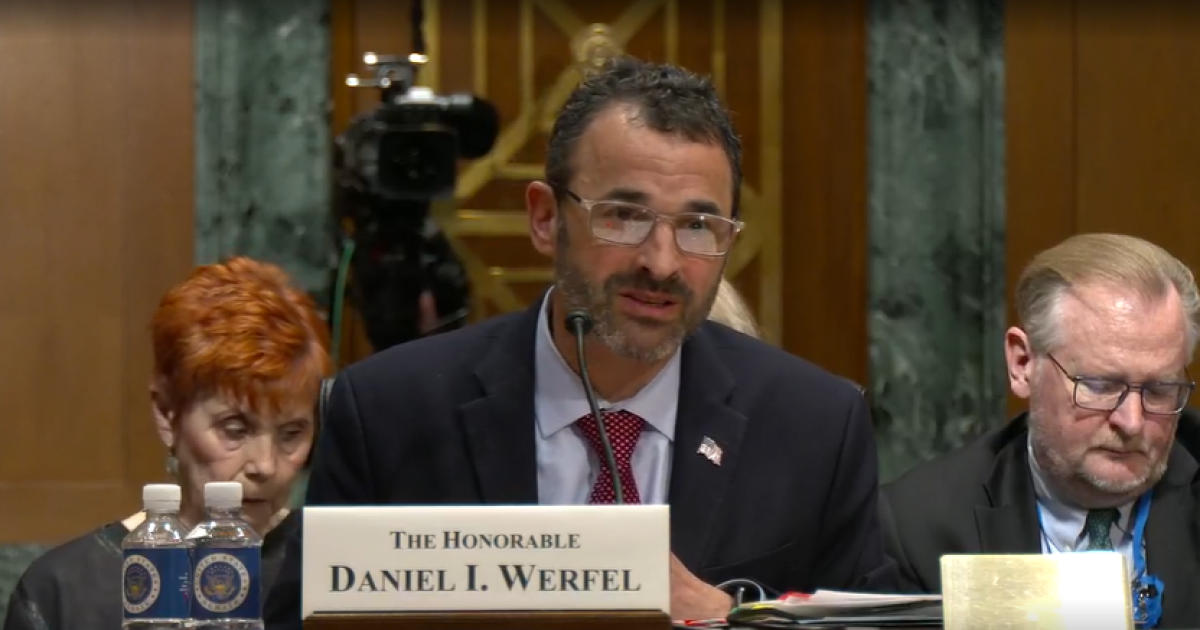
Internal Revenue Service commissioner Danny Werfel testified Tuesday at a hearing of the Senate Finance Committee to discuss this past tax season and the proposed budget for carrying out the agency’s future plans.
“I’m pleased to report the 2024 tax season opened on schedule on January 29, and we’ve seen a historic filing season unfolding since then,” Werfel said in his opening statement. “Through March 30, the IRS received more than 90.3 million individual income tax returns and issued more than 60.8 million refunds for more than $185.6 billion. Going into the final days of tax season, the Inflation Reduction Act funding has enabled the IRS to have one of its best filing seasons ever in terms of customer service.”
He noted that wait times and the level of service on the IRS’s main phone lines have improved, and the agency has dramatically expanded service in its walk-in sites, increasing hours and serving more taxpayers. However, one lawmaker grumbled that even if the IRS employees are answering the phone faster, that doesn’t mean constituents are getting the help they need.

Werfel noted that the new and expanded tools on IRS.gov are getting heavy use, and increased funding from the Inflation Reduction Act of 2022 has enabled the IRS to begin making inroads in addressing the tax gap and tax evasion.
“Our compliance work includes focusing on delinquency and non-filing among high-income individuals, as well as leveraging artificial intelligence and hiring subject matter experts to find tax evasion among our largest and most complex partnerships and corporations,” Werfel said.
He asked for continued funding for the IRS after Congress rescinded approximately $20 billion of the $80 billion that was supposed to go to the IRS under the Inflation Reduction Act after a deal last year to avert a debt limit default.
The Biden administration’s fiscal year 2025 budget proposal would restore and maintain the full IRA investment in the IRS through 2034 to avoid funding cliffs that would dramatically degrade ability in many different areas, including taxpayer services beginning in 2026. Werfel argued that sustained funding would allow the agency to build on the successes of the 2024 filing season and make further phone service improvements. The IRS would also be able to provide additional digital tools for taxpayers, such as the
Senate Finance Committee chairman Ron Wyden, D-Oregon, praised the Direct File pilot. “Anybody who denies that the Direct File pilot was a huge success must be living in another universe,” he said during his opening statement. “It was open to a fairly small percentage of taxpayers, but the reviews it got from its initial users were overwhelmingly positive. Frankly, it seems like a whole lot of people were pleasantly stunned that a federal agency — particularly one as frequently vilified as the IRS — was able to build a helpful website that works. The tens of thousands of taxpayers who used Direct File this year collectively saved millions on fees they would have paid to one of the tax software giants. The website was user-friendly. It was quick and easy to use. It didn’t hassle users with upcharges for add-on services they didn’t need.”
“In short, with Direct File, the IRS built a good tool that people like because it saves Americans time and money,” Wyden continued. “No surprise then that the people who oppose it are absolutely furious and doing everything they can to stop it from expanding. The detractors said it didn’t attract enough users, but tens of thousands of new users came in over the last week, and the IRS hit its goal of 100,000 taxpayers using the system. There’s no doubt this will become more popular every year.”
The ranking Republican on the committee, Sen. Mike Crapo, R-Idaho, criticized the Direct File program, and a number of other Republicans questioned why the IRS didn’t use the “off-the-shelf” tax prep software instead of developing its own program.
“An emblematic example of the ‘just spend more, no questions asked’ approach is the Direct File program,” Crapo said in his opening remarks. “Despite there already being multiple free filing programs offered by the IRS, the agency embarked on a redundant government-run tax preparation project, complete with all attendant inefficiencies and conflicts-of-interest.”
He pointed to a
“In contrast, the federal government spends less than $5 million a year to have two to three million taxpayers served in one of its free income tax preparation programs,” said Crapo. “Were the IRS to use this year’s Direct File spending to pay third-party providers to prepare and file returns instead, literally hundreds of times the number of taxpayers could file for free. The IRS spending hundreds of millions of its finite funding to simply ‘test’ the utility of doing something that can already be done more efficiently, with better outcomes and without very real conflicts, while simultaneously pleading for more funding calls for more oversight.”
Werfel defended the usefulness of the program, and he received support from Democrats on the committee, including Sen. Elizabeth Warren, D-Massachusetts, who has advocated for a free IRS tax-filing program for years. Werfel noted that tax season isn’t yet finished in Massachusetts because taxpayers receive an extra two days due to the Patriots Day holiday.
“Thousands of taxpayers already have successfully used the system, and users are giving the new option positive reviews,” said Werfel. “These early results from Direct File have shown taxpayers like the ease and convenience of the tool. It is important to note that a core part of the IRS’s mission is to meet taxpayers where they are and ensure they have options to fulfill their tax obligations that meet their needs. I want to emphasize that taxpayers will always have choices for how they prepare their taxes. They can file using a trusted tax professional, our Free File program, tax software, or free tax preparation services such as the Volunteer Income Tax Assistance and Tax Counseling for the Elderly programs, or they can file a paper return. We saw an extremely successful filing season involving all of those options. We continue to emphasize that taxpayers should use the filing option that works best for them and their personal financial situation. Direct File is designed to be an additional option for some taxpayers this year that is simple, secure, accurate, and free.”
He pointed out that there was a surge of use of the commercial tax software offered by the Free File members because of the additional publicity about Direct File.





U.S.- Canada Trade Talks Collapse; Carney Says Retaliatory Tariffs Begin September 8

Flock Cameras and the Future of Public Security

AI Infrastructure Boom Hits Physical Limits: Power, Financing, and Supply Chain Strain

Armanino adds Strategic Accounting Outsourced Solutions

New 2023 K-1 instructions stir the CAMT pot for partnerships and corporations

Tax Strategy: Employee Retention Credit update
-

 Stock News1 week ago
Nvidia Q2 FY2027 Earnings beats Wall Street Expectation with Record $96.2 Billion Revenue
-
 Technology5 days ago
AI Infrastructure Boom Hits Physical Limits: Power, Financing, and Supply Chain Strain
-
 Technology3 days ago
Flock Cameras and the Future of Public Security
-
 Economics3 days ago
U.S.- Canada Trade Talks Collapse; Carney Says Retaliatory Tariffs Begin September 8