
Personal Finance
Kamala Harris’ tax records reveal ‘fairly basic’ approach, experts say

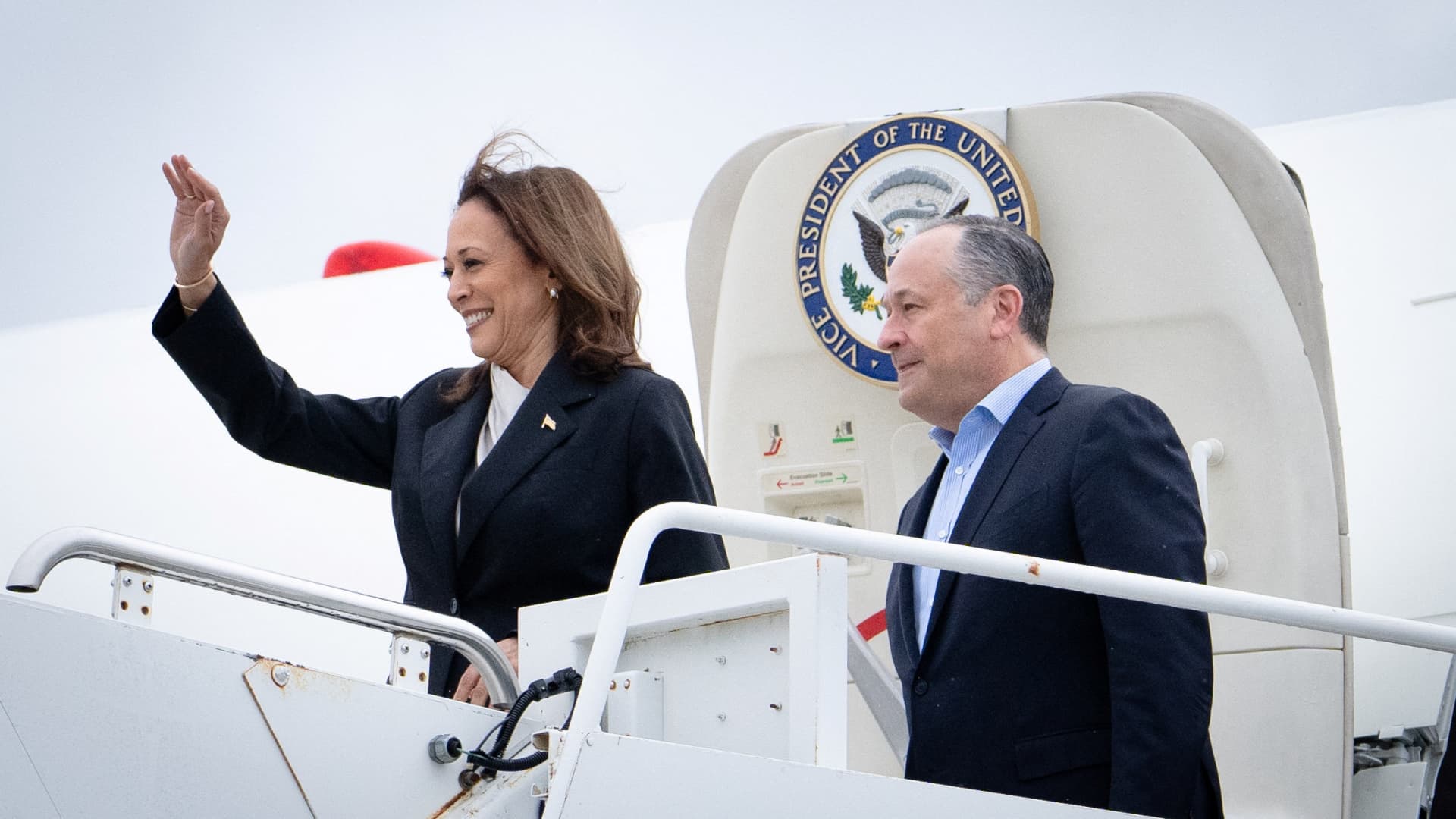
U.S. Vice President Kamala Harris and second gentleman Douglas Emhoff descend from Air Force Two in Wilmington, DE, U.S., July 22, 2024.
Erin Schaff | Via Reuters
Vice President Kamala Harris‘ personal financial records are under fresh scrutiny now that she is running for the highest office in the United States.
Experts say recent tax filings show she and her husband, Second Gentleman Douglas Emhoff, have largely kept their finances simple during her years as vice president.
“Her returns are fairly basic,” said Craig Hausz, a certified financial planner and certified public accountant, who is CEO and managing partner at CMH Advisors in Dallas.
Yet that approach may have cost the couple as they left unclaimed tax savings through additional deductions, as well as other missed financial strategies.
The financial disclosures may raise few red flags in her career in public office. Unlike most other Americans, Harris and Emhoff can afford to avoid to miss those savings.
More from Personal Finance:
What the presidential election could mean for Social Security and Medicare
Harris: ‘Building up’ middle class is a defining goal. Here’s how she may do it
What Kamala Harris’ latest financial disclosure reveals about her investments
“Even if she doesn’t win president, as an ex vice president, she’ll always have lots of money coming in,” said Carolyn McClanahan, a CFP and founder of Life Planning Partners in Jacksonville, Florida.
“They will never lack for money, so they don’t really need to worry too much about how [tax] efficient they are, or how much they save,” said McClanahan, who is also a member of the CNBC FA Council.
Harris’ office did not respond to a request for comment by press time.
The couple’s recent tax filings mirror millions of other Americans’, according to Boston-based CFP and enrolled agent Catherine Valega, founder of Green Bee Advisory.
“They took a conservative approach and that’s the right thing to do,” Valega said. “You don’t see them trying to do anything super creative here to reduce their taxes.”
What tax savings Harris may have missed
Overall, Harris’ return could have been more aggressive to reduce tax liability, experts say.
“Somebody in her position could probably take more deductions,” particularly against her book income, Hausz explained.
To that point, Harris reported $7,272 in gross book income in 2023 with a single business deduction of $1,273 for “commissions and fees.” By comparison, her 2021 book earnings were $452,664 with the same deduction worth $65,951.
“If I were advising her, I would say ‘let’s keep this as uncomplicated as possible, so there’s no talking points,'” Hausz said. “She’s done a very good job of that.”
‘A little too conservative’ with cash
Another possible missed opportunity is Harris’ cash allocations, with $50,603 in bank account interest reported for 2023, up from $6,054 in 2022, experts say.
Bank account yields have been higher after a series of interest rate hikes from the Federal Reserve. But Harris’ jump in interest could mean they have significant cash allocations, which may be “a little too conservative,” Hausz said.
“They’ve missed out on growth in the stock market,” he added.
However, the cash allocation could be a good fit, depending on their short-term financial goals and other investments, Valega said.

Yields will fall once the Federal Reserve begins cutting interest rates again. In the meantime, earning $50,000 on Federal Insurance Deposit Corporation-protected cash is a “pretty good deal,” she said.
It is possible Harris and Emhoff may not be getting the best returns on their cash, depending on whether that money is locked up in certificates of deposit, or sitting in a lower-yield savings account, according to McClanahan.
Yet having lots of cash on hand may give them the financial flexibility they need, particularly as Emhoff took a big pay cut to become Second Gentleman, McClanahan said.
“It’s good to have lots of cash when you’re a politician, so you could stay out of trouble with meeting your expenses,” McClanahan said.
More money toward retirement
Harris could also put more of her income in tax-deferred retirement accounts to boost her tax savings.
“Even though she could have put money in retirement plans, she didn’t need to,” McClanahan said.
Hopefully, Harris is maxing out a Thrift Savings Plan, a retirement savings and investment plan for federal employees, McClanahan said.
In addition, she could contribute to a simplified employee pension plan, or SEP, a variation of individual retirement accounts, to further boost her retirement savings, she said.
While those contributions may help Harris save on taxes, she already has retirement security through pensions from her time as vice president, senator and attorney general of California, McClanahan noted. In addition, she stands to receive Social Security benefits based on her payroll tax contributions to the program.

Personal Finance
Next-Generation Retirement Planning: Managing Longevity Risk and Variable Income Streams


S&P 500 September Outlook: Tech Rally Holds Index at 7,600

India Unveils ‘Saptadhara’ Reform Agenda Targeting Technology, Youth Skilling, and Growth

S&P 500 Outperforms Amid Strong Corporate Earnings as Treasury Yields Cap Equity Multiples

Armanino adds Strategic Accounting Outsourced Solutions

New 2023 K-1 instructions stir the CAMT pot for partnerships and corporations

Tax Strategy: Employee Retention Credit update
-

 Stock News1 week ago
Nvidia Q2 FY2027 Earnings beats Wall Street Expectation with Record $96.2 Billion Revenue
-

 Technology6 days ago
AI Infrastructure Boom Hits Physical Limits: Power, Financing, and Supply Chain Strain
-

 Economics4 days ago
U.S.- Canada Trade Talks Collapse; Carney Says Retaliatory Tariffs Begin September 8
-

 Technology4 days ago
Flock Cameras and the Future of Public Security
-

 Insights2 hours ago
Climate Resilience and Offshore Wind and Land Restoration Milestones
-
 Stock News55 minutes ago
S&P 500 September Outlook: Tech Rally Holds Index at 7,600
-

 Accounting2 hours ago
Mandatory ESG Reporting Standards Demand Standardized Non-Financial Audit Trails
-
 Finance2 hours ago
S&P 500 Outperforms Amid Strong Corporate Earnings as Treasury Yields Cap Equity Multiples