
Finance
Ray Dalio says the Fed faces a tough balancing act

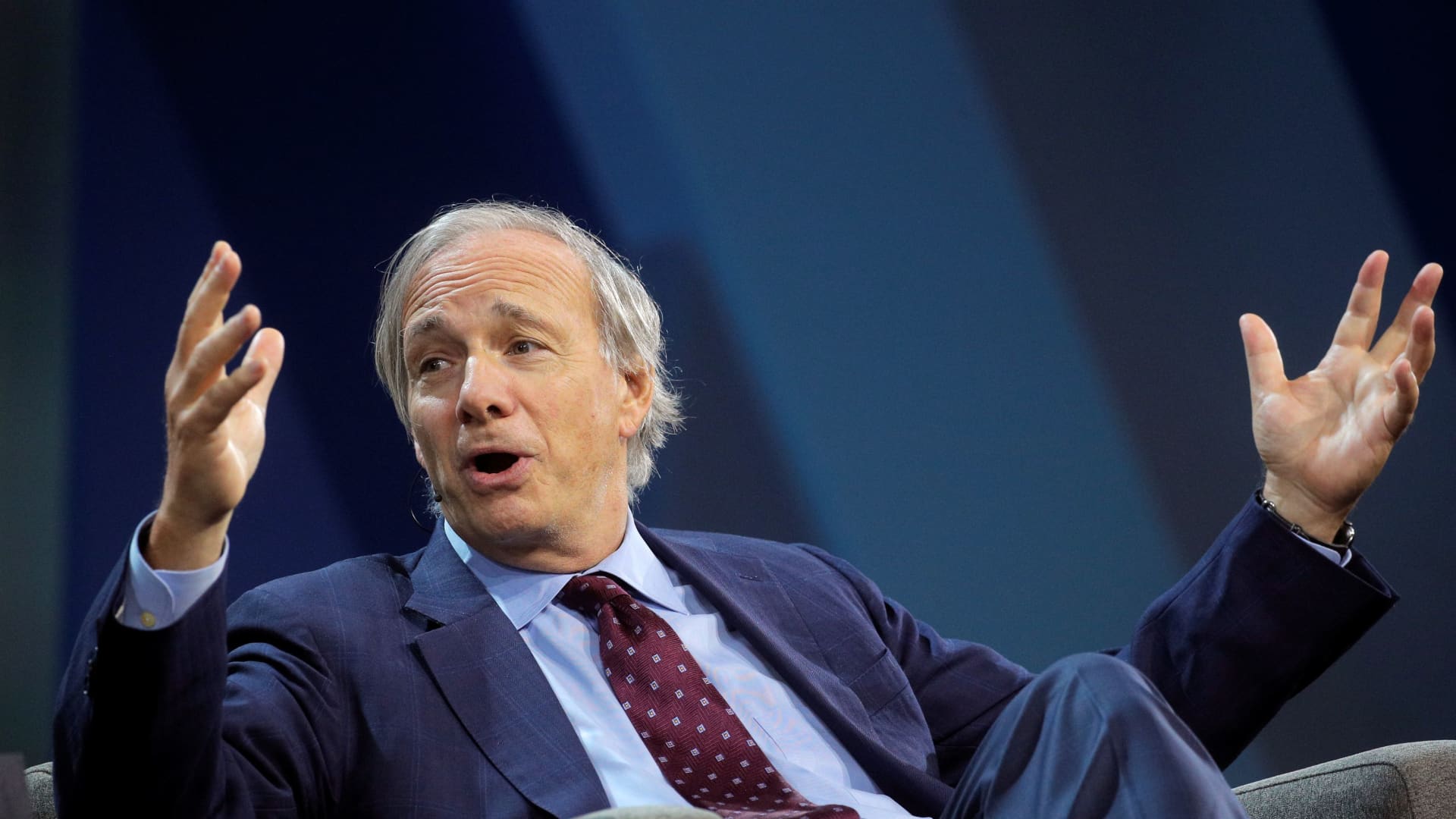
Ray Dalio, Bridgewater Associates co-chairman and co-chief investment officer, speaks during the Skybridge Capital SALT New York 2021 conference.
Brendan McDermid | Reuters
As the U.S. Federal Reserve implemented its first interest rate cut since the early Covid pandemic, billionaire investor Ray Dalio flagged that the U.S. economy still faces an “enormous amount of debt.”
The central bank’s decision reduces the federal funds rate to a range of 4.75% to 5%. The rate not only determines short-term borrowing costs for banks, but also impacts various consumer products like mortgages, auto loans and credit cards.
“The challenge of the Federal Reserve is to keep interest rates high enough that they’re good for the creditor, while keeping them not so high that they’re problematic for the debtor,” the founder of Bridgewater Associates told CNBC’s “Squawk Box Asia” on Thursday, noting the difficulty of this “balancing act.”
The U.S. Treasury Department recently reported that the government has spent more than $1 trillion this year on interest payments for its $35.3 trillion national debt. This increase in debt service costs also coincided with a significant rise in the U.S. budget deficit in August, which is approaching $2 trillion for the year.
On Wednesday, Dalio listed debt, money and the economic cycle as one of the top five forces influencing the global economy. Expanding on his point Thursday, he said he was generally interested in “the enormous amount of debt that is being created by governments and monetized by central banks. Those magnitudes have never existed in my lifetime.”
Governments around the world took on record debt burdens during the pandemic to finance stimulus packages and other economic measures to prevent a collapse.
When asked about his outlook and whether he sees a looming credit event, Dalio responded he did not.
“I see a big depreciation in the value of that debt through a combination of artificial low real rates, so you won’t be compensated,” he said.
While the economy “is in relative equilibrium,” Dalio noted there’s an “enormous” amount of debt that needs to be rolled over and also sold, new debt created by the government.”

Dalio’s concern is that neither former President Donald Trump or Vice President Kamala Harris will prioritize debt sustainability, meaning these pressures are unlikely to alleviate regardless of who wins the upcoming presidential election.
“I think as time goes on, the path will be increasingly toward monetizing that debt, following a path very similar to Japan,” Dalio posited, pointing to how the Asian nation has kept interest rates artificially low, which had depreciated the Japanese yen and lowered the value of Japanese bonds.
“The value of a Japanese bond has gone down by 90% so that there’s a tremendous tax through artificially giving you a lower yield each year,” he said.
For years, Japan’s central bank stuck to its negative rates regime as it embarked on one of the most aggressive monetary easing exercises in the world. The country’s central bank only recently lifted interest rates in March this year.

Additionally, when markets do not have enough buyers to take on the supply of debt, there could be a situation where interest rates have to go up or the Fed may have to step in and buy, which Dalio reckons they would.
“I would view [the] intervention of the Fed as a very significant bad event,” the billionaire said. Debt oversupply also raises questions of how it gets paid.
“If we were in hard money terms, then you would have a credit event. But in fiat monetary terms, you have the purchases of that debt by the central banks, monetizing the debt,” he said.
In that scenario, Dalio expects that the markets would also see all currencies go down as they’re all relative.
“So I think you’d see an environment very similar to the 1970’s environment, or the 1930 to ’45 type of period,” he said.
For his own portfolio, Dalio asserts that he does not like debt assets: “so if I’m going to take a tilt, it would be underweight in debt assets such as bonds,” he said.





Treasury Bond Volatility Forces Bessent to Double Debt Buyback Size as Yields Swing

Nvidia Earnings Preview: What Wall Street Expects From the AI Bellwether’s Q2 Report

SEC’s Semiannual Reporting Proposal Faces Investor Pushback: What CFOs Need to Know

Armanino adds Strategic Accounting Outsourced Solutions

New 2023 K-1 instructions stir the CAMT pot for partnerships and corporations

Tax Strategy: Employee Retention Credit update
-

 Economics1 week ago
U.S. Retail Sales Fall for the First Time in Nine Months as Consumer Spending Slows
-

 Economics1 week ago
Nvidia’s Potential $3 Billion SB Energy Investment Could Reshape AI Infrastructure
-

 Economics4 days ago
Top 10 Largest Economies by 2030: IMF & World Bank GDP Projections for Global Powerhouses
-

 Stock News4 days ago
How to understand Intel $15B Stock Offering
-

 Technology1 week ago
U.S.-China AI Competition Intensifies as Washington Pushes Allies to Choose Sides
-
 Economics4 days ago
Economic Profile of the United States of America (2026–2030 Horizon)
-
 Leaders3 days ago
Jackson Hole 2026: What the First Symposium Under Fed Chair Kevin Warsh Means for Markets
-
 Economics3 days ago
U.S. National Debt Surpasses $40 Trillion for the First Time: What It Means for the Economy